XPENG unveils WorldGPT for six types of machines
XPENG unveiled WorldGPT on November 24, 2026, describing it as a model that can predict and plan actions across six machine types. The company says it is a cloud-based teacher model whose knowledge can be distilled into smaller models for individual machines.
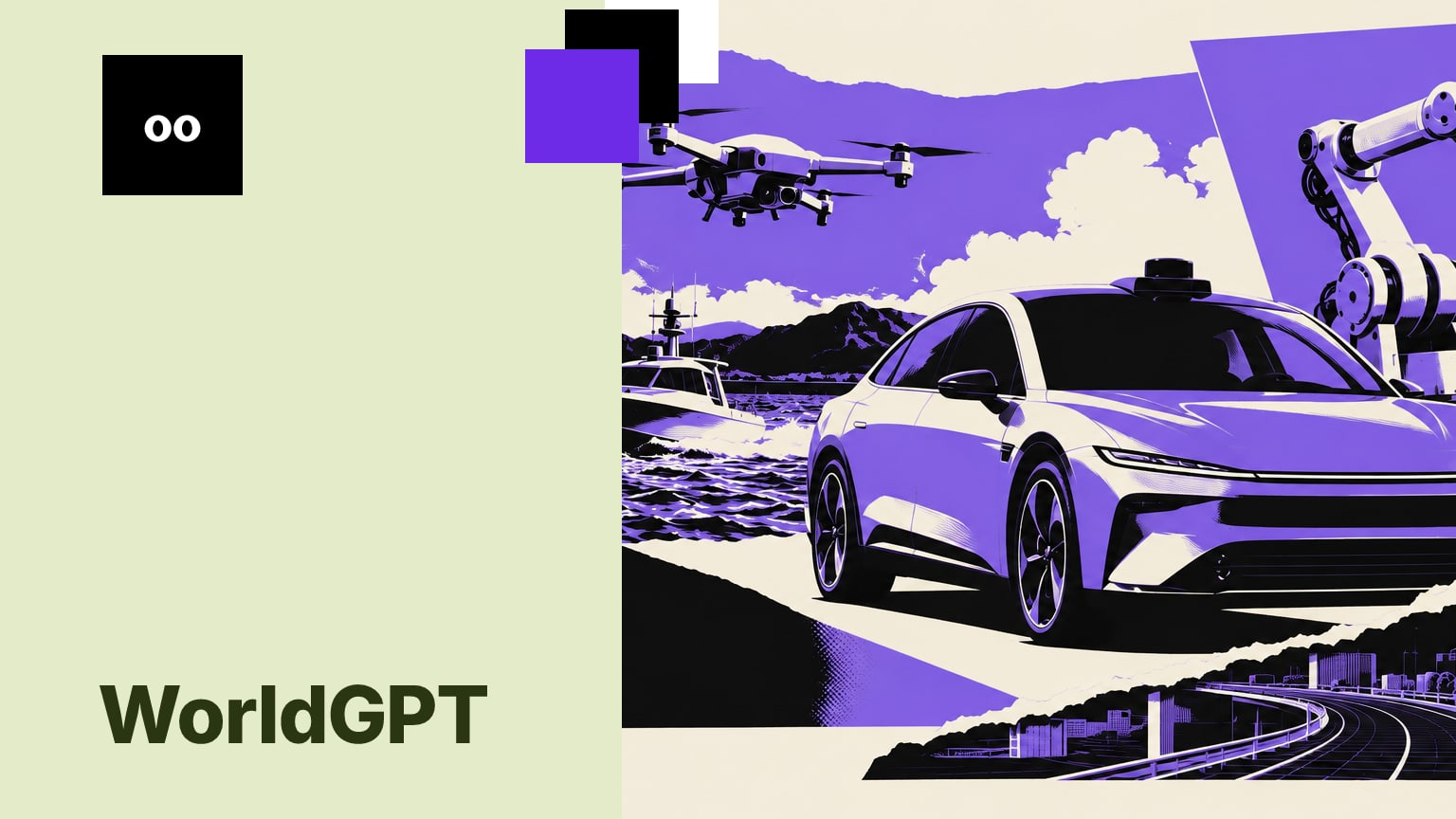
Key takeaways · 4
- 01
WorldGPT covers cars, boats, drones, single-arm and dual-arm robots, and humanoid robots.
- 02
XPENG describes it as a cloud-based teacher model that can pass shared knowledge to smaller, machine-specific models.
- 03
XPENG reports 12 first-place public benchmark rankings as of November 12, 2026.
- 04
Zeniteq reports that XPENG had not announced public weights, an API, pricing or general developer availability.
A model spanning six machine types
XPENG says WorldGPT belongs to its Turing World Model family and covers cars, boats, drones, single-arm robots, dual-arm robots and humanoid robots.[1] The company frames the project around intelligent vehicles, humanoid robotics and autonomous mobility.[1] XPENG describes the model as learning shared knowledge from data across different machines, rather than as a model dedicated to just one machine type.[1] It calls WorldGPT the first world model to demonstrate prediction and action-planning capabilities across all six listed types.[1] That “first” description is XPENG’s claim.[1]
From footage to planned actions
XPENG says WorldGPT can take previous camera footage and a simple instruction as input, then generate video showing how a scene might evolve.[1] The company also says it can plan actions needed to complete a task and explain its reasoning in natural language.[1] XPENG says the system learns from visual data across machine types to combine perception, reasoning, prediction and action planning.[1] Those capabilities describe the model’s stated functions; the evidence does not establish how they perform in customer deployments.[1]
Teacher model and smaller models
XPENG’s architecture uses a large cloud-based teacher model to learn shared knowledge from data across different machines.[1] The company says that knowledge can be distilled into smaller specialized models designed to run on individual machines.[1] XPENG says this approach could reduce development costs, improve data efficiency and make it easier to extend the system to new machine types.[1] These are anticipated benefits stated by the company, not reported cost or efficiency results.[1] For teams assessing the approach, the key distinction is between the cloud-based teacher and the smaller models intended for individual machines.[1]
Benchmark claims and access
XPENG reports 12 first-place rankings across public benchmarks in four areas as of November 12, 2026.[1] Its reported results include a 95.2% average success rate across 50 single-arm manipulation tasks, described as the highest among published models evaluated.[1] XPENG also reports first-place results in autonomous-driving evaluations, visual-understanding tests and adaptation tests, as well as the highest overall VBench 2.0 video-generation score and a tie for first on WorldOlympiad.[1] Unite.AI reports that the project site hosts 32 demonstration clips.[2] Zeniteq reports that XPENG had not announced public weights, an API, pricing or general developer availability.[3]
For teams working across vehicle and robotics systems, a shared teacher model with smaller machine-specific models is an architecture worth evaluating against their own deployment needs. The reported benchmark results may help frame that evaluation, but the lack of announced public access details leaves practical testing and adoption questions open.
Why it matters
AI training for your team
kju.ai is built for teams: daily sessions, team analytics, and rollout support for your organization.
How this developed
25 November 2026
XPENG unveils WorldGPT for six types of machines