UniX AI’s Panther: The First Mass-Produced Humanoid Robot in Real Homes
In a watershed for robotics, UniX AI’s third-generation humanoid robot, Panther, has moved beyond laboratory demos to become the world’s first mass-produced service robot operating autonomously in unmodified households.
Key takeaways · 5
- 01
Panther is the first mass-producible humanoid robot to complete autonomous, unscripted tasks in real homes.
- 02
Its core innovations blend bespoke hardware for complex home layouts with advanced AI for task adaptation and sequencing.
- 03
Panther’s deployment drew strong investor attention, signaling commercial momentum for multi-scenario service robots.
- 04
UniX AI’s technology roadmap focuses on cross-domain reuse, streamlining R&D for varied real-world deployment.
- 05
The success challenges entrenched industry separation between demonstration-stage robots and viable household automation.
From Lab Demonstration to Real-World Deployment
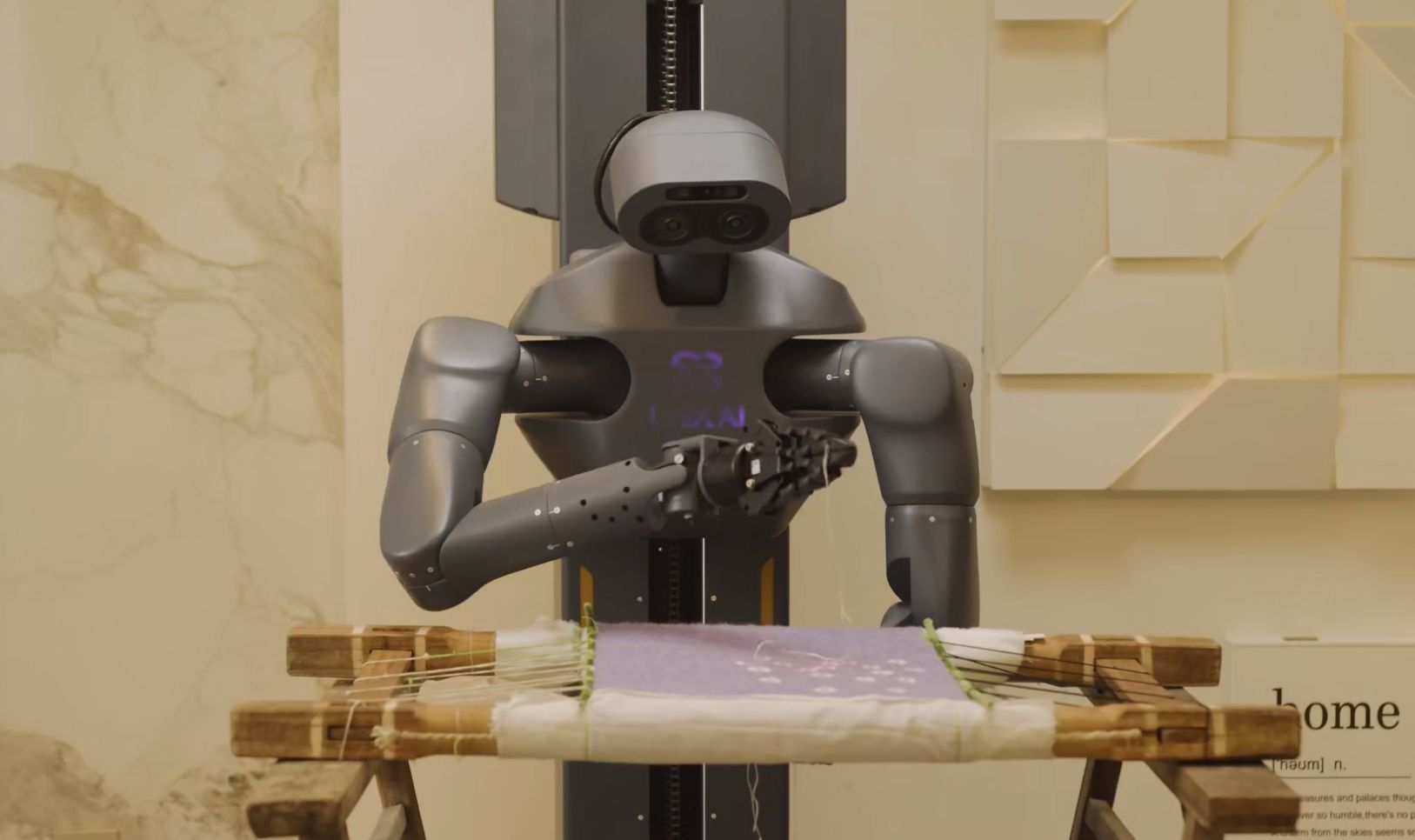
For decades, the commercial promise of humanoid robotics has stalled at impressive but ultimately limited laboratory demonstrations. Most contenders showcased agility or dexterity only in staged, highly controlled environments or industrial settings, unable to cope with the unpredictable dynamics of actual homes. Panther, UniX AI’s third-generation platform, has overcome this constraint, validated with multi-day, continuous operation in unmodified, real households without staged objects or scripted interventions. Panther succeeded in waking household members, making beds, preparing meals, cleaning, and organizing objects—key milestones that existing robots failed to deliver outside the lab sphere [1][2][4].
This represents a decisive transition from the so-called “demonstration era” of robotics into what industry leaders term the “home commercialization era.” Previous industry efforts have bifurcated between robots prioritizing anthropomorphic appeal and those destined for repetitive industrial or warehouse tasks, neither group able to generalize to the tight, dynamic, and cluttered nature of domestic spaces. Panther’s validation of full-stack, autonomous service in ordinary home settings signals the field has finally breached what was long considered the most complex robotics frontier [2][3][6].
Central to this leap is Panther’s capacity for live interruption management and rapid task replanning, critical for homes where humans, pets, unexpected obstacles, and competing priorities constantly reshape the environment. This pragmatic validation refocuses the discussion from aesthetics and controlled successes to measurable, lasting utility in the messiness of real life [1][4].
Hardware Innovations for the Domestic Challenge
Breaking through into households required radical rethinking on both a mechanical and sensing level. Panther introduces the world’s first mass-produced, 8-degree-of-freedom (DOF) bionic dual arms—surpassing the dexterity and range of legacy robotic arms limited to 6 or 7 axes. This enables Panther to perform both broad manipulations (such as bedmaking) and fine motor tasks (like needle threading in embroidery) with natural, repeatable movement [3][4][5].
The chassis employs an omnidirectional four-wheel drive system, giving Panther exceptional maneuverability in confined, uneven, and cluttered home spaces, areas that have historically confounded robots with less adaptive locomotion. A high-voltage 48V drive provides the transient power and control range necessary for safe, stable operation at both high and low speeds. Standout computing power—over 2000 TOPS—serves real-time sensor fusion and decision-making, supported by open interface architecture for ongoing hardware and AI upgrades [1][3][6].
These hardware choices are all explicitly tuned for chaotic and ever-shifting home layouts, not just clean, repetitive factory lines. Panther’s ability to traverse narrow hallways, operate in congested kitchens, or help care for the elderly stems from its combination of compact full-size humanoid form (roughly 1.6–1.75 meters) and embedded safety and perception systems, representing a leap beyond demonstration ‘shells’ incapable of sustained, robust interaction with both the environment and its human inhabitants [4][6][7].
AI Architecture: From Perception to Generalization
Panther’s autonomy is driven by a trilogy of proprietary AI subsystems orchestrating perception, decision-making, and long-horizon planning. At its core, UniTouch provides unified visuo-tactile fusion, enabling simultaneous processing of vision and physical feedback—a capability critical for delicate home tasks like folding laundry or handling kitchen items [4][5][6].
The UniFlex imitation learning framework overcomes the data scarcity problem that plagues home deployment, decoupling perception from low-level control and facilitating rapid learning from sparse, multimodal demonstrations. As a result, Panther can generalize across very different home layouts and routines, a major advancement over robots with brittle, environment-specific behavior policies [4][6].
Rounding out this stack, the UniCortex planner enables Panther to sequence interrupted or abandoned tasks, reprioritize goals, and adapt contextually when household activity disrupts its routines. Together, these AI layers deliver continuous, reliable operation across end-to-end household workflows, a feat that positions Panther at the forefront of embeddable, contextually aware embodied intelligence [3][5][7].
Commercialization and Market Signal
The significance of Panther’s home deployment extends far beyond technical headlines—it sent immediate reverberations across global investor and enterprise communities. Unveiled at the Morgan Stanley China Summit in April 2026, Panther’s success in real homes was met with unprecedented interest from top-tier U.S. dollar venture funds and strategic industry stakeholders [1][2][4].
Discussions at the summit focused on the scalability, manufacturability, and cross-scenario extensibility of service humanoid robots. Investors identified Panther’s ability to shift effortlessly from household to commercial retail, hospitality, and even light industrial roles as the hallmark of a platform, not a point solution. The company’s cross-domain reuse model—“one R&D, multi-scene deployment”—was cited as a powerful risk mitigator and value amplifier in an industry mired in one-off demo units [3][4][5].
Strong market validation has followed: Panther is now positioned as the benchmark for high-end, practical service robotics, setting a precedent that the next generation of humanoid robots must demonstrate measurable autonomy in true field operations—not just engineered showcases [2][4].
Strategic Implications for AI and Robotics
The debut of Panther signifies more than a technical win for UniX AI—it represents a paradigm shift for embodied AI, robotics, and automated home assistance worldwide. By finally bridging the gap between controlled demonstrations and genuine home deployment, Panther forces a re-examination of what is required for robots to become practical partners in daily human life. Its cross-scenario generalization lays groundwork for robots that move fluidly between sectors, from elderly care and entertainment to education and property security [3][6][7].
For AI practitioners, this is a call to align research agendas with messier, high-variance field data rather than sanitized lab benchmarks. Technologies like visuo-tactile integration and robust, multi-layered planning architectures—once academic pursuits—are now commercial imperatives underpinning deployable products.
Panther’s arrival will likely accelerate both R&D funding and regulatory conversation regarding household robots, safety certification, and social integration. UniX AI’s proactive focus on scalable, scene-driven AI, and modular hardware, presents a blueprint for the next phase of AI-enabled robotics—one that could reshape not just homes but a broad constellation of real-world environments [4][6][7].
Panther’s entry into real homes demonstrates that humanoid robots can move beyond demonstration stages to provide practical, multi-task service in uncontrolled, everyday spaces. For AI practitioners, this breakthrough exemplifies the integration of advanced perception, planning, and control systems necessary for robust field deployment—setting a new bar for what deployable embodied AI must achieve.
Why it matters
Test yourself on this story — 2 questions.
Create a free account to take the quiz, earn XP, and get a daily session built for your industry.
Take the quizSources
- UniX AI Claims First Real-Home Deployment of Mass-Produced Humanoid Robot Panther Intradopr.sandyjournal.com
- UniX AI Claims First Real-Home Deployment of Mass-Producedglobenewswire.com
- UniX AI Launches Panther, a Scalable Humanoid Robot Platform for Multi-Scenario Commercial Deploymentconcept360web.com
- Beyond Prototypes: UniX AI Debuts Panther as a Mass-Production Humanoid Robot for Real-World Operations - Tech Primextechprimex.com
- UniX AI Launches Panther, a Scalable Humanoid Robot Platform for Multi-Scenario Commercial Deployment - Tech Livotechlivo.com
- UniX AI Panther: The World’s First Mass-Deployable Humanoid Robot Entering Real Household Environments - TechBulliontechbullion.com
- From Demo to Deployment: UniX AI Launches Panther, the First Commercial Humanoid Robot for Real Homes - Wheel Walewheelwale.net