Tesla Expands Robotaxi Footprint: Dallas and Houston Join Autonomous Rideshare Rollout
Tesla has officially expanded its autonomous robotaxi service to Dallas and Houston, signaling a major step in its ambitious bid to lead the U.S. self-driving ride-hailing market. With unsupervised Model Y vehicles now plying select Texas neighborhoods, Tesla deepens its AI strategy amid fierce competition and ongoing regulatory hurdles.
Key takeaways · 5
- 01
Tesla’s unsupervised robotaxi service is now in Dallas and Houston, doubling its Texas coverage since the Austin pilot.
- 02
Initial geofences are small—12 to 15 square miles in Houston and 30 to 35 in Dallas—mirroring the conservative rollout seen in Austin.
- 03
Service operates with no safety drivers for most rides, but some edge cases or data-collection phases may include monitors.
- 04
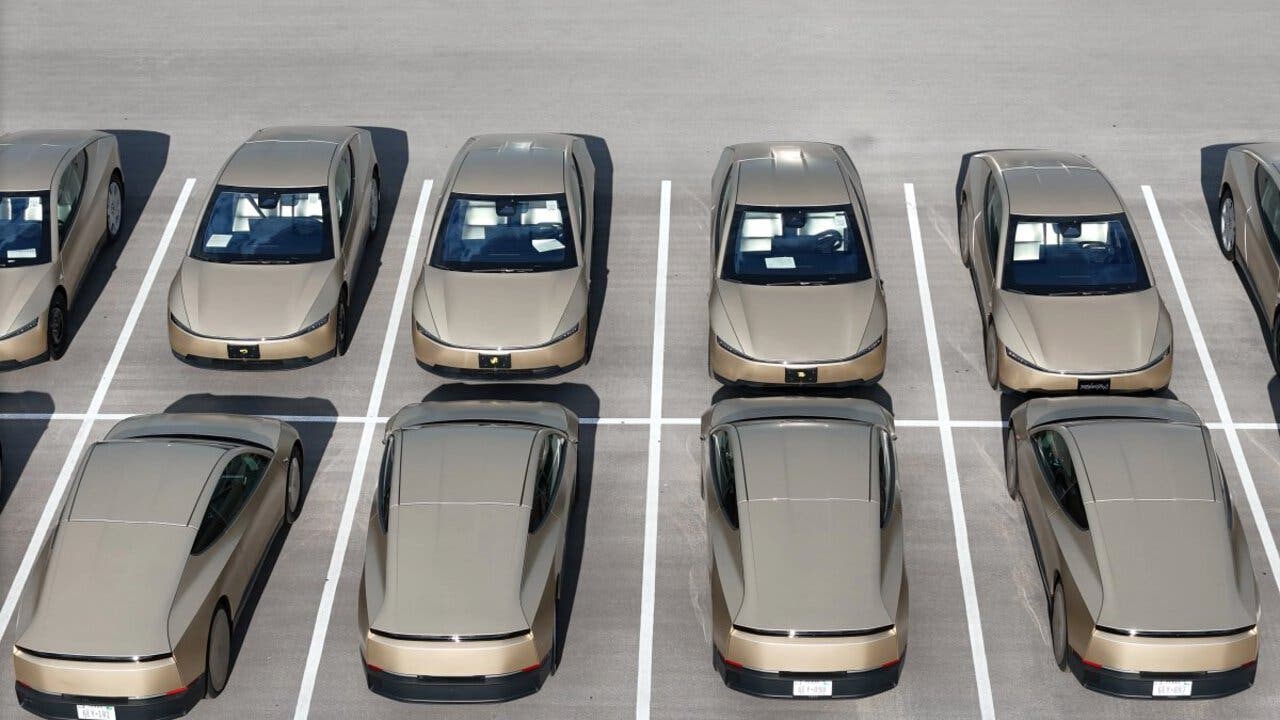
More than 50 purpose-built Cybercab robotaxis are staged at Giga Texas, pending further regulatory clearance for mass deployment.
- 05
Rival robotaxi services, especially Waymo, are competing in the same Texas markets, intensifying the pace of AV innovation and policy debate.
The Texas Expansion: Geofences and Launch Details
Tesla announced the rollout of its robotaxi service in Dallas and Houston in mid-April 2026, marking the first major geographic extension since its Austin pilot. Unlike earlier deployments that required a safety monitor in the passenger seat, the company debuted the Texas service with Model Y vehicles operating fully unsupervised, as evidenced by published videos showing empty front seats. CEO Elon Musk underscored the milestone on X, reinforcing the company’s intent to rapidly scale autonomous ride-hailing throughout the United States [1][2][3].
However, the rollout remains tightly controlled. Dallas’ initial service area comprises around 30 to 35 square miles—primarily urban core and Park Cities neighborhoods—while Houston’s covers a more modest 12 to 15 square miles northwest of the city center. This mirrors Tesla’s earlier approach in Austin, which started with a compact 20-square-mile deployment before gradually extending to 245 square miles as confidence in the software and infrastructure grew [3][4]. Tesla has signaled an intent to follow a similar expansion arc in Dallas and Houston, gathering real-world operational data before releasing the service citywide.
The company has yet to reveal key operational details, such as the number of available vehicles, pricing, or anticipated timeline for scaling up geofences. While demonstration videos highlight unsupervised operation, some evidence suggests a transitional period where both supervised and fully autonomous modes may coexist, especially for edge-case handling and ongoing safety validation. Tesla’s move comes as archrivals—most notably Alphabet’s Waymo—are establishing a presence in Texas, creating a dynamic arena for AV experimentation and policy development [2][3][4].
Autonomy Milestones and Operational Nuances
Tesla’s Texas expansion is significant for its level of autonomy: most robotaxi rides in Dallas and Houston no longer include in-car human monitors, a shift that signals growing company confidence in its Full Self-Driving (FSD) suite’s robust handling of urban environments. This represents a key evolution from prior launches in Austin and the Bay Area, where either a backup driver or a so-called Tesla Safety Monitor remained present during initial public testing [2][3].
Official statements, service videos, and local tests show vacant front seats for robotaxi trips in both Texas cities’ new geofenced zones. That said, Tesla’s deployment is not entirely uniform: certain cases may still see supervised vehicles, particularly when edge-case behavior, policy requirements, or real-world anomaly collection are prioritized. The company has not confirmed whether remote human fallback mechanisms are in play, though elsewhere it has acknowledged limited use of remote operations for rare situations that could challenge autonomy [2][3].
Tesla’s approach balances aggressive autonomy promotion with incremental safety measures, hoping to quickly amass data to refine FSD models. While this unsupervised capability is a high-profile milestone, regulators and public safety advocates are closely monitoring incident reporting, operational transparency, and the handoff rates between AI and human oversight. These technical and disclosure nuances will shape the race for national-scale, commercial robotaxi services in the U.S. [2][3].
Competition and the National Robotaxi Race
Tesla’s robotaxi deployment in Dallas and Houston occurs amid intensified competition from autonomous vehicle players. Waymo, Alphabet’s self-driving division, entered the same Texas markets in February 2026 and has since sought to expand both fleet presence and public adoption. Amazon-backed Zoox is also accelerating testing and pilot deployments in other U.S. cities, contributing to a climate where AV firms race for technological validation and regulatory green lights [1][2][5].
This competitive dynamic elevates the stakes for both market share and public confidence in autonomy. Tesla’s service currently leans on a proprietary FSD stack, while Waymo continues to grow its hardware-agnostic approach, increasing pressure on Tesla to demonstrate not just technical competence, but also reliability against high-profile rivals. The close timing of Tesla’s Texas rollout and Waymo’s entry indicates parallel lobbying efforts, local authority outreach, and efforts to build public comfort with driverless vehicles [2][4].
Tesla’s leadership, including CEO Musk, views the robotaxi business as the company’s linchpin for future valuation—a radical pivot from traditional EV manufacturing to networked mobility and AI. More than $1.3 trillion in market value now hinges on the company’s ability to commercialize unsupervised ride-hailing across multiple metropolitan areas before rivals can achieve similar scale. The expansion to Dallas and Houston is thus a litmus test for consumer demand, operational robustness, and competitive positioning [1][5].
Regulatory, Scaling, and Infrastructure Challenges
Despite public hype and high-profile demonstrations, Tesla’s robotaxi program remains constrained by regulatory approvals and real-world limits on scalability. In Texas, the company has staged over 50 next-generation Cybercab units at its Austin Giga Texas factory, with drone footage revealing rows of vehicles equipped for autonomous operation but awaiting commercial green light. While these units hint at readiness for wider service, actual fleet deployment is throttled by complex city and state regulatory frameworks [3][6].
Notably, Tesla’s autonomous ride-hailing service is available only in relatively small, tightly geofenced urban zones. Approval for broader coverage—such as in the Bay Area, where Tesla holds a ride-hailing permit but not an autonomous taxi license—remains elusive. This regulatory asymmetry explains why mass deployment lags production readiness and why functional AVs can be seen “parked and waiting” rather than in full public circulation [2][6].
Infrastructure and public trust further shape the expansion curve. Even as Tesla rolls out geofenced services, authorities demand rigorous incident reporting, clear data on handoff and disengagements, and evidence of systems’ ability to manage hazards and unpredictable driver or pedestrian behavior. The experience of staged launches in Austin, Dallas, and Houston suggests a hybrid model of phased operational escalation, regulatory negotiation, and local public engagement [2][3][6].
Market Impact and the Road Ahead
Tesla’s moves in Texas reverberate across the U.S. AV landscape, projecting both technical ambition and strategic urgency. Financial markets closely tracked the launch as a prelude to the company’s late-April earnings call, viewing the robotaxi service as a bellwether for Tesla’s much-publicized shift from electric vehicles to AI-driven mobility and robotics. The company’s ability to launch, regulate, and eventually scale its ride-hailing service will directly affect investor confidence and the pace of related technology bets [1][5].
For local residents, the arrival of robotaxis presents the promise of hands-off, on-demand mobility, but it also introduces questions around safety, accessibility, pricing, and liability. Early feedback in Austin and observers in Dallas and Houston suggest cautious optimism, with some users quickly adopting the novel service, while others remain wary of ceding control fully to autonomous systems [3][4].
Looking forward, Tesla is poised for additional expansion, with preparations underway in Phoenix, Miami, Orlando, Tampa, and Las Vegas. Lifting geofencing constraints and securing legal clarity in major California markets remain central to this roadmap. Ultimately, Tesla’s Texas deployments are both a signal and a stress test: can autonomy transition from boutique demos to large-scale, everyday infrastructure in America’s biggest cities? [3][6].
Tesla’s unsupervised robotaxi expansion represents a high-stakes test of autonomous vehicle technology, regulatory strategy, and public adoption. For AI practitioners, it offers insights into the deployment challenges, safety frameworks, and operational hurdles faced by commercial-scale AI-driven mobility platforms.
Why it matters
Put this to work — one session a day, built for your industry.
Create a free account for a daily session — eight questions and one real-work challenge, on the news that affects your role.
Start freeSources
- Tesla expands robotaxi service to Dallas, Houston | WDEZ 101.9 FM Great Countrywdez.com
- Tesla is rolling out its Robotaxi service to Dallas and Houstonengadget.com
- Tesla Launches Unsupervised Robotaxi Service in Dallas and Houston – Hubteslahubs.com
- Tesla launches 'Robotaxi' in Houston and Dallas with tiny geofences | Flipboardcherry.flipboard.com
- Tesla Robotaxi Service Expands To Dallas And Houston | Flipboardcherry.flipboard.com
- Tesla's robotaxi future is parked in a lot in Texas, waiting for permission - ClubAlfa Globalclubalfa.it