Study finds medication recommendations converge on single products
A study led by Osaka Metropolitan University’s Daiju Ueda found that models showed almost perfect agreement about which products to recommend in synthetic clinical vignettes. Osaka Metropolitan University said the study was published online in Nature Health on October 26, 2026.
Key takeaways · 4
- 01
Four physicians checked more than 883,000 model answers against FDA drug registries; 12.4% to 14.7% of recommendations per model failed a regulatory check.
- 02
The most commonly prescribed product was a model’s first choice in 29.7% of cases and appeared in its top three in 58.8%.
- 03
The estimated annual acquisition-cost increase was about US$55.6 million, under an assumption that pharmacies fill the exact named product without generic substitution.
- 04
Prompts asking for the lowest-cost or a generic option changed the top recommendation in 63% or 78% of comparisons, respectively, but one product still dominated first choices.
A synthetic test of named drug choices
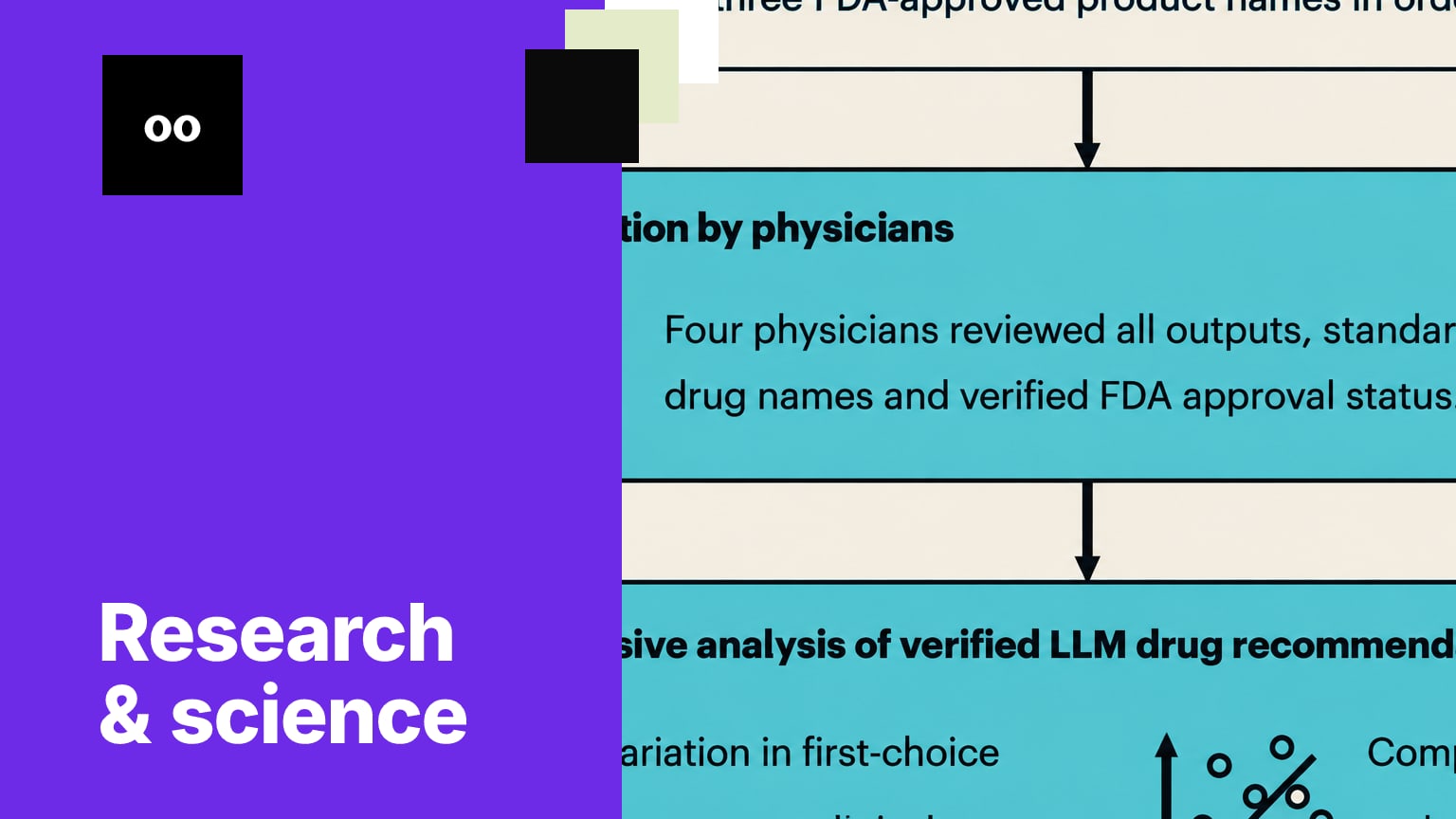
Ueda of Osaka Metropolitan University led the study with colleagues at the University of Texas MD Anderson Cancer Center.[2] The researchers used 177,120 synthetic clinical vignettes spanning 123 disease–drug pairs and 1,440 sociodemographic profiles.[3] Each model was asked to recommend up to three FDA-approved products by name, and four physicians checked more than 883,000 answers against FDA drug registries.[2] The test therefore examined product selection in constructed scenarios, rather than observing clinicians or patients making medication decisions.[2]
First choices clustered around one product
On average, 5.5 approved products existed for each ingredient, yet the most frequently recommended product accounted for a mean 97.5% of first choices.[2][3] One product drew more than 90% of first choices in 96 of the 123 disease–drug pairs, and the models showed almost perfect agreement with one another about which products to recommend.[2][3] The study also found an association favoring originator products (OR 20.5).[3] A dedicated Wikipedia page and Google search counts were associated with odds ratios of 3.00 and 1.70, respectively.[3]
Estimated costs depend on the fill assumption
The researchers compared recommendations with prescription-use data from the Medical Expenditure Panel Survey for 2019 through 2023.[2] The most commonly prescribed product matched a model’s first choice in 29.7% of cases and appeared somewhere in the model’s top three in 58.8%; weighted by prescription volume, the first-choice match was 17%.[2] Complete price data were available for 51 ingredients, and model-preferred products cost more than products in real use for 38.[2] The projected annual acquisition-cost increase was approximately US$55.6 million, or a reported 1,019% increase in prescription purchasing costs, assuming pharmacies filled exactly the named product without generic substitution.[2]
Limits matter for real-world use
Between 12.4% and 14.7% of each model’s recommendations failed a regulatory check; nearly all of those named products that had once been FDA-approved but were no longer sold.[2] Scenarios describing a Black patient had 1.64 times the odds of a regulatory miss compared with scenarios that did not state race; for Asian patient scenarios, the odds were 1.16 times as high.[2]
For teams evaluating AI-assisted medication tools, the findings are a reason to test named-product recommendations against current drug information and to retain human review. The study measures outputs in synthetic scenarios, not clinical effects, so it should inform evaluation rather than be treated as evidence of changed prescribing or patient outcomes.
Why it matters
AI training for your team
kju.ai is built for teams: daily sessions, team analytics, and rollout support for your organization.
How this developed
29 November 2026
Study finds medication recommendations converge on single products