South Korean shares fall more than 5% as AI regulation concerns weigh
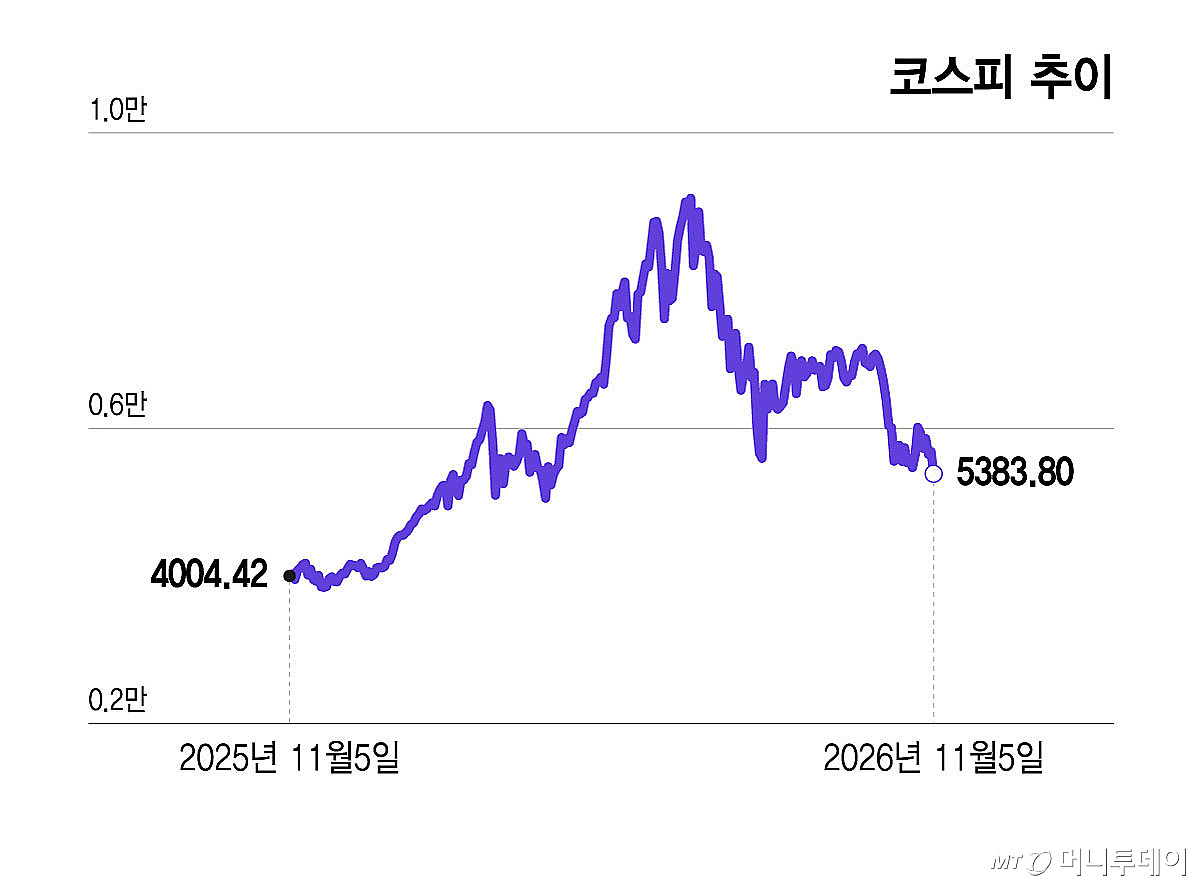
South Korea’s KOSPI fell more than 5% on Nov. 5, 2026, reaching a seven-month low, MoneyToday reported.
Key takeaways · 4
- 01
Track the scale of foreign selling: investors net sold about 10.3 trillion won in KOSPI shares over five trading days.
- 02
The potential rules could address data-center power use, local burdens, environmental issues, monopolies and labor-market effects.
- 03
MoneyToday reported that investors sold 10.9 trillion won in SK hynix shares and 9.7 trillion won in Samsung Electronics shares.
- 04
The report also noted a counterpoint: some market participants considered the concerns excessive as global uncertainty eased and rates, oil prices and exchange rates stabilized.
A sharp fall amid contrasting global markets
MoneyToday reported that the KOSPI fell more than 5% and reached its lowest level in seven months.[1] It said the index had fallen below 5,400 on a closing-price basis since last April.[1] The report contrasted South Korea’s decline with gains across most major overseas markets, including the United States, after the midterm elections.[1] The Dow Jones rose 3.03%, the S&P 500 gained 1.6% and the Nasdaq Composite closed up 1.4%.[1] The Euro Stoxx rose 2.3%, and Hong Kong’s Hang Seng gained in the 3% range, while Taiwan’s Weighted Index fell in the 3% range and Japan’s Nikkei dropped more than 1%.[1]
Data-center rules raise semiconductor concerns
MoneyToday reported that the possibility of stronger regulation of AI data centers had emerged as a negative factor for semiconductor stocks.[1] Potential rules could cover data-center electricity use, regional burdens, environmental issues, monopolies and labor-market impacts.[1] The report said such measures could reduce profits for Korean and Taiwanese companies.[1] Democratic Party candidates who advocated development regulations won in major data-center investment areas, including Texas and Georgia.[1] The report also said concerns were raised that new data-center construction schedules could be delayed.[1] The report also described concerns about higher construction costs and slower new investment weighing on domestic semiconductor companies’ earnings forecasts.[1]
Foreign investors sell shares; some see overreaction
Foreign investors net sold about 10.3 trillion won in KOSPI shares over five trading days, including 3.8 trillion won on Nov. 5.[1] An intraday sell-sidecar was triggered.[1] MoneyToday separately reported foreign net sales of 10.9 trillion won in SK hynix shares and 9.7 trillion won in Samsung Electronics shares, as well as sales in Samsung Electro-Mechanics and LS Electric.[1] Semiconductor materials, components and equipment stocks also fell sharply.[1] The report presented a counterview: some market participants considered the concerns excessive, citing easing global uncertainty and stabilizing interest rates, oil prices and exchange rates.[1]
For investors and business planners, the report describes potential regulation and concerns about construction costs and slower investment as risks to domestic semiconductor companies’ earnings forecasts. Treat these as concerns, not settled outcomes; some market participants considered the market concerns excessive as global uncertainty eased and interest rates, oil prices and exchange rates stabilized.
Why it matters
Bring this to your team — one session a day, built for your industry.
kju.ai is built for teams: daily sessions, team analytics, and rollout support for your organization.
For teamsHow this developed
5 November 2026
South Korean shares fall more than 5% as AI regulation concerns weigh