South Korean police arrest seven in alleged AI-assisted data theft
South Korean police said they arrested seven people, including an alleged ringleader, over suspected network-law violations and extortion. Police allege the group stole more than 8.2 million pieces of personal information and internal company data from about 90 entities.
Key takeaways · 4
- 01
Police allege the group took data from about 90 entities, using AI tools against 60 targets.
- 02
Thirty-eight entities suffered losses; the group demanded a combined 360 million won but received 300,000 won from one company.
- 03
Police said payment-card information was not leaked and the stolen personal information was recovered.
- 04
Police urged companies threatened over personal-information leaks to report the threats immediately.
What police say happened
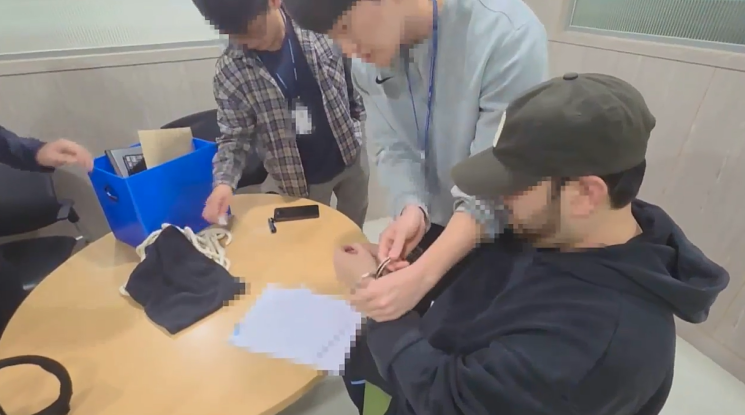
Police announced the arrests on Oct. 26, saying seven people were suspected of network-law violations and extortion.[1] The alleged ringleader, identified as A, was 32; police sent A to prosecutors in custody on Oct. 23, while the other six suspects were investigated without detention.[2] Police allege the group operated from September 2025 through October 2026, a period they described as 13 months.[3] The investigation began in June 2026 after one affected company filed a complaint.[3]
Targets and demands
Police allege the group stole personal information and internal company data from about 90 entities, and used AI tools to hack 60 of its targets.[4] Those targets included academies, hospitals, golf courses, universities and affiliates of large corporations; police said the large hospitals commonly called the “Big Five” were not among them.[2][1] Of the targeted entities, 38 suffered losses, and the group demanded a combined 360 million won.[4] Police said it actually received only 300,000 won from one company.[3]
How AI featured in the case
Police said A began using generative AI in late August to hack a broader range of companies indiscriminately.[2] They said an AI autonomous penetration-testing system, also used in a recent financial-sector data theft, was used in A’s hacking.[2] Police described the arrests as South Korea’s first in a case involving large-scale hacking and personal-information theft using generative AI.[2] A had no formal IT background and taught himself hacking techniques through blogs and other sources; he had worked at a security company conducting penetration tests from 2019 through 2022.[3]
Data recovery and next steps
The stolen information included customer names, resident registration numbers, phone numbers and addresses, as well as employee and internal business data.[1] Police said payment-card information was not leaked, that they had recovered the personal information the group stole, and that there was no current indication it had been redistributed on the dark web.[2][1] Police also said the tools reduced the personnel required for investigations and shortened the investigation period to four months.[3] They said they would continue investigating additional victims, accomplices and the proceeds of crime.[1]
The case makes AI-enabled intrusion and extortion relevant to teams that hold customer or employee data, while the police statements describe both the exposure and the limits of what is known about onward distribution. Professionals can use the details to review threat-reporting procedures and incident-response plans without assuming the case establishes the risk level for other organizations.
Why it matters
Bring this to your team — one session a day, built for your industry.
kju.ai is built for teams: daily sessions, team analytics, and rollout support for your organization.
For teamsHow this developed
26 October 2026
South Korean police arrest seven in alleged AI-assisted data theft
Sources
- AI 해킹으로 기업 정보 820만건 빼돌린 일당 검거chosun.com
- 비전공자가 AI로 골프장 등 개인정보 820만건 탈취에 협박까지 | 연합뉴스yna.co.kr
- Hacker with No IT Background Uses Generative AI to Breach Companies, Steal 8.2 Million Records, Demand Money - The Asia Business Dailyasiae.co.kr
- Cybercrime ring busted over AI-powered data theft targeting hospitals, businesses | Yonhap News Agencyen.yna.co.kr