SoftBank’s $11 Billion OpenAI Bond Plan Draws Heavy Early Demand
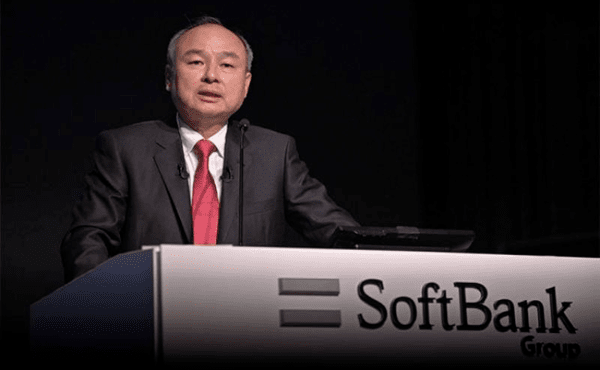
SoftBank’s plan to sell more than $11 billion of speculative-grade debt for its OpenAI investment has attracted over $20 billion of early investor interest.
Key takeaways · 4
- 01
SoftBank is using more than $11 billion of unsecured, speculative-grade debt to finance its OpenAI position.
- 02
Early interest above $20 billion indicates demand exceeding the planned dollar and euro issuance.
- 03
The financing adds bond debt alongside a higher margin-loan limit backed by SoftBank’s Arm shares.
- 04
Practitioners should track how debt-funded AI investment affects infrastructure spending and strategic commitments.
The offering takes shape
SoftBank’s junk-bond offering drew more than $20 billion of early investor interest, according to Bloomberg’s September 22 report. [1] The group plans to borrow more than $11 billion through risky bonds to fund another payment for its OpenAI stake, according to investor documents cited by the Financial Times. [2]
SoftBank announced the start of sales for $10 billion and €1 billion, or about $1.15 billion, of unsecured bonds intended for investment in OpenAI. [6] Other reports described the planned offering as $10 billion plus €1 billion, or approximately 15.3 trillion won and Rp198 trillion in local-currency terms. [3][7][8][10]
How the debt works
The dollar-denominated portion is divided into three maturities of three and a half years, five and a half years, and seven and a half years. [6] The bonds are expected to carry sub-investment-grade ratings, reflecting SoftBank’s credit profile and the higher risk required of buyers. [4]
Junk bonds pay high interest but carry a greater risk that investors will not recover their money. [2] The sale is set to be the largest by a single company excluding distressed debt exchanges involving companies at risk of default. [3]
OpenAI anchors the strategy
The proceeds are earmarked for SoftBank’s OpenAI investment, with the planned financing described as another payment toward the group’s stake. [2][4] OpenAI develops ChatGPT, and its latest funding rounds valued the San Francisco company at more than $80 billion, according to Brief Asia. [4]
SoftBank’s existing AI-related holdings include semiconductor designer Arm Holdings and Vision Fund stakes in machine-learning infrastructure companies. [4] The group is also sharply increasing the limit on a margin loan backed by Arm shares as its reliance on borrowing grows. [3]
The credit-market backdrop
Asian junk-bond issuance was down roughly 18% year over year through August 2026, while risk premiums had widened amid geopolitical uncertainty and concerns about spillovers from China’s property sector. [4] SoftBank last entered the high-yield market in 2024 with a $4.5 billion multi-tranche transaction priced at spreads of 375 to 450 basis points over benchmark rates. [4]
The new structure lets SoftBank preserve liquidity without issuing equity or liquidating other strategic holdings, according to Brief Asia. [4] Nvidia also plans to issue at least $20 billion of bonds to help finance continuing AI spending, according to a related report cited by Prospect. [6]
What it means
SoftBank is pairing a concentrated OpenAI position with several forms of borrowing: unsecured junk bonds and a larger lending facility backed by Arm shares. Early interest exceeding the planned offering suggests investors are willing to evaluate that exposure despite the bonds’ speculative-grade status and a subdued Asian high-yield market. Nvidia’s reported plan for at least $20 billion of bonds provides a useful comparison: both companies are turning to debt as they direct capital toward AI, although SoftBank’s proceeds are specifically tied to OpenAI. For technology leaders, the transaction shows that frontier-model financing now intersects directly with corporate credit strategy. What the sources don't address: what returns, governance rights or protections SoftBank expects from the OpenAI stake financed by this debt.
The financing illustrates how large AI commitments are becoming intertwined with corporate balance sheets and credit markets. AI practitioners should watch whether debt-funded investment changes the scale, duration or governance of commitments to frontier-model companies and their infrastructure.
Why it matters
Put this to work — one session a day, built for your industry.
Create a free account for a daily session — eight questions and one real-work challenge, on the news that affects your role.
Start freeHow this developed
22 September 2026
SoftBank’s $11 Billion OpenAI Bond Plan Draws Heavy Early Demand
22 September 2026
Event created from source cluster.
Sources
- SoftBank Draws Over $20 Billion of Early Interest in Junk BondBloomberg Technology
- SoftBank Plans Record $10 Billion Junk Bond Sale to Fund OpenAI Bet - Seoul Economic Dailyen.sedaily.com
- SoftBank Plans $11 Billion Junk Bond Sale to Fund OpenAI Stakebriefasia.com
- SoftBank Borrows More Billions to Fund Its Growing OpenAI Bet | the deep divethedeepdive.ca
- SoftBank выпустил облигации для финансирования OpenAI на сумму свыше $11 млрдprospect.com.ru
- [AI 인프라 전쟁] 소뱅, 오픈AI 투자 위해 15조원 정크본드 발행 < AI 인프라 전쟁 < 글로벌 M&A < M&A < 기사본문 - 넘버스numbers.co.kr
- SoftBank plans USD 11 bn bond sale to fund OpenAI investment - report - Telecompapertelecompaper.com
- SoftBank to borrow over $11 billion in risky bonds for OpenAI stakethe-decoder.com
- Danai OpenAI, SoftBank Bakal Terbitkan Obligasi Rp198 Triliunidxchannel.com
- Danai OpenAI, SoftBank Bakal Terbitkan Obligasi Rp198 Triliunlite.idxchannel.com