Science Corp to Begin First Human Trials of Biohybrid Brain Sensor: Shaping the Next Frontier of BCIs
Science Corp, the neurotechnology startup founded by Max Hodak, is set to implant its first biohybrid brain sensor into a human patient—marking a major milestone in brain-computer interface development and signaling a new direction for neuroprosthetics and therapeutic neural technology.
Key takeaways · 5
- 01
Science Corp’s brain sensor uses a biohybrid approach, combining electronics with lab-grown neurons to create a more natural interface.
- 02
The device will be tested initially in patients already undergoing major brain surgery, mitigating additional surgical risks.
- 03
Unlike Neuralink, Science Corp’s sensor is placed on the cortex surface, not penetrating tissue—potentially reducing long-term damage.
- 04
Clinical trials focus first on restoring function and healing damaged neural tissue, aiming to expand future BCI applications.
- 05
Securing regulatory approvals and demonstrating meaningful patient benefits will be critical for broader clinical adoption.
Science Corp’s Ambition: A New Paradigm for BCIs
Max Hodak, former Neuralink president and co-founder, launched Science Corp in 2021 with the intention of reimagining the human-machine interface. Unlike many brain-computer interface (BCI) ventures that focus solely on electronic electrodes, Science Corp is developing a biohybrid device that blends lab-grown neurons with sophisticated electronics. This approach aims to sidestep the primary drawback of current BCIs: long-term tissue damage and fading performance caused by the mechanical and electrical mismatch between rigid metal electrodes and soft brain tissue [1][2].
The founding team, including chief science officer Alan Mardinly and newly appointed clinical adviser Dr. Murat Günel of Yale, is steering the project away from strictly mechanical paradigms. Their reasoning is both philosophical and practical: by fostering natural connections with neurons at the device interface, the hope is to create a BCI that operates more like a biological extension rather than a foreign implant. Science Corp's vision is not just to treat disease, but to unlock augmented sensory abilities and richer brain-computer communication in the long term [1].
Since its inception, the company has quietly built momentum. After acquiring vision-restoration device PRIMA in 2024 and advancing it into late-stage clinical trials, Science Corp raised a $230 million Series C round in March 2026, elevating the company’s post-money valuation to $1.5 billion [1][4]. This strong financial backing, combined with fresh clinical talent, sets the stage for their bold entry into human trials—a key differentiator in a field dominated by high-profile, often hype-driven competitors.
The Biohybrid Sensor: Technical Details and Rationale
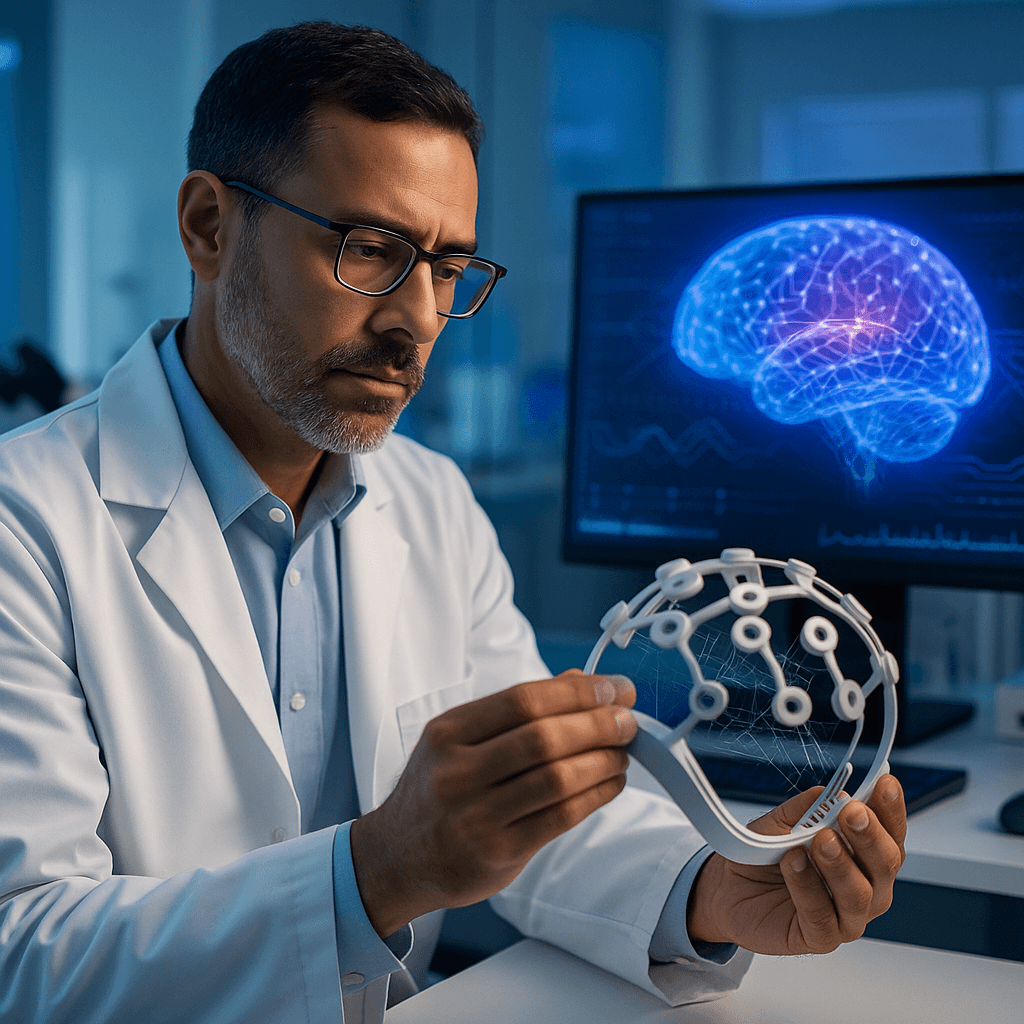
Science Corp’s experimental sensor embodies a significant technical pivot from dominant BCI models. Rather than implanting metallic probes into brain tissue, as is standard with devices like Neuralink, Science Corp’s sensor will rest on the brain’s surface, beneath the skull but above the cortex, reducing invasiveness and associated risk of chronic inflammation or scar tissue [1][4]. The initial device features 520 recording electrodes compacted into a wafer the size of a pea, specifically designed to record and stimulate neural signals with high precision [1][4].
The most innovative aspect, however, lies in the integration of lab-grown neurons within the device itself. According to Mardinly’s research team, these neurons can be activated by precise pulses of light (optogenetics), with the goal of achieving a seamless biological interface. A 2024 animal study demonstrated that the device could be safely implanted in mice and effectively stimulate brain activity [1]. The company is now scaling up these prototypes and rigorously characterizing the neuron cultures to ensure their suitability for human therapeutic use.
Notably, the first human trials will not employ the neuron-seeded version of the device. Instead, the trials are set to evaluate the safety and efficacy of the purely electronic platform when placed on already-exposed cortex during neurosurgical procedures, such as for patients undergoing craniectomy following stroke or injury [4]. This staged deployment mitigates risk and allows for feedback before advancing toward the full biohybrid configuration.
Therapeutic Focus and Clinical Strategy
A distinguishing feature of Science Corp’s initial clinical push is its therapeutic emphasis. While most BCIs concentrate on signal detection, neural decoding, or restoring lost motor controls, Science Corp’s sensor is engineered to deliver precisely targeted electrical stimulation to injured or diseased neural tissue. This marks a notable shift toward leveraging BCIs not just as assistive tech, but as active agents in neural repair [3][4].
The device’s first use cases are expected to revolve around patients requiring significant brain surgery, such as those with severe stroke-induced swelling. By embedding the sensor during scheduled surgical intervention, the incremental procedural risk is minimized. The stimulation paradigm is informed by decades of neurostimulation research, but the company claims that their interface could fine-tune therapy for a range of conditions—from Parkinson’s to spinal cord injuries and even neurodegenerative diseases [3][4].
If clinical trials validate these ambitions, Science Corp could carve a distinct niche in neurotechnology: devices not just for communication or restoration, but for regenerative healing. That would open up much wider patient populations, potentially positioning the company as a leader in medical BCI applications beyond the narrow confines of current regulatory precedents.
Competition, Regulation, and Next Steps
Science Corp’s announcement comes at a pivotal moment for the BCI industry, where multiple major players—Neuralink, Synchron, Paradromics, and others—are moving from animal data to human clinical programs. Whereas previous years focused on demonstrating technical feasibility, the competitive race is now centered on clinical data, patient benefit, and regulatory approval [3].
The regulatory pathway for novel neural devices remains complex. Science Corp claims that, because their sensor sits atop the brain rather than penetrating it, the device may not fall within the FDA’s highest-risk categories for experimental neurosurgery, potentially streamlining the approval process for initial implantation [1]. Still, the company is proactively consulting with medical ethics boards and expects further regulatory scrutiny, particularly before broader trials or commercial distribution can proceed [1][4].
Ultimately, Science Corp’s success will hinge on several factors: demonstrable safety, reproducible therapeutic gains for patients, long-term device stability, and ethical stewardship. The funding environment remains favorable—BCI startups attracted over $600 million in venture investment last year, underscoring the urgency and stakes of the clinical BCI race [3]. If Science Corp delivers on its biohybrid promise, it could fundamentally reshape expectations for how artificial and biological systems interact.
Science Corp’s biohybrid approach could resolve longstanding barriers of biocompatibility and longevity in BCIs, offering new therapeutic options for neurological injury and disease. For AI and neurotechnology practitioners, these advancements accelerate the path to real-world applications, push ethical boundaries, and set new regulatory and biological standards for advanced brain-machine interfaces.
Why it matters
Put this to work — one session a day, built for your industry.
Create a free account for a daily session — eight questions and one real-work challenge, on the news that affects your role.
Start freeSources
- Max Hodak’s Science Corp. is preparing to place its first sensor in a human brainAI News & Artificial Intelligence | TechCrunch
- Science Corp prepares first human brain sensor placement ... - TNWthenextweb.com
- Science Corp. Readies First Human Brain Sensor Implanttechbuzz.ai
- Science Corporation prepares US human trials for neuron electronics sensornewsbytesapp.com