NATO-backed startup adapts edge AI for autonomous attack drones
Scaleout Systems is deploying decentralized, small-scale computer vision models to military bases and autonomous drones, providing AI-driven target detection and engagement at the edge.
Key takeaways · 3
- 01
Scaleout Systems transitioned to defense AI after the 2022 invasion of Ukraine.
- 02
The startup runs lean computer vision models directly on small edge devices.
- 03
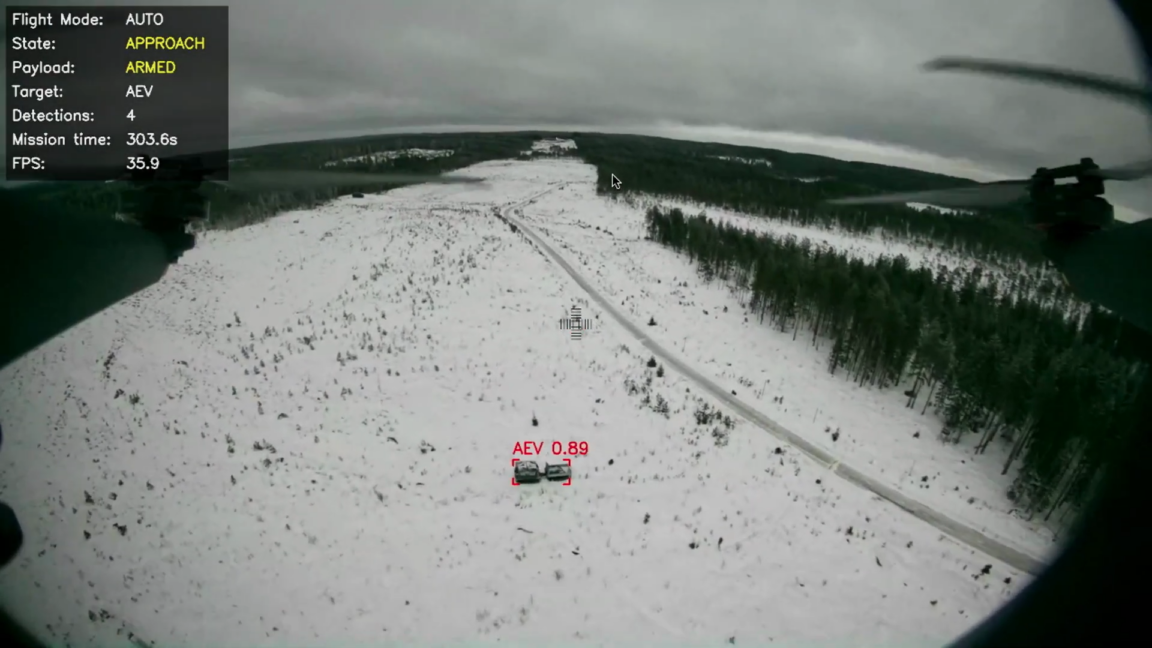
Scaleout's technology was demonstrated on an autonomous attack drone for the ALMA project.
Shift to defense
Scaleout Systems, a NATO-backed startup originally founded in 2018 by Uppsala University researchers, transitioned its focus from commercial vehicles to defense applications following Russia's 2022 invasion of Ukraine. [1] The company provides decentralized machine learning technology designed to operate on drones and military bases. [1] Scaleout's target recognition and engagement capabilities were recently demonstrated on an autonomous attack drone as part of the BAE Systems Bofors-led ALMA project. [1]
Edge deployments
Instead of relying on large frontier AI models from developers like OpenAI or Anthropic, Scaleout uses leaner computer vision models. [1] CEO Andreas Hellander stated that these machine learning models are explicitly designed to fit on forward-deployed edge hardware. [1] This deployment hardware ranges from small embedded devices directly on drones to more powerful edge workstations located at forward bases. [1] The company was also recently selected to participate in NATO's Defence Innovator Accelerator program. [1]
What it means
The deployment of federated learning for autonomous drone strikes indicates a shift toward localized edge computing in battlefield environments where reliance on cloud-based frontier models is impractical. Scaleout’s pivot highlights how the ongoing war in Ukraine is accelerating European defense integration with decentralized AI systems. By focusing on smaller computer vision models that can run on constrained hardware, the ALMA project demonstrates an alternative to the massive parameters typically required for advanced object recognition by companies like OpenAI and Anthropic. What the sources don't address: How much human oversight remains in the decision loop before an autonomous drone is permitted to engage a detected target.
The transition to edge-deployed machine learning models enables critical infrastructure and defense systems to function autonomously in disconnected environments.
Why it matters
Put this to work — one session a day, built for your industry.
Create a free account for a daily session — eight questions and one real-work challenge, on the news that affects your role.
Start freeHow this developed
18 September 2026
NATO-backed startup adapts edge AI for autonomous attack drones
18 September 2026
Event created from source cluster.