Researcher reports five malicious GGUF models on Hugging Face
Security researcher Düzgün, who publishes as Root0ne, disclosed findings on November 27 alleging that five public Hugging Face repositories contained malicious GGUF models or agent-targeting instructions. The researcher reported 2,428 downloads across the five repositories as of that date.
Key takeaways · 5
- 01
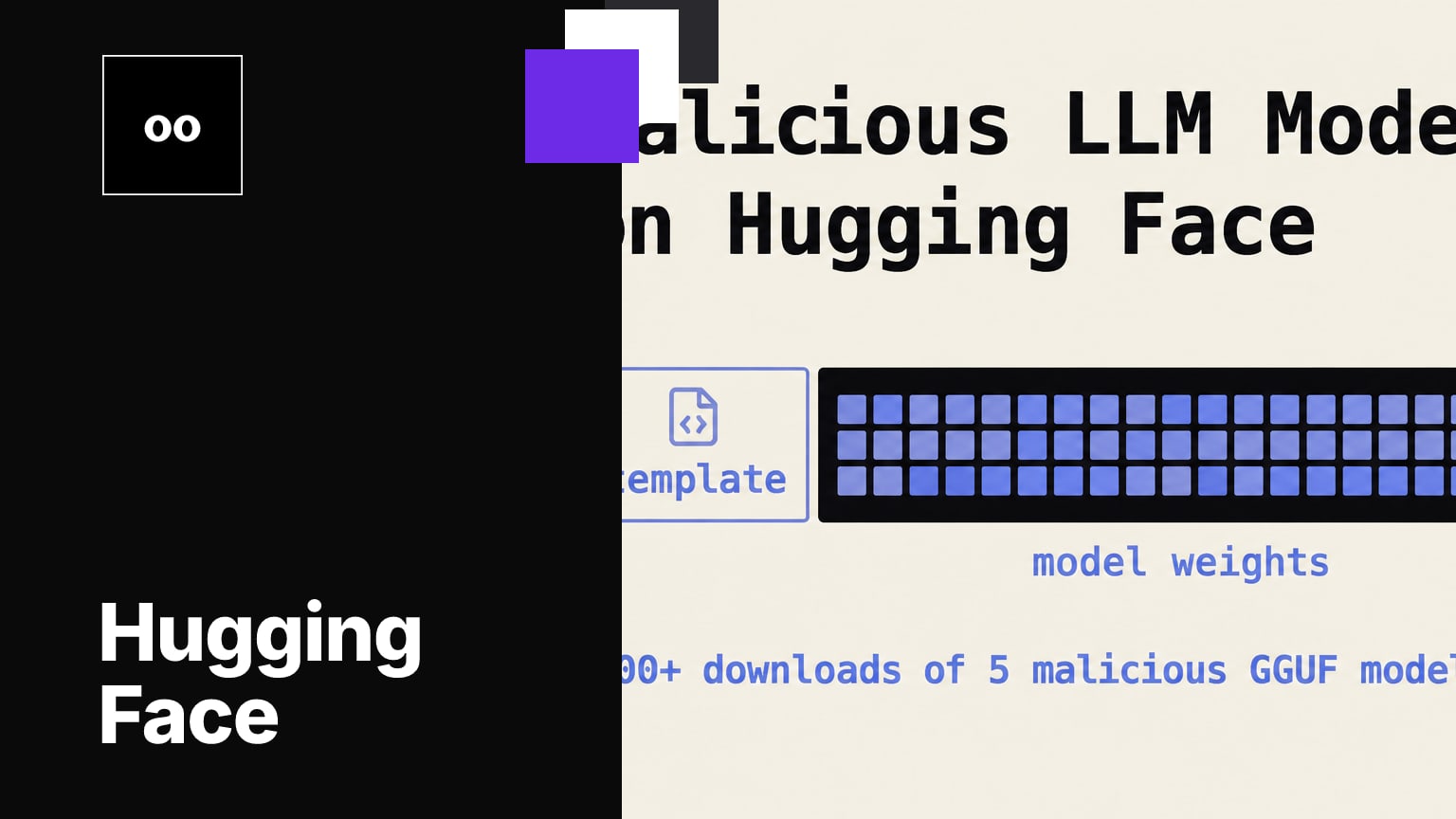
Düzgün/Root0ne reported finding five malicious GGUF models in a scan of 3,273,389 public Hugging Face model repositories.
- 02
The five repositories had 2,428 downloads in the researcher’s tally as of November 27, up from 1,502 at the November 26 scan.
- 03
Two repositories reportedly carried a Windows trojan; three others contained instructions aimed at coding agents.
- 04
Treat the download figure as repository activity, not a count of people who opened a file: the tally can include repeat and automated fetches.
- 05
For screening, GGUF Radar’s documentation says it checks files for hidden malware and poisoned chat templates without running the model or template.
What the researcher reported
Düzgün, publishing as Root0ne, disclosed the findings on November 27 after scanning 3,273,389 public Hugging Face model repositories.[1][2] The researcher reported five malicious GGUF models and said their repositories had accumulated 2,428 downloads by that date.[2] The tally rose from 1,502 on the November 26 scan, a gain of more than half in one day.[2] Two named Mir2k repositories accounted for 1,488 and 458 downloads in the researcher’s tally; a timdedid repository accounted for 271.[2]
Two reported infection paths
The researcher said two repositories carried a Windows trojan, while three others contained instructions aimed at coding agents.[1] In the timdedid templates, a trigger phrase caused a fake system directive to tell an agent with shell access to download and run a script.[2] The researcher said the Mir2k templates were changed so the model began every answer with a PowerShell command for a user to run.[2] The disclosed paths depended on someone or an agent running a suggested command; merely loading a file did not establish that malware executed.[1]
What was hidden in the files
The researcher said the Mir2k GGUF files concealed a Windows program called ollie after their tensors, and that data after that point is never read and does not change how the model loads or behaves.[3][2] One model was padded with about half a megabyte of filler; the second carried the same program compressed with raw Deflate.[2] The reported ollie program was an 11.47 MB Windows x64 executable.[2] The researcher said it could steal saved passwords from Chrome, Edge and Brave, support keylogging and screen or webcam capture, and mine Monero over Tor while an infected computer was idle.[2]
How to interpret the figures
The reported 2,428 figure counts downloads, not confirmed installations or affected people.[2][1] Downloads can include repeated fetches, automated jobs and people who never load a file.[1] The researcher said the three timdedid models did not yield the next stage of the attack.[1] The researcher also said the scan parsed 572,184 chat templates statically, without executing them, and read GGUF headers and file ends through HTTP Range requests rather than downloading entire models.[2] The five repositories were reported still online on November 27.[2]
A screening option
GGUF Radar’s GitHub documentation says the tool checks LLM model files for hidden malware and poisoned chat templates without running the model or template.[4] It works on GGUF files stored on disk and on models hosted on Hugging Face.[4] The documentation also says it can build a clean GGUF copy while preserving model weights, and requires Python 3.10 or newer.[4] This is a documented capability, not evidence that the tool was used in the reported scan or that any repository was remediated.
Teams evaluating open model files should distinguish a download count from evidence of execution or compromise. Review both model artifacts and chat templates, and make any agent or user action that runs a command a deliberate security checkpoint.
Why it matters
AI training for your team
kju.ai is built for teams: daily sessions, team analytics, and rollout support for your organization.
How this developed
28 November 2026
Researcher reports five malicious GGUF models on Hugging Face
Sources
- Researcher reports Windows trojan and malicious instructions in Hugging Face GGUF repositories · Mushimumushimu.com
- GGUF LLM Models with Hidden Malware on Hugging Face Reached 2400+ Victims | Malsparkmalspark.com
- GGUF Malware: 5 Models, 2,428 HF Downloads (Nov 2026) | explainx.ai Blogexplainx.ai
- GitHub - Root0ne/gguf-radar: Checks LLM model files for hidden malware and poisoned chat templates without running them, and builds clean copies of GGUF files. · GitHubgithub.com