OpenAI’s DevDay Puts Always-On Dots Beside Cheaper GPT-6.1 Sol
OpenAI used DevDay 2026 to introduce always-on Dots agents, a lower-priced GPT-6.1 Sol model, and persistent Codex environments designed to follow developers across devices.
Key takeaways · 4
- 01
Benchmark GPT-6.1 Sol against Astra workloads where token costs matter more than the final margin of model performance.
- 02
Treat each Dot’s identity, credentials, tools, and messaging access as part of an organization’s security boundary.
- 03
Evaluate reusable Codex environments for teams that need consistent permissions and configurations across local, mobile, and cloud sessions.
- 04
Plan explicit human review around autonomous coding and monitoring tasks, even when agents can continue working in the background.
A Broader Agent Platform
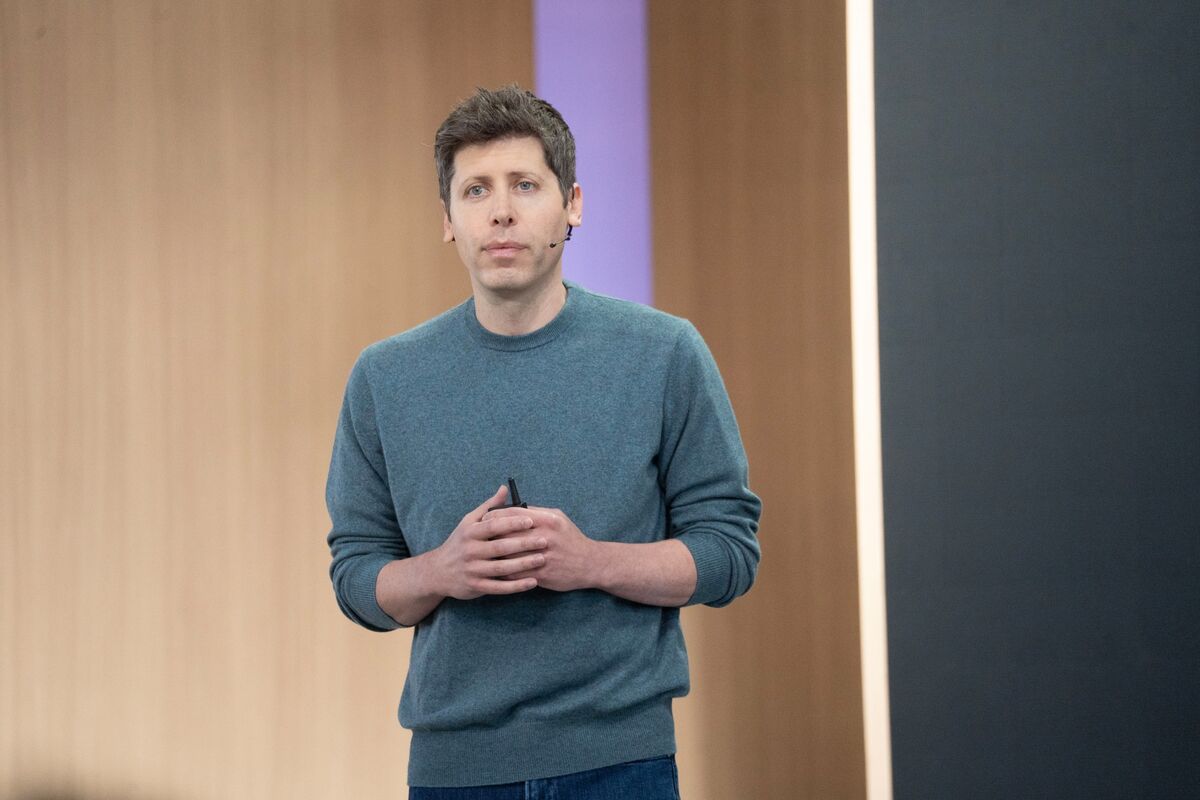
OpenAI described DevDay 2026 as its biggest yet, with more than 20 major announcements spanning ChatGPT, Codex, models, and new ways of working with AI. [1] At the event, the company introduced agents designed to take on ongoing responsibilities and new ways for people and AI to work together. [1]
OpenAI said ChatGPT has 1.2 billion weekly users and is being opened as a shared surface where people and agents can collaborate and developers can launch native experiences. [1] OpenAI also launched Dots, a personal agentic assistant powered by GPT-6 Astra and designed to pursue user-defined goals continuously in the background with minimal oversight. [3]
How Dots Operate
OpenAI says users can begin with a primary Dot, give it a name, and personalize it, while the company envisions teams of Dots eventually working together for users. [3] The company’s examples include a developer assigning a Dot to monitor customer feedback and implement fixes, and a scientist using one to rerun analyses when new experimental data arrives. [3]
Users can message Dots through Slack, Teams, and other organizational platforms, with text-message support planned for later. [3] Individual Dots can receive specific identities, credentials, and tools through existing systems, and OpenAI is working with Microsoft on integration with Agent 365 security controls. [3] The Verge positioned Dots as a rival to Meta’s recently launched Muse and noted that Muse is free while Dots initially targets paid ChatGPT plans. [6]
Sol Narrows the Gap
OpenAI presented GPT-6.1 Sol at DevDay one week after launching GPT-6 Sol. [4] The company says GPT-6.1 Sol delivers nearly the same intelligence as GPT-6 Astra for agentic coding, computer use, and professional work at one-fifth of Astra’s standard input and output token prices. [4]
At low reasoning effort, OpenAI says the share of responses containing a factual error fell from 11.4 percent with GPT-6 Sol to 7.7 percent with GPT-6.1 Sol. [4] Across all reasoning settings, the company says GPT-6.1 Sol’s error rate remains within 1.9 percent of GPT-6 Astra, and the model is available in ChatGPT Work and Codex but not yet in Chat. [4]
Codex Moves Across Devices
OpenAI introduced reusable Codex cloud development environments that developers can access from different devices, extending the engineering agent beyond a developer’s laptop. [2] While Codex already supported remote cloud tasks, the new environments are more persistent and configurable instead of treating each task as an isolated remote sandbox. [2]
OpenAI says the environments should let tasks start faster and provide teams with shared workspaces containing approved settings and permissions. [2] The refreshed Codex CLI adds voice-directed tasks and an /agents view for delegating and tracking concurrent work, while the ChatGPT desktop app gains code-review summaries, change exploration, issue questions, and automatic initial reviews. [2]
What it means
Dots packages persistent, independently acting assistance into a named product, while Muse supplies the clearest competitive reference: Meta’s product is free, whereas Dots initially sits behind paid ChatGPT plans. GPT-6.1 Sol offers a different trade-off, aiming to approach GPT-6 Astra across agentic work while charging one-fifth of its standard token prices. Reusable Codex environments complement that model strategy by giving coding agents persistent configurations and shared permissions across devices. Together, the announcements make continuity—of goals, environments, credentials, and work—the defining feature of OpenAI’s agent push. What the sources don't address: how OpenAI will measure and constrain failures when Dots and Codex act continuously with organizational credentials and limited oversight.
OpenAI is combining persistent agents, lower-priced model inference, and reusable execution environments into a more continuous form of AI-assisted work. Practitioners will need to evaluate not only model quality, but also how identities, credentials, permissions, environments, and human review are managed over long-running tasks.
Why it matters
Put this to work — one session a day, built for your industry.
Create a free account for a daily session — eight questions and one real-work challenge, on the news that affects your role.
Start freeHow this developed
30 September 2026
OpenAI’s DevDay Puts Always-On Dots Beside Cheaper GPT-6.1 Sol
30 September 2026
Event created from source cluster.
Sources
- DevDay 2026 RecapOpenAI News
- Altman on OpenAI's IPO Plans, AI Agent Dots, AI SecurityBloomberg Technology
- OpenAI CFO Friar on New AI Assistant, Capital RaiseBloomberg Technology
- OpenAI Will Keep Driving Down AI Prices, Sam Altman SaysBloomberg Technology
- Altman Says OpenAI Investors Patient on IPO Amid Safety FocusBloomberg Technology
- OpenAI launches Dots, its bubbly agentic avatarTechCrunch AI
- OpenAI launches Dots, its Muse competitorThe Verge AI
- OpenAI DevDay 2026: The biggest news and announcementsThe Verge AI
- OpenAI’s Dots Are Always-On AI Agents—and Its Answer to Meta’s MuseWired AI
- OpenAI unveils its Muse competitor: DotsSemafor
- OpenAI gives Codex reusable cloud environments that work across devicesTechCrunch AI
- OpenAI launches GPT-6.1 Sol, says it nearly matches GPT-6 Astra and costs lessTechCrunch AI