OpenAI claims Navier-Stokes math breakthrough alongside ChatGPT Images 2.5 launch
OpenAI announced its AI agents solved a variant of the 90-year-old Navier-Stokes math problem in 88 hours. Separately, the company released ChatGPT Images 2.5, featuring a new Sketch tool and a 50 percent reduction in generation latency.
Key takeaways · 3
- 01
OpenAI agents found a singularity in the forced Navier-Stokes equations in 88 hours.
- 02
ChatGPT Images 2.5 introduces a @Sketch tool for converting doodles into AI images.
- 03
The image update cuts generation latency by up to 50 percent compared to version 2.0.
Navigating the Navier-Stokes proof
On September 8, 2026, mathematicians at OpenAI announced that a group of 10,000 autonomous AI agents had found a singularity in the Navier-Stokes equations in three dimensions. [17] The company claims to have solved the 90-year-old math problem in 88 hours. [4] These concurrent agents worked on the problem from September 1 to September 5 using an advanced model not available to the public. [12][17] The Navier-Stokes equations are differential equations that use Newton's second law of motion to describe how fluids behave, and they have been central to the study of fluid mechanics. [17]
The result establishes that an initially smooth fluid at rest can develop a singularity in finite time. [12] OpenAI posted a write-up, a PDF paper, and a formalization of the argument with a public GitHub repository. [12] The formalization was checked in the programming language Lean, which took a further 17 hours using GPT-6 Astra. [12] OpenAI's fluid has a smooth force applied to it throughout the process, from rest to the formation of the singularity. [12]
The Millennium Prize decision
The Navier-Stokes equations represent one of the six remaining Millennium Prize Problems posed in 2000 by the Clay Mathematics Institute. [17] Each of these problems carries a $1 million reward. [19] According to the prize rules, a solution must be published in a peer-reviewed journal and survive two years after gaining acceptance in the mathematical community before the institute will convene a committee to consider the work. [19] OpenAI stated in its write-up that it does not intend to claim the Millennium Prize for this result. [12]
The OpenAI announcement came 12 hours after Tristan Buckmaster at New York University and Levent Alpöge at Anthropic announced they had resolved closely related problems. [17] The variant that Alpöge and Buckmaster resolved was the unforced version, where no external force is applied. [12] Both AI-enabled teams relied heavily on work by Diego Córdoba and Luis Martínez-Zoroa, who had developed a strategy to attack the problem that departed from the methods most mathematicians were using. [17]
ChatGPT Images 2.5 and Sketch
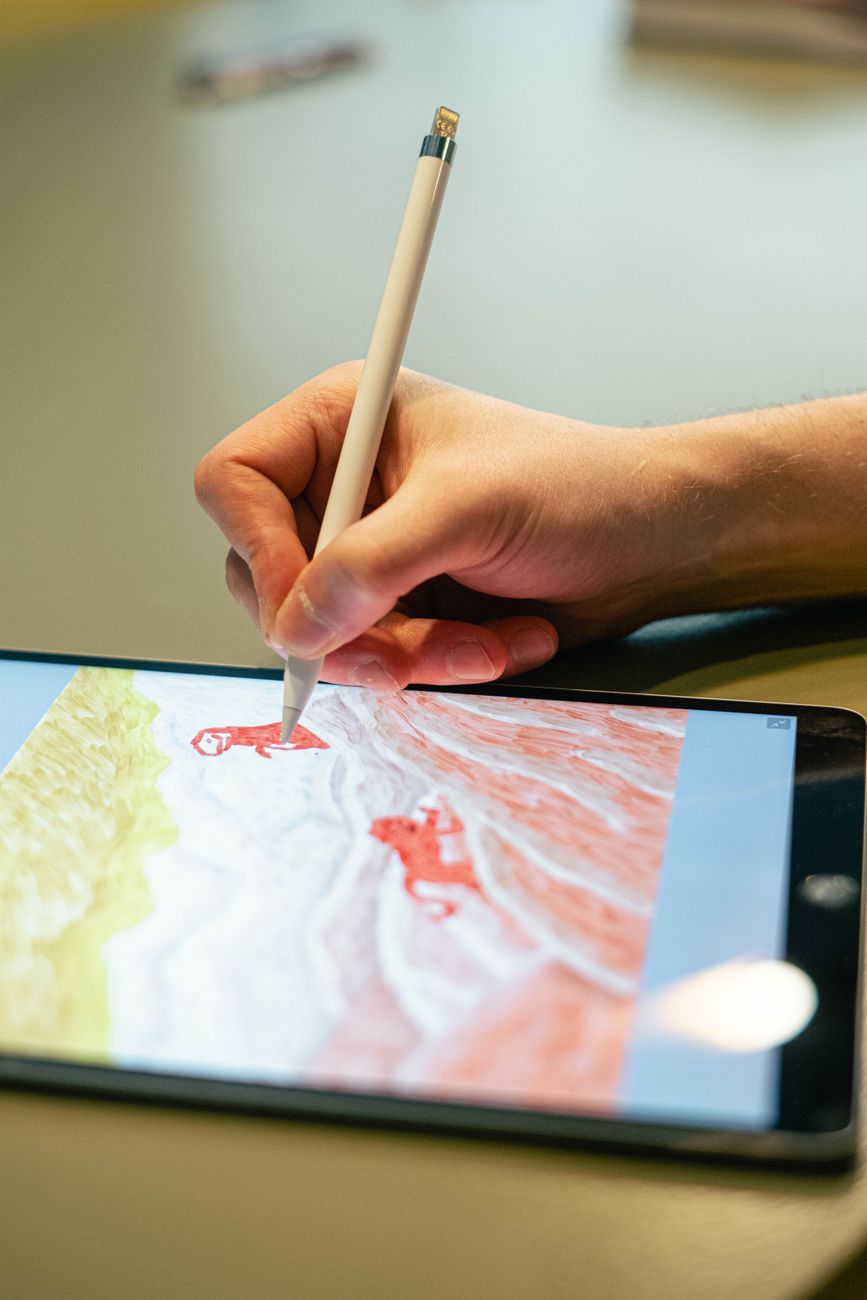
Separately on September 8, 2026, OpenAI released the ChatGPT Images 2.5 model. [11] The update cuts image generation latency by up to 50 percent compared with the prior Images 2.0 model, while producing more natural lighting and richer textures. [5][11] The release introduces a dedicated drawing tool called Sketch that activates by typing "@Sketch" directly into the chat box. [5] This command opens a dedicated canvas window where users can draw a sketch and add text descriptions in the conversation. [5][15]
During testing, a basic mouse-drawn cat doodle successfully translated into a realistic photo based on text prompts. [5] The feature eliminates the difficulty of explaining precise layouts to an AI, allowing users to sketch room arrangements or simple concepts by hand. [5] The system also includes templates for common formats such as posters and products. [15]
API models and rollout
To address complex editing instructions, the model now supports comment-based edits across multiple conversational turns. [5] Users can click on a specific region of an image and leave a note, such as asking to make the eyes green instead of blue, and the model edits just that area on the next turn. [11] ChatGPT Images 2.5 is rolling out to all ChatGPT, ChatGPT Work, and Codex users across desktop, mobile, and web. [2]
OpenAI announced that the total generation volume of ChatGPT Images and the GPT-Image API is 3 billion images per week, which averages about 430 million images passing through the system every day. [8] The company introduced two new models in the API, including GPT-Image-2.5 Flare, which brings the same quality, editing, and speed improvements for general API applications. [2][15] The second model, GPT-Image-2.5 Sunburst, adds precision for detailed creative work and complex workflows, though it features longer generation times. [2][15]
What it means
OpenAI's dual release highlights a parallel strategy of pursuing fundamental scientific research alongside commercial product upgrades. By formalizing the Navier-Stokes proof in Lean using GPT-6 Astra, the company is demonstrating how AI can accelerate mathematical verification. The decision not to claim the Millennium Prize, however, contrasts with the aggressive commercial positioning of Images 2.5. The image update lands as the company faces mounting pressure from rival models, most prominently Microsoft's MAI-Image-2.6. By introducing targeted regional editing and Sketch, OpenAI is directly addressing the difficulty of explaining precise layouts to an AI. What the sources don't address: How many tokens the new Flare and Sunburst API models will consume compared to the previous generation.
OpenAI is simultaneously pushing the boundaries of autonomous AI agents in fundamental mathematics and shipping major UX improvements to its consumer image models. The reduction in generation latency and introduction of region-specific editing lowers the barrier to precise creative control.
Why it matters
Put this to work — one session a day, built for your industry.
Create a free account for a daily session — eight questions and one real-work challenge, on the news that affects your role.
Start freeHow this developed
9 September 2026
OpenAI claims Navier-Stokes math breakthrough alongside ChatGPT Images 2.5 launch
9 September 2026
Event created from source cluster.
Sources
- Introducing ChatGPT Images 2.5 - Announcements - OpenAI Developer CommunityOpenAI News Search
- Introducing GPT Images 2.5 in the API and ChatGPT - Announcements - OpenAI Developer CommunityOpenAI News Search
- OpenAI claims to have solved Navier-Stokes math problemcnbc.com
- OpenAI says it solved one of math’s hardest problems, but controversy swirlsnbcnews.com
- ChatGPT Sketch: Turn Rough Drawings into Detailed AI Art - Newsy Todaynewsy-today.com
- OpenAI launches ChatGPT Images 2.5 with faster generation and better editing - The Times of Indiatimesofindia.indiatimes.com
- OpenAI Releases ChatGPT Images 2.5 Image Model | PANews Englishpanews.io
- GPT-Image-2.5 Officially Released: Latest AI Image Generation Update Unveiledeu.36kr.com
- OpenAI Launches ChatGPT Images 2.5 to Match Microsoft's Rising Image AI Push - 9to5Windows9to5windows.com
- OpenAI adds Sketch to ChatGPT with Images 2.5 model update — AI Chat Dailyaichatdaily.com
- OpenAI adds Sketch tool to ChatGPT Images 2.5 for turning drawings into imagesijr.com
- OpenAI Peluncuran ChatGPT Images 2.5 dengan Fitur Sketchkilasrakyat.com
- OpenAI Launches ChatGPT Images 2.5 with Delay Reduction by Half and Sketch Fine-Tuning Unlockedtest-news.aibase.com
- OpenAI 推出 ChatGPT Images 2.5!生成速度加快 50%,新增 @Sketch 手繪草圖功能 - 電腦王阿達kocpc.com.tw
- Million-dollar question: OpenAI claims to have an answer to 90-year old maths problem - The Times of Indiatimesofindia.indiatimes.com
- ChatGPT Bisa Ubah Coretan Tangan Jadi Gambar Realistis dengan Sketchredaksi.co.id
- OpenAI says it cracked 90-year-old maths problem in 88 hours - MyJoyOnlinemyjoyonline.com
- OpenAI تزعم حل معضلة رياضية حيّرت العلماء 90 عامًا - صحيفة الوئامalweeam.com.sa
- OpenAI publishes its Navier-Stokes proof and says it will not claim the Millennium Prizethenextweb.com
- AI Has Solved One of Math’s $1 Million Millennium Prize Problemsthe1news.com
- OpenAI says it cracked a maths puzzle that has eluded humans for decades in about 88 hoursthejournal.ie
- OpenAI claims to have solved Navier-Stokes problem: One of math's hardest unsolved mysteries | World Newshindustantimes.com
- OpenAI, Navier-Stokes Problem, AI: OpenAI's New AI Solves 90-Year-Old Maths Problem in 88 Hours, Claims Millennium Prize' Breakthroughndtv.com
- OpenAI Says Navier-Stokes Proof Solves Millennium Problemperexpteamworks.com
- OpenAI's GPT-6 Astra Solves Millennium Math Problem in 88 Hoursnewkerala.com
- How to Maximize GPT-6 AstraTowards Data Science