OpenAI’s leadership shakeup signals a sharper, product-first turn
OpenAI’s latest executive exits and science-team overhaul suggest the company is tightening its structure around product delivery, compute efficiency, and a new push toward agentic AI.
Key takeaways · 4
- 01
Watch for slower near-term experimentation as OpenAI rewires teams and responsibilities.
- 02
Expect research priorities to move closer to product roadmaps and infrastructure constraints.
- 03
Sora’s closure shows OpenAI is reallocating compute toward higher-leverage bets, not just cutting costs.
- 04
The departures reinforce how quickly strategy can change when leadership changes at frontier AI firms.
A leadership reset
OpenAI’s latest shakeup is notable not just for who is leaving, but for what those departures imply about the company’s next phase. Bill Peebles, who led Sora; Kevin Weil, the VP for Science; and Srinivas Narayanan, a senior figure in B2B applications, are all out as the company reorganizes around new priorities [1][2]. The coincidence of these exits with broader strategy shifts and reported medical leaves makes the transition look less like isolated turnover and more like a deliberate reset.
For observers of frontier AI companies, the pattern matters because leadership moves often precede changes in product cadence and internal power. These are not peripheral managers; they were tied to visibly important efforts, from a viral consumer video app to science and enterprise workstreams [1]. When that much responsibility moves at once, the practical question becomes whether OpenAI is simplifying decision-making or losing institutional memory at a sensitive moment.
Science moves closer
OpenAI says the science division is being reorganized so research sits closer to model capabilities and infrastructure, rather than operating in a more isolated lane [1]. That phrasing matters. It suggests the company wants scientific work to be evaluated not only by research novelty, but by how directly it can be converted into product features, platform improvements, and operational efficiency.
The likely upside is speed. If science, product, and infrastructure teams are working in a more integrated loop, new capabilities may move from lab to release faster, and engineering tradeoffs may be easier to resolve. But integration can also reduce the room for open-ended research, especially if teams are now judged by shorter-term shipping goals. In other words, the reorg may improve execution even as it narrows the company’s tolerance for speculative work [1][3].
Sora loses its place
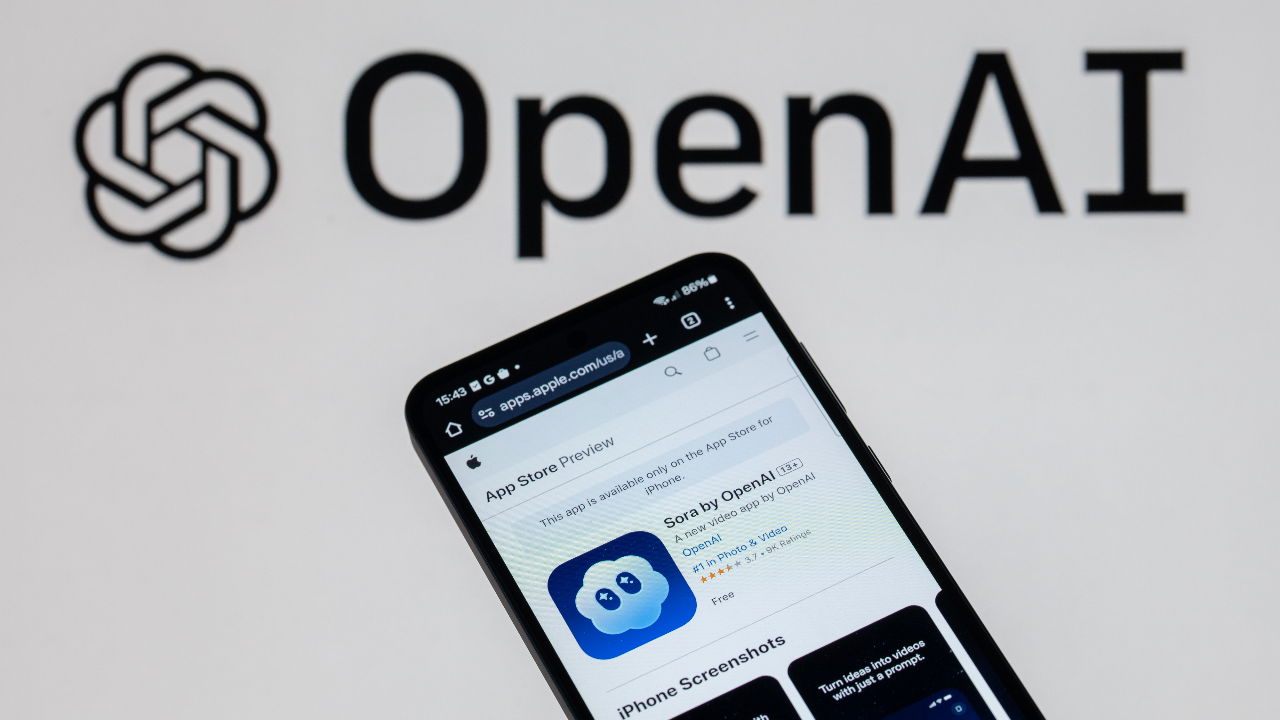
The shutdown of Sora is the clearest sign that OpenAI is reprioritizing its compute budget and commercial attention. Sora had a moment of momentum: the short-form video app reached the top of Apple’s App Store under Peebles’ leadership, making it one of the company’s most visible consumer experiments [1]. Its closure shows that visibility alone is not enough if a product does not fit the company’s next strategic frame.
OpenAI appears to be moving away from standalone media-style products and toward more scalable systems, especially “agentic AI” that can automate decisions and workflows [1]. That shift matters because video generation is compute-intensive and can be spectacular without necessarily becoming durable infrastructure. For developers and creators, the message is blunt: OpenAI is willing to abandon a successful showcase if the resources can be redeployed into a higher-priority platform bet.
What builders should watch
The broader signal is that OpenAI is becoming more selective about where it spends talent and compute, even if that means shrinking high-profile projects [1][3]. For startups and enterprise teams that depend on OpenAI’s roadmap, the risk is less about outright instability than about changing assumptions: what looked like a core bet one quarter can become a side experiment the next. That makes partner planning, model selection, and feature dependency more important than ever.
The restructuring also hints at a maturing posture. Rather than chasing every visible consumer use case, OpenAI seems to be aligning around the parts of the stack that can support long-term platform economics: infrastructure, model capability, and automation-heavy products [1]. If that reading holds, the company’s next competitive edge may come less from splashy apps and more from tighter execution across research, deployment, and enterprise-facing utility [3].
For AI teams, the story is a reminder that frontier-model companies are increasingly optimizing for delivery, not just research prestige. When leadership and org structure shift this quickly, product timelines, model access, and feature priorities can change with little warning. It also signals a broader industry pattern: the next phase of generative AI may be defined by operational integration and automation, not by standalone showcase apps.
Why it matters
Put this to work — one session a day, built for your industry.
Create a free account for a daily session — eight questions and one real-work challenge, on the news that affects your role.
Start freeSources
- OpenAI Leadership Shakeup: Key Executives Depart Amid Strategic Reorgopentools.ai
- Nouveaux départs au sein de la direction d'OpenAIfr.businessam.be
- Several managers leave OpenAIse.marketscreener.com
- OpenAI loses multiple executives in latest leadership shakeupcnbc.com
- OpenAI’s Former Product Chief and Sora Head Leave Company - Bloombergbloomberg.com
- OpenAI’s former Sora boss is leaving | The Vergetheverge.com