OpenAI Codex Evolves into Agentic Coding Powerhouse, Escalating Rivalry with Claude Code
OpenAI has unveiled a sweeping update to Codex, transforming it from a code-generation tool into an autonomous AI development agent capable of managing workflows, controlling desktops, and retaining long-term memory—all while intensifying competition with Anthropic's Claude Code.
Key takeaways · 6
- 01
Codex can now control Mac desktops, browse the web, generate images, and automate multi-step workflows in parallel.
- 02
A persistent memory feature lets Codex recall user preferences and previous sessions, streamlining recurring tasks.
- 03
Expanded integrations—over 100 plugins—connect Codex with tools like GitHub, Slack, Notion, Microsoft Suite, and more.
- 04
A new $100/month ChatGPT Pro plan increases Codex usage limits fivefold, targeting power users and enterprises.
- 05
OpenAI and Anthropic diverge philosophically: Codex runs in managed cloud containers, while Claude Code prioritizes local execution and privacy.
- 06
Usage of Codex has soared, with over 3 million weekly active users and rapid month-over-month growth.
Codex Steps Beyond Code Generation
For years, AI coding assistants were defined by autocompletion and code suggestion features. OpenAI’s recent Codex update, however, fundamentally transforms the tool’s scope and ambitions. Codex can now autonomously interact with desktop environments—navigating, clicking, and typing on a Mac in the background without interfering with the user’s ongoing work. Multiple agent instances operate in parallel, handling tasks such as application testing, front-end iteration, and automation within apps lacking an API [1][2].
The update also debuts in-app web browsing, allowing Codex to execute commands across browser-based tools. Users can comment directly on web pages for precise, context-specific interactions, which is especially beneficial for frontend and game development. This shift positions Codex as less of a coding widget and more of a digital collaborator with persistent, cross-application utility [1][5][9].
Crucially, Codex’s reach now includes workflow management, with support for reviewing pull requests, coordinating multi-file edits, and managing development across local and remote environments. By seamlessly connecting the dots between code, documentation, issue tracking, and UI, Codex aspires to take tedious coordination off the developer’s plate [4][10].
Persistent Memory and Context Awareness
A defining addition to Codex's capabilities is its new memory system—an opt-in feature that enables the agent to recall user preferences, corrections, and prior work. This eliminates the need for developers to repeatedly supply context on ongoing projects, substantially reducing friction for long-term or complex workflows [2][5][9].
Codex can now preserve conversation threads, allowing automations to pick up exactly where they left off, even across days or weeks. Scheduled tasks and context-aware suggestions enable Codex to proactively identify outstanding items, such as unresolved pull requests or follow-ups in connected tools like Slack, Notion, and Google Docs. This memory feature is being previewed first for desktop app users signed in with ChatGPT, with broader support rolling out to enterprise, education, and European users soon [2][5].
The system leverages connected plugins and project metadata to provide personalized recommendations. This means Codex can remind users of unfinished code reviews, bring up related code snippets, or retrieve design documents precisely when needed. The shift from reactive assistance to proactive, context‐sensitive agent reflects a broader industry move toward genuinely intelligent, sustained automation [9][10].
Expanding Integrations and Workflow Automation
The refreshed Codex ecosystem boasts more than 100 plugins, linking seamlessly with an expanding roster of development and productivity applications. Integrations now include household names like GitHub, Slack, GitLab, Atlassian Rovo, CodeRabbit, Microsoft Suite, Notion, Databricks, and more. These connections let Codex coordinate ticket triage, automate code reviews, summarize discussions, and manage day-to-day development logistics—all from within a unified agentic interface [2][5][9].
The in-app browser further empowers Codex to function as the connective tissue of the modern developer’s stack, capable of orchestrating work across cloud and local environments. For example, Codex can build daily task lists from calendar data, generate instant image assets via gpt-image-1.5, and manage documentation or requirements in Notion or Confluence. This degree of cross-tool orchestration has previously required considerable manual stitching by developers or DevOps teams [4][2].
Such broad integration represents OpenAI’s response to Anthropic’s aggressive feature rollouts for Claude Code, and signals an enterprise-focused pivot for the Codex platform. OpenAI is betting that the convenience and efficiency of one AI agent spanning the entire workflow will be a compelling proposition for teams managing ever-growing toolkits and codebases [10][4].
Pricing, Usage Tiers, and Market Momentum
To capitalize on burgeoning demand, OpenAI has overhauled Codex’s pricing structure. The headline addition is the new $100-per-month ChatGPT Pro plan, designed to deliver five times the Codex capacity of the popular $20 Plus tier. For heavy enterprise users and fast-growing engineering teams, this new plan marks a middle ground between affordability and volume, while the $200 Pro plan remains available for high-intensity operations [6][7][8].
The Pro tier features GPT-5.4 and 5.3-Codex models with increased session limits and access to Codex-Spark (in research preview). A launch promotion through May 2026 offers a tenfold usage boost, and the new pricing directly matches Anthropic’s Claude Max plan to court developer loyalty [6][8].
Codex’s user base underscores this demand. Weekly active users have soared to over 3 million, up from 2 million merely a month earlier—a stunning 70% month-over-month growth and a fivefold increase in just three months. With Pro subs yielding $1,200 annually per user, OpenAI aims to close the gap with Anthropic, whose Claude Code has already eclipsed $2.5 billion in annualized run-rate revenue [8][6][7].
Codex vs. Claude Code: Agentic Philosophies Diverge
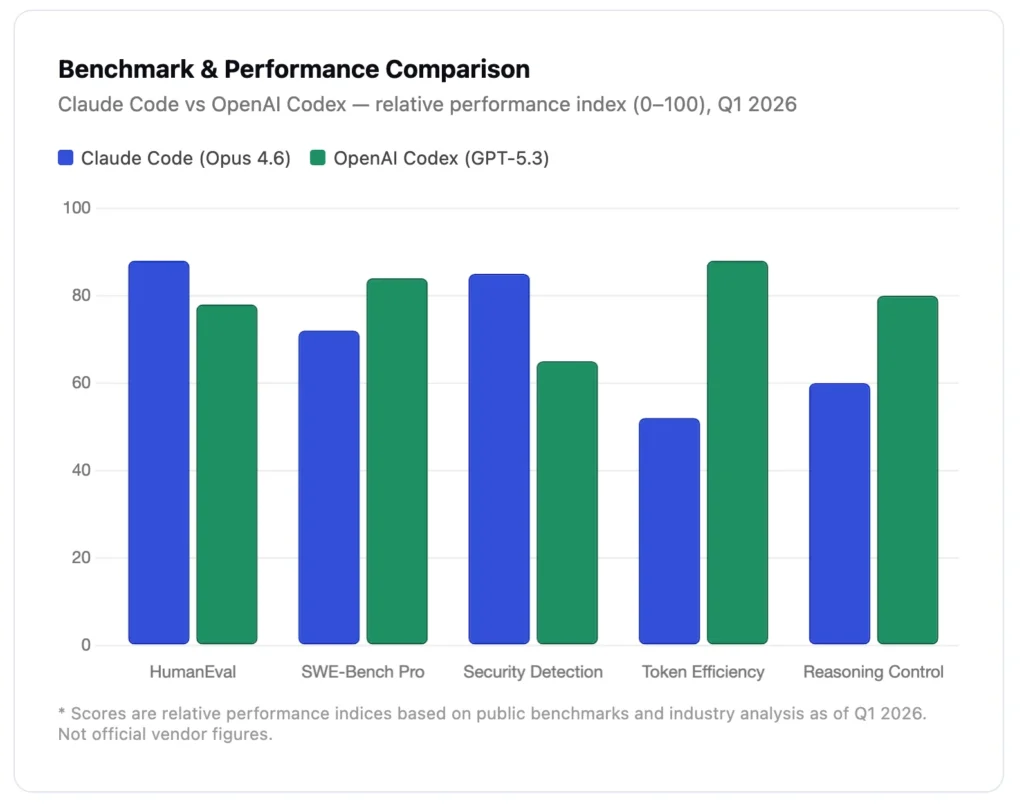
While OpenAI Codex and Anthropic’s Claude Code compete in the same product category, their underlying architectures are fundamentally different and reflect diverging user values. Codex operates almost entirely in managed cloud containers spun up by OpenAI; tasks are delegated to these isolated environments, allowing developers to ‘fire and forget’ code work while focusing elsewhere. In contrast, Claude Code is terminal-first and designed for local execution—meaning code never leaves the developer’s machine except for inference, key for those in security-conscious or privacy-sensitive settings [3][4].
Claude Code emphasizes direct filesystem and terminal access, allowing complex workflows, deep integration with local Git, and even developer-in-the-loop intervention. Its ‘Agent Teams’ feature enables coordinated, multi-agent tasks across large codebases, an area where Codex’s approach—parallel, independent agents—prioritizes speed and scale in the cloud [3].
Performance-wise, both AI agents tout extended context windows (up to 1 million tokens in beta) and strong integration with IDEs. However, Codex leans heavily into ecosystem extensibility with API-driven plugins and an open-source CLI, while Claude Code’s approach is more ideal for those seeking compliance, fine control, or advanced security vulnerability detection [3].
The philosophical split promises to shape adoption: OpenAI targets fast, hands-off automation with deep integrations, while Anthropic appeals to organizations prioritizing control, privacy, and local execution. This dichotomy is likely to persist as the arms race for next-gen coding agents continues into 2027 [3][4].
Wider Implications for Developer Work
The current wave of updates transforms Codex from an assistant for writing code snippets into a true project partner—able to coordinate multi-step flows, tap into relevant data across business tools, and maintain context over time. For developers, this means fewer repetitive tasks, smarter context resumption, and less mental overhead as projects grow in complexity and scale [1][2][5].
The rise of autonomous coding agents also portends changes to team structure: routine code review, documentation, and even sprint planning can increasingly be automated. As integration and memory features mature, AI agents like Codex may become de facto project managers, proactively identifying roadblocks or opportunities for acceleration, and letting teams focus on design and strategy.
However, these advances carry tradeoffs—especially in data privacy, platform lock-in, and the challenge of maintaining robust oversight when much of the scaffolding work is delegated to AI. As competition heats up, developers and organizations will need to assess not just feature parity, but also which agentic philosophy aligns with their priorities for security, transparency, and ecosystem fit [3][10][4].
Codex's evolution signals a turning point for AI-driven developer productivity, shifting from assistive to autonomous workflows. For practitioners, these changes underscore the need to evaluate agent capabilities not just for code generation, but for holistic project and workflow management—while balancing productivity gains against considerations of data privacy and infrastructure control.
Why it matters
Put this to work — one session a day, built for your industry.
Create a free account for a daily session — eight questions and one real-work challenge, on the news that affects your role.
Start freeSources
- OpenAI’s big Codex update is a direct shot at Claude Code - NewsBreaklocal.newsbreak.com
- OpenAI expands Codex with desktop & workflow toolsitbrief.co.uk
- Claude Code vs OpenAI Codex: The Complete Comparison (2026) - 헤이든의 전산실 (Hayden's Server Room)it-server-room.com
- OpenAI Turns Codex Into AI Agentaiplanetx.com
- OpenAI expands Codex with desktop & workflow toolsitbrief.com.au
- OpenAI’s new $100 ChatGPT Pro plan targets Claude Max with five times the Codex accessthenextweb.com
- OpenAI Introduces $100 Monthly Pro Plan To Expand Codex Access And Compete With Anthropicdigitalmarketreports.com
- OpenAI Launches $100 ChatGPT Pro Tier With 5X More Codex Usage - The SaaS Sentinelsaassentinel.com
- OpenAI’s big Codex update is a direct shot at Claude Code - Pitchdeck Malaysiapitchdeck.my
- OpenAI targets Anthropic with Codex upgrade that expands desktop ...timesofindia.indiatimes.com
- OpenAI upgrades Codex with desktop control features amid rivalry ...storyboard18.com
- OpenAI takes aim at Anthropic with beefed-up Codex that gives it ...x.com