Nvidia confirms H2 2026 Vera Rubin rollout amid record $75B data center quarter
Nvidia is shipping its Vera Rubin architecture in the second half of 2026, targeting massive efficiency gains as the company forecasts a $1 trillion revenue pipeline. Despite upcoming hardware price hikes, the new architecture promises to radically lower inference costs.
Key takeaways · 4
- 01
Vera Rubin systems promise a 10x lower cost per token for AI inference.
- 02
Nvidia's data center revenue hit $75 billion, jumping 92% year over year.
- 03
Hardware prices for Vera Rubin and Grace Blackwell systems will rise 15%+ in early 2027.
- 04
Anthropic committed to 2 gigawatts of AMD MI450 GPUs starting in 2027.
Vera Rubin's scale and rollout
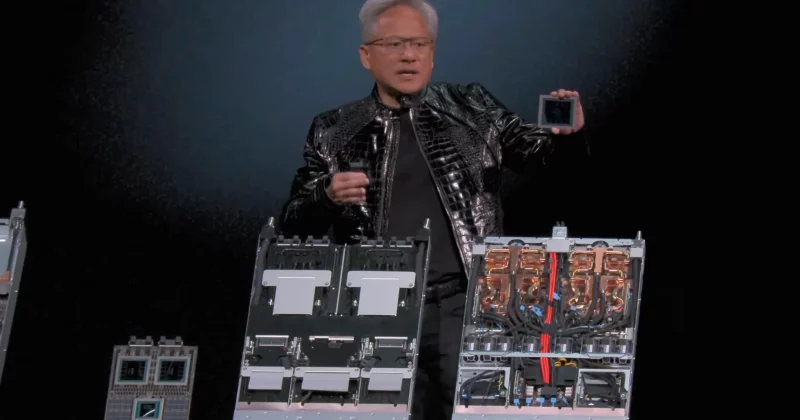
Nvidia confirmed the Vera Rubin AI platform is on schedule for partner availability in the second half of 2026. [2] The flagship NVL72 system packs 72 Rubin GPUs and 36 Vera CPUs into a single rack, delivering 3.6 exaflops of NVFP4 inference compute. [2] The architecture promises five times the inference performance of current Blackwell systems at the rack level. [2]
Dell is deploying this hardware, which 5,000 enterprises including Lilly, Samsung, and Honeywell are already utilizing. [1] The architecture is designed to deliver a ten times lower cost per token for AI inference compared to Blackwell. [1][2]
Record revenue and surging demand
Nvidia reported data center revenue of $75 billion, marking a 92 percent increase from the previous year. [3][6] Networking revenue nearly tripled year over year. [6] Overall company revenue for the quarter reached $81.6 billion. [5] CEO Jensen Huang stated that demand has gone "utterly parabolic" and expects $1 trillion in Blackwell and Rubin revenue from 2025 through calendar 2027. [1][6]
Alongside these financial milestones, the company refreshed its share buyback program with an $80 billion authorization and raised its dividend to 25 cents per share. [5][6]
Pricing hikes and AMD's push
Some of Nvidia's top customers have been told that prices will jump by more than 15 percent on systems including Vera Rubin and Grace Blackwell starting in early 2027. [7] Customers were reportedly warned about these AI-related price hikes as the hardware transitions approach. [8]
Competitor AMD reported record data center revenue of $6.72 billion, a 107 percent increase year over year. [6] Anthropic has committed to up to two gigawatts of AMD's MI450 series GPUs in Helios racks, with the first gigawatt starting in 2027. [6]
What it means
Nvidia’s combination of massive hardware scale and significant token cost reductions paints a challenging picture for competitors, even as AMD gains traction with major clients like Anthropic. While the anticipated 15 percent hardware price increase could pressure capital expenditures, the 10x drop in token costs may ultimately offset those upfront premiums for heavy inference users. Nvidia's staggering $75 billion data center quarter highlights how firmly it controls the high-end infrastructure market compared to AMD's $6.72 billion data center segment. What the sources don't address: How the projected 3,400 percent growth in global token consumption will strain data center power grids before these next-generation exaflop racks even come online.
The transition to the Vera Rubin architecture fundamentally alters the economics of AI deployment. Lower token inference costs will make massive agentic applications viable, but teams must navigate impending capital expenditure increases for the hardware itself.
Why it matters
Test yourself on this story — 3 questions.
Create a free account to take the quiz, earn XP, and get a daily session built for your industry.
Take the quizHow this developed
30 August 2026
Archived
23 August 2026
Nvidia's Vera Rubin Enters Production Amid Spiking Demand and Looming Price Hikes
23 August 2026
Event evidence refreshed from source cluster.
21 May 2026
Event created from source cluster.
Sources
- Nvidia customers reportedly warned about AI-related price hikescnbc.com
- Nvidia confirms Vera Rubin AI platform on track for H2 2026cryptobriefing.com
- Sources: some of Nvidia's top customers have been told that prices will jump 15%+ on systems, including Vera Rubin and Grace Blackwell, starting in early 2027 (Bloomberg)Techmeme
- NVIDIA Vera Rubin Delivers 10× Lower Cost Per Token For AIquantumzeitgeist.com
- Nvidia’s Q1 2027 data center revenue jumped 92 percent from last year. | The Vergetheverge.com
- Live: Nvidia's Q1 Earnings Tonight Could Send Shockwaves Across the Market - 24/7 Wall St.247wallst.com
- Nvidia reports $81.6B revenue, $80B share buyba... | Pluangpluang.com
- AMD vs. Nvidia: Is AMD Finally Closing the AI Gap?247wallst.com