NVIDIA announces Rubin HPC GPU for scientific computing
NVIDIA announced Rubin HPC at SC26 on November 16, 2026, describing it as part of its Vera Rubin platform. The GPU is designed to accelerate simulation and data processing across science, engineering and analytics workflows.
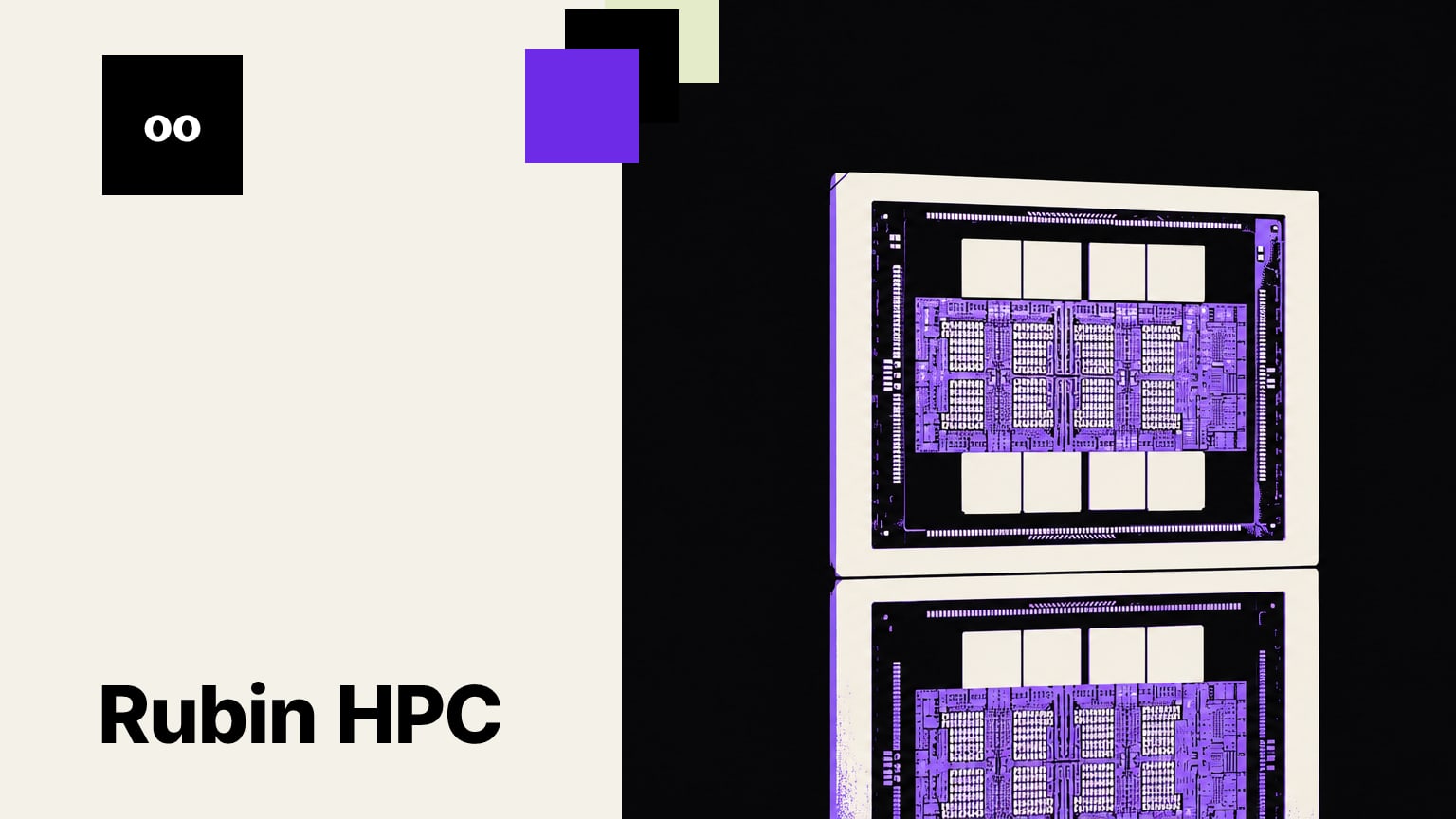
Key takeaways · 3
- 01
Rubin HPC is part of NVIDIA’s Vera Rubin platform and is designed for simulation and data processing.
- 02
NVIDIA says the GPU has more than 50,000 CUDA cores and uses sparse data acceleration and seventh-generation NVLink.
- 03
NVIDIA expects Rubin HPC to be available in 2028; simulation benchmarks have not been published.
A GPU for simulation-heavy work
NVIDIA says Rubin HPC is part of its Vera Rubin platform and is designed to accelerate simulation and data processing for science, engineering and analytics workflows.[2] The company points to climate models, engineering simulations, genomic analysis and financial risk as workloads with similar computational patterns.[2] According to NVIDIA, these workloads repeatedly retrieve a few scattered values from immense datasets, calculate a result and repeat the process at scale.[2] That description helps explain why the announcement emphasizes data movement as well as raw computing capacity.
Cores, data access and connectivity
NVIDIA says Rubin HPC has more than 50,000 CUDA cores on a single GPU, which it describes as a record count.[2] It also includes sparse data acceleration, which NVIDIA says is intended to keep those cores supplied with data.[2] For GPU-to-GPU connectivity, the company says Rubin HPC uses seventh-generation NVLink.[2] NVIDIA describes the overall approach as scaling data movement and computing together rather than increasing computing capacity alone.[2] The announcement also names sparse matrix operations, stencil computations, sorting and reductions as recurring simulation patterns the GPU accelerates.[2]
How agents fit into the workflow
NVIDIA says agents can help scientists and engineers explore more candidate materials, molecules and designs.[2] In the company’s description, agents use simulations to test ideas and guide their next steps.[2] Rubin HPC is intended to accelerate those agent-used simulations, shortening the path from exploration to scientific discovery and industrial design.[2] NVIDIA also says its CUDA-X libraries provide agents with optimized implementations of complex algorithms, including algorithms relevant to simulation and analytics.[2] The company says faster agent-invoked simulations can shorten the cycle of hypothesis, simulation and refinement.[2]
Availability and evidence still to come
NVIDIA expects Rubin HPC to be available in 2028.[2] That makes the announced timing relevant to teams planning future computing capacity, but the evidence does not specify a price or a more precise availability date. NVIDIA has not published simulation benchmarks for Rubin HPC.[3] As a result, the announcement describes intended capabilities and workloads, but does not provide benchmark results with which to quantify performance gains. NVIDIA vice president Ian Buck said faster simulation means faster discovery for agents working on science and engineering.[2]
For teams evaluating future simulation infrastructure, the announcement offers a view of NVIDIA’s design priorities: data movement, GPU connectivity and workloads used by agents. Planning should account for the stated 2028 availability and the absence of published simulation benchmarks.
Why it matters
AI training for your team
kju.ai is built for teams: daily sessions, team analytics, and rollout support for your organization.
How this developed
16 November 2026
NVIDIA announces Rubin HPC GPU for scientific computing