Lakebase Postgres Uses Branches to Restore 100 TB in Seconds
Databricks says Lakebase Postgres can restore a 100 TB database in seconds by creating a timestamped branch instead of copying snapshots and replaying logs.
Key takeaways · 3
- 01
Branch-based restoration references existing database history instead of copying snapshots onto newly provisioned storage.
- 02
Decoupling compute from storage removes several size-dependent steps from the conventional managed OLTP recovery process.
- 03
Databricks says a 100 TB Lakebase Postgres database can be restored within seconds.
How Branch Restores Work
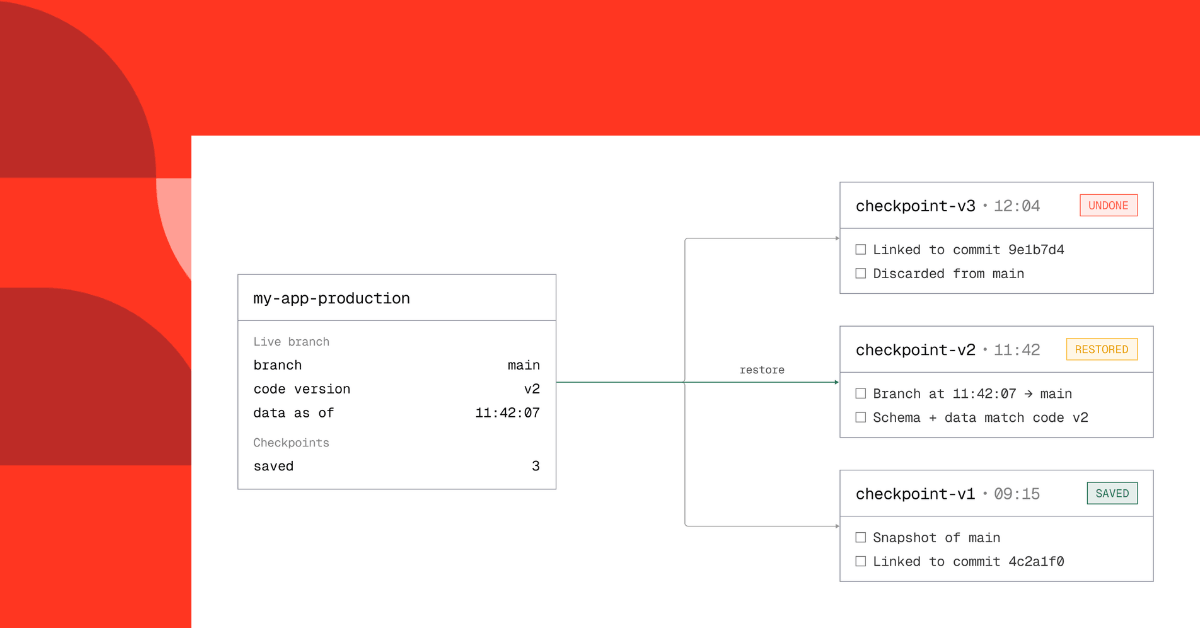
Databricks says traditional managed OLTP restores can take hours because recovery requires provisioning compute, downloading snapshots and replaying WAL files. [1] Lakebase Postgres instead decouples compute and storage, retaining immutable database history in object storage so it can be referenced without copying data to a new disk. [1] A restore creates a branch at the selected timestamp through a metadata operation rather than a multi-hour copy-and-replay process. [1] According to Databricks, this reduces restore time to seconds even for a 100 TB database and lets AI agents handle branching and undo workflows. [1]
What it means
The architectural distinction is more important than the headline restore time: Lakebase avoids the provisioning, snapshot-download and WAL-replay sequence that makes traditional managed OLTP recovery slower as databases grow. That design also turns restoration into a branch operation, making recovery and undo easier to incorporate into automated agent workflows. The comparison, however, comes from Databricks rather than an independent evaluation. What the sources don't address: whether seconds-long restores remain consistent across different production workloads, recovery timestamps and failure conditions.
Branch-based restoration changes recovery from a data-copying process into a metadata operation over existing immutable history. For AI practitioners operating stateful applications, Databricks presents this as a way to make database rollback and branching fast enough for automated agent workflows.
Why it matters
Put this to work — one session a day, built for your industry.
Create a free account for a daily session — eight questions and one real-work challenge, on the news that affects your role.
Start freeHow this developed
2 October 2026
Lakebase Postgres Uses Branches to Restore 100 TB in Seconds
2 October 2026
Event created from source cluster.