Databricks Details Autoscaling Architecture for Lakebase Postgres
Databricks has detailed the architecture behind Lakebase Postgres, which eliminates the need for upfront database sizing through automated scaling. The system relies on decoupling compute from storage to resize virtual machines in place.
Key takeaways · 3
- 01
Lakebase Postgres uses an algorithm tracking CPU, memory, and working set to drive autoscaling.
- 02
The architecture separates the compute layer from the durable storage layer.
- 03
Compute nodes can change size without moving the underlying database.
Omitting Upfront Sizing
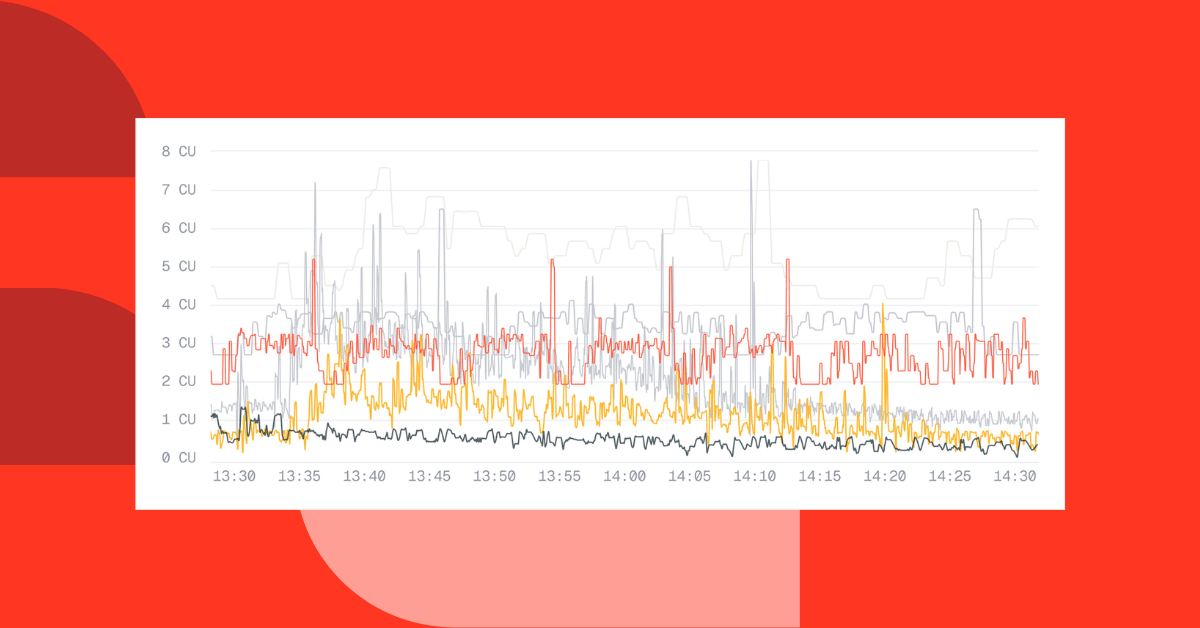
Lakebase Postgres omits the database sizing experience altogether thanks to autoscaling. [1] Instead of requiring developers to manually provision specific hardware for peak workloads, the platform dynamically adjusts resources on the fly. [1] The system's autoscaling responsiveness comes from in-place VM resizing and an algorithm that tracks CPU, memory, and the database’s working set. [1]
Decoupling Compute and Storage
Traditional Postgres runs as a stateful process tied to a machine and its disks. [1] The Lakebase Postgres architecture separates those responsibilities by dividing the system into distinct compute and storage layers. [1] The compute layer runs Postgres and executes queries using RAM and local NVMe, but owns no durable state. [1] The separate storage layer owns durability and history, utilizing safekeepers, pageservers, and object storage. [1] Because of this architectural foundation, a compute node can start, stop, move, or change size without moving the database underneath it. [1]
What it means
The separation of compute and storage in Lakebase Postgres aligns with modern cloud-native database design, moving away from monolithic, stateful architectures. By making the compute layer stateless and reliant on local NVMe for low-latency query execution, Databricks enables seamless vertical scaling without the downtime typically associated with migrating databases to larger instances. This directly addresses the compute waste inherent in provisioning for peak database workloads upfront. What the sources don't address: How the autoscaling algorithm handles sudden, extreme traffic spikes before the in-place VM resizing can complete.
The ability to autoscale Postgres databases dynamically reduces compute waste and operational overhead. Separating compute from storage provides greater flexibility for infrastructure management.
Why it matters
Turn this story into practical AI skill after launch.
Get the release link for daily sessions built around your role and industry.
Join the waitlistHow this developed
31 August 2026
Databricks Details Autoscaling Architecture for Lakebase Postgres
31 August 2026
Event created from source cluster.
Sources
- Autoscaling Lakebase PostgresDatabricks