Terafab Mega-Fab: Intel Teams with Musk Ecosystem for AI Chip Supremacy
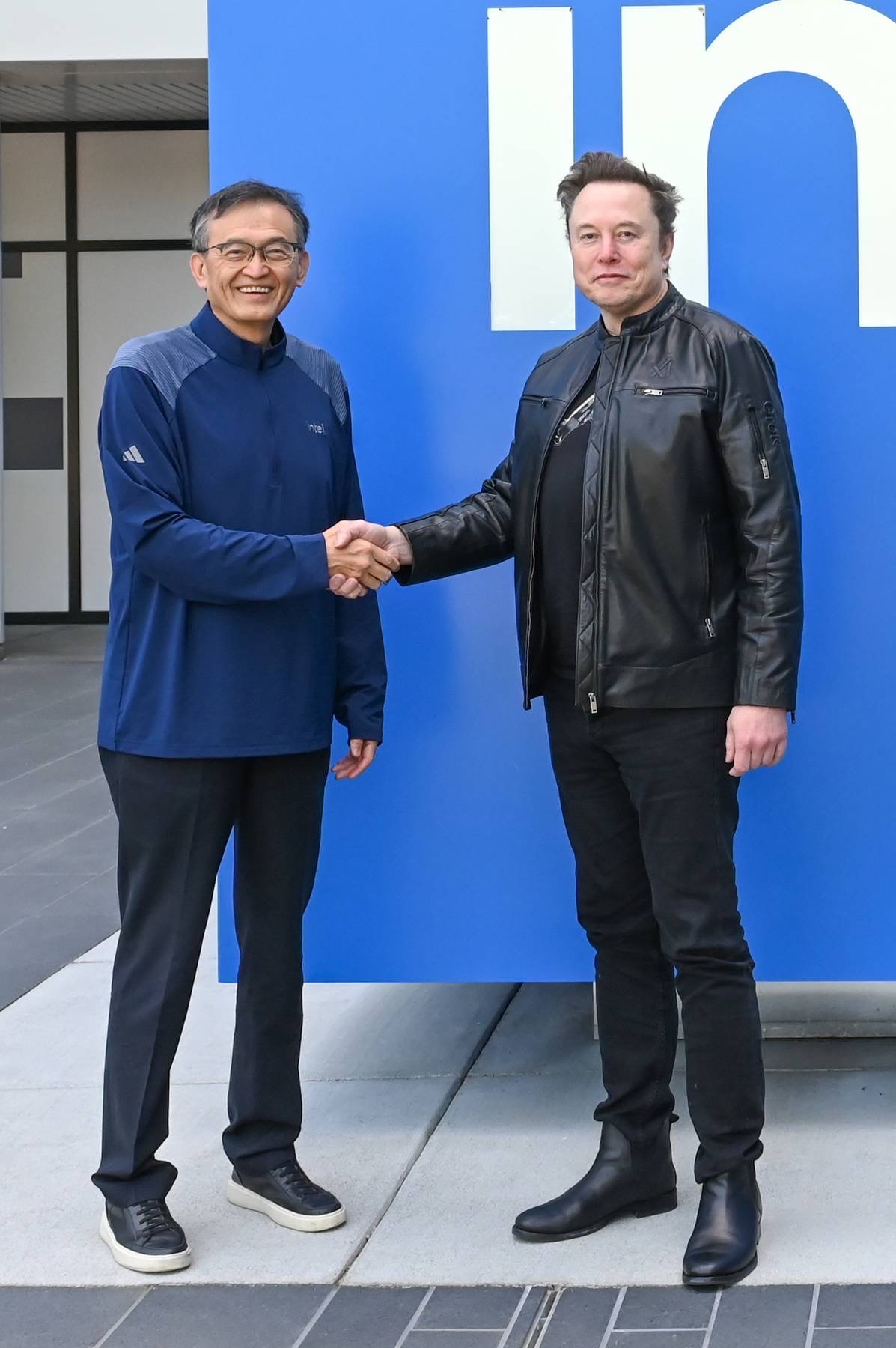
Elon Musk’s Terafab project has secured Intel as a pivotal partner, marking a $20-25 billion semiconductor initiative in Austin, Texas, aiming to leapfrog AI chip manufacturing capacity and rewire global supply chains for robotics, autonomous vehicles, and orbital AI.
Key takeaways · 4
- 01
Terafab aims to create 1 terawatt per year of compute silicon, vastly outpacing current global AI chip output.
- 02
Intel's foundry expertise anchors the $20-25B project, accelerating Musk companies’ ability to scale robotics and orbital AI.
- 03
The initiative vertically integrates design to packaging, reducing dependence on global third-party fabs and U.S. chip vulnerability.
- 04
Intel’s involvement boosts its struggling foundry business and signals renewed investor confidence amid intense competition.
A New Paradigm: The Terafab Vision
The unveiling of Terafab represents a seminal moment in the intersection of AI, robotics, and chip manufacturing. Envisioned as a $20-25 billion vertically integrated semiconductor complex, the Austin-based project will span the entire pipeline from design through foundry to advanced packaging, erasing bottlenecks typical in global silicon supply chains [1][5]. This scale and ambition are a direct answer to what Elon Musk has repeatedly warned: compute, not capital, is now the limiting factor for exponential advances in autonomy, robotics, and space-based data infrastructure.
The site, located at the North Campus of Giga Texas, is designed to outperform traditional chip fabrication models by bringing all core processes under one roof, a stark departure from the globally disaggregated norm. With Tesla, SpaceX, and xAI as direct beneficiaries, the fab's output will focus on two chip classes—low-power, high-efficiency silicon for autonomous vehicles and robotics (including Full Self-Driving chips and Optimus humanoids), and ultra-rugged, high-power variants for satellite and orbital data center use [1][4].
The audacious target: producing one terawatt (TW) worth of annual AI compute—roughly fifty times the world’s current AI silicon output—signals a structural reset in how the world approaches large-scale semiconductor deployment for next-gen intelligent machines [1][4][5].
Intel’s Strategic Leap: Technology and Execution
Intel’s alliance with Terafab marks a strategic inflection for a company previously battered by foundry missteps and missed opportunities in the AI hardware surge. CEO Lip-Bu Tan personally underscored the deal’s importance, hailing the project as a 'step change in how silicon logic, memory and packaging will get built in the future' [3]. Intel brings crucial advanced process technology, high-volume manufacturing muscle, and packaging capabilities—assets Musk’s ecosystem lacked for delivering secure, customized, U.S.-based silicon at scale.
Terafab’s raison d’être is to give Tesla, SpaceX, and xAI strategic autonomy over bespoke chips, freeing them from global foundry shortfalls and supplier risk. This aligns with recent U.S. government efforts to fortify domestic chip manufacturing, with Intel supported by both public policy and private investment [3][5]. The project also leverages Intel’s recent process breakthroughs: its 18A node, featuring gate-all-around transistors and backside power delivery, now achieves yields above 65%, while the next-generation 14A node promises even greater performance for future applications [5].
For Intel Foundry Services, the Musk alliance comes at a time when the unit’s losses—over $10 billion in 2025—have raised alarm, yet the company continues a turnaround via asset restructuring, government backing, and new major customer wins, such as Apple’s M-series processors [3][5]. The Terafab deal positions Intel’s foundry business as a lynchpin in both the Musk supply chain and the U.S. semiconductor revival.
Market and Industry Ripples: Stock Reaction and Competitive Context
The news of Intel joining Terafab reverberated immediately through financial markets, with Intel stock rising 3-3.5%—a sharp contrast to a day when the S&P 500 fell 0.5% and the broader tech sector wavered on geopolitical jitters [2][3]. Analysts and investors interpreted the partnership as a concrete signal of Intel’s reemergence in the race for AI and autonomous hardware leadership, sharpening its narrative against foundry giants TSMC and Samsung.
Intel has faced several years of competitive stagnation, missing the early spark in AI-driven silicon and suffering from persistent foundry losses. The Terafab engagement, coupled with its recent $14.2 billion reacquisition of full control of its Leixlip, Ireland, fab, illustrates renewed strategic clarity and confidence. Institutional support—from investors and the U.S. government, which has taken equity stakes to boost chip independence—further underscores the significance of this pivot [3][5].
For Musk's ecosystem, the elimination of chip supply constraints could accelerate vehicle automation deployments and the rollout of millions of Optimus robots, as well as unlock new capabilities for space-based AI. Terafab effectively lifts a major growth ceiling for Tesla, SpaceX, and xAI, with Intel’s manufacturing credibility anchoring the plan.
Broader Implications: U.S. Chip Independence and AI Frontier
Terafab’s strategic importance transcends company profits. By anchoring cutting-edge manufacturing stateside, the project bolsters U.S. semiconductor sovereignty at a time when supply chain disruptions loom large and global demand for custom AI accelerators far outstrips availability [1][4]. This public-private convergence—involving Musk's vision, Intel's manufacturing reinvention, and U.S. policy intervention—sets a robust template for domestic high-tech capacity in the face of increasing geopolitical and market uncertainty.
Silicon autonomy for the Musk family of companies means more than operational resilience—it allows for radical design iteration and controlled IP development in autonomy, robotics, and orbital computing. With satellites and datacenters moving into space, and terrestrial demand for energy-efficient edge inference exploding, this American mega-fab will define the next era of compute infrastructure.
If successful, Terafab could serve as a proving ground for advanced packaging, integration of silicon logic and memory, and scale-out AI compute architecture—technologies at the heart of tomorrow’s intelligent machines, on Earth and off-planet [1][4]. The ramifications for system designers, hardware architects, and supply chain strategists are profound, foreshadowing intensified competition and innovation cycles that extend well beyond the Musk-Intel alliance.
With Terafab, the Musk ecosystem and Intel are challenging the AI compute bottleneck that risks stalling automation and robotics advancements. This deal not only strengthens U.S. technological self-reliance but also signals a new era of tightly coupled AI and hardware design, ushering in opportunities—and challenges—for practitioners building the next generation of intelligent systems.
Why it matters
Put this to work — one session a day, built for your industry.
Create a free account for a daily session — eight questions and one real-work challenge, on the news that affects your role.
Start freeSources
- Elon Musk's Terafab project locks up massive new partnerteslarati.com
- Intel stock surges 3% on Terafab deal with Elon Musk-linked firmsinvezz.com
- Intel stock surges 3% on Terafab deal with Elon Musk-linked firms — TradingView Newstradingview.com
- Intel Partners with Tesla and SpaceX on Terafab | NextBigFuture.comnextbigfuture.com
- Intel Joins Elon Musk’s Fab Project - Semiecosystemmarklapedus.substack.com
- Intel will help build Elon Musk’s Terafab AI chip factory | The Vergetheverge.com
- 5 Burning Questions About Elon Musk’s Terafab Chip Partnership with Intel | WIREDwired.com
- Intel Archive for April 2026 - Page 1 | The Vergetheverge.com