India to identify professions less vulnerable to AI, Goyal says
Piyush Goyal said he had directed the Commerce Ministry to identify professions considered less vulnerable to artificial intelligence. The effort will focus on sectors where AI can improve efficiency without necessarily replacing workers.
Key takeaways · 4
- 01
The Commerce Ministry has been directed to identify professions considered less vulnerable to AI.
- 02
The named sectors are handicrafts, handloom, culinary arts and tourism; Goyal said AI could improve efficiency without necessarily replacing workers.
- 03
Goyal linked attracting skilled professionals to a strong research ecosystem and an environment conducive to innovation.
- 04
He said he would help innovation and startup efforts gain a platform at major trade fairs and exhibitions.
A search for AI-resilient work
Goyal said he had directed the Commerce Ministry to begin identifying what he called AI-proof professions, described in the report as professions considered less vulnerable to artificial intelligence.[1] The ministry’s focus, he said, would be on sectors where AI can improve efficiency without necessarily replacing workers.[1] That frames the initiative as an effort to find ways technology can support work, rather than a claim that particular jobs are entirely protected from automation. Goyal said India must plan as a nation for many millions of people, and that the effort aims to help provide a better future for the country’s 1.4 billion people.[1]
Four sectors in focus
Goyal identified handicrafts, handloom, culinary arts and tourism as sectors where India could take a global leadership role.[1] He said traditional skills and human creativity remain important in these areas.[1] The ministry’s stated approach links that human contribution with opportunities to improve efficiency through AI, rather than assuming that technology must replace workers.[1] For organisations in these fields, the sector list is a signal to assess where digital tools could support work while preserving the skills and creative contributions that Goyal highlighted.
Talent, research and innovation
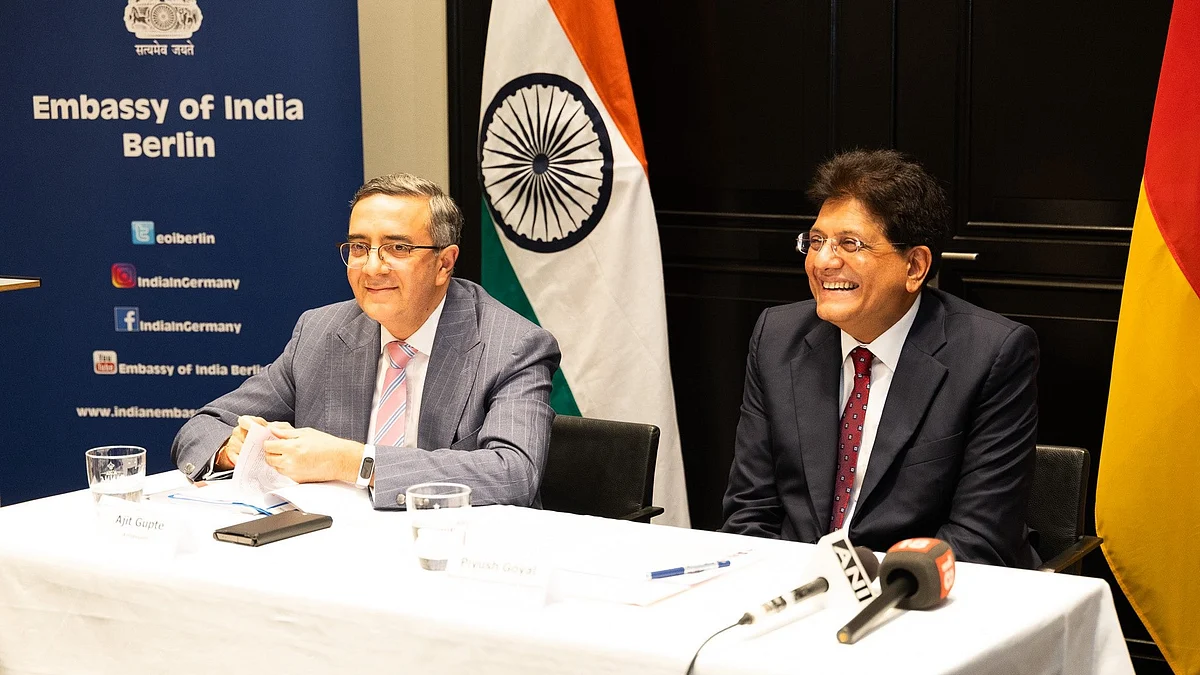
Goyal said the strategy would draw on India’s large pool of skilled talent and youthful population.[1] Speaking to Indian science and technology researchers and students in Germany, he urged them to say what support they would need to work in India and contribute to the Viksit Bharat journey.[1][2] He said attracting skilled professionals requires a strong research ecosystem and an environment conducive to innovation.[2] He also said he would support innovation and startup efforts by helping them gain a platform at major trade fairs and exhibitions, where he wants India’s story to be strongly showcased.[1]
Germany visit and trade ties
During the visit, Goyal met Levin Holle, an economic and financial policy adviser to Germany’s Federal Chancellor and Germany’s G7 and G20 Sherpa.[2] He held discussions on strengthening industrial cooperation between India and Germany.[2] The proposed India-European Union Free Trade Agreement was described as having potential to boost bilateral trade and investment.[2] These discussions provide a wider setting for Goyal’s appeal to researchers abroad and his emphasis on presenting Indian innovation at international trade fairs.
The proposal draws a practical distinction between work that AI may support and work that depends on human skills and creativity. For employers, researchers and policymakers, the sector list can prompt closer examination of where technology could improve efficiency—and what investment in talent and innovation would be needed.
Why it matters
Bring this to your team — one session a day, built for your industry.
kju.ai is built for teams: daily sessions, team analytics, and rollout support for your organization.
For teamsHow this developed
24 October 2026
India to identify professions less vulnerable to AI, Goyal says
Sources
- Commerce ministry identifying AI-proof professions, sectors where India can take global lead: Goyalnewindianexpress.com
- Commerce Minister Piyush Goyal Highlights Sectors Less Vulnerable to AI | Akashvani Newsnewsonair.gov.in
- Piyush Goyal tasks ministry with mapping 'AI-proof' jobs as India plans for future of workmoneycontrol.com