OpenAI Unveils GPT-5.4 Mini and Nano: Fast, Efficient AI for Coding and Multimodal Tasks
OpenAI has released GPT-5.4 mini and nano, powerful compact versions of their GPT-5.4 model, designed to deliver faster, cost-effective AI performance for coding, multitasking, and real-time image understanding.
Key takeaways · 5
- 01
GPT-5.4 mini doubles speed compared to GPT-5 mini while approaching GPT-5.4's performance on major coding and reasoning benchmarks.
- 02
GPT-5.4 nano is the smallest, cheapest GPT-5.4 variant, ideal for low-latency, less complex tasks such as classification and data extraction.
- 03
These models support multitasking formats including coding, tool use, real-time multimodal inputs, and subagent architectures.
- 04
GPT-5.4 mini’s multimodal capabilities excel in interpreting dense computer interfaces and screenshots swiftly.
- 05
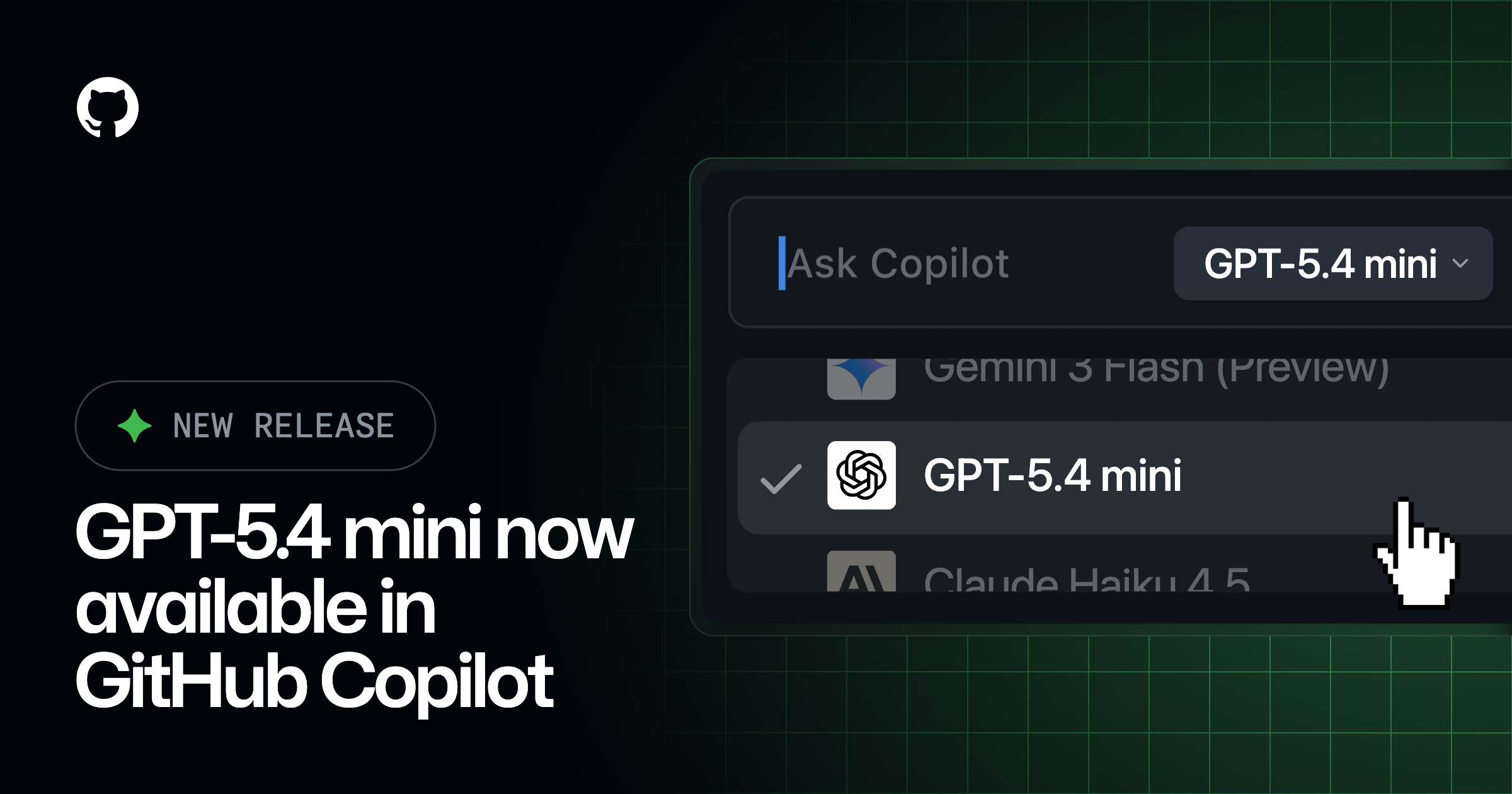
The models are broadly accessible: GPT-5.4 mini is integrated into GitHub Copilot across multiple IDEs and devices, available in ChatGPT for Free and Go users, while nano is API-exclusive.
Introducing GPT-5.4 Mini and Nano
OpenAI's new GPT-5.4 mini and nano models bring the advanced capabilities of GPT-5.4 to smaller, faster architectures. Mini notably doubles the throughput of its predecessor and can handle complex coding, reasoning, and multimodal workflows nearly as well as the full GPT-5.4. Nano targets the lowest latency and cost use cases, providing a powerful option for routine or supporting AI tasks.
Performance and Use Cases
Evaluations show GPT-5.4 mini surpasses previous mini models by a wide margin and performs strongly on standard benchmarks like SWE-Bench Pro and Terminal-Bench 2.0. It is well-suited for coding workflows that require rapid iteration, such as debugging and codebase exploration. Nano models excel in classification, ranking, and simple code subagents—enabling efficient, scalable AI systems that partition tasks effectively.
Integration and Availability
GPT-5.4 mini is accessible via the OpenAI API, Codex, ChatGPT, and prominently integrated into GitHub Copilot across popular IDEs including Visual Studio Code, JetBrains, Eclipse, Xcode, and the GitHub web and mobile apps. Nano is currently available through the API. The rollout in GitHub Copilot highlights mini’s practical impact on developer tools, improving responsiveness and efficiency.
Cost and Efficiency
Pricing signals a favorable cost-performance ratio: GPT-5.4 mini costs $0.75 per million input tokens and $4.50 per million output tokens, while nano costs just $0.20 per million input tokens, significantly cheaper than comparable models from other providers. This affordability enables large-scale processing such as annotating extensive photo collections at minimal expense.
The release of GPT-5.4 mini and nano models represents a critical advancement in making high-performance AI accessible at lower latency and cost, particularly benefiting developers and enterprises needing AI assistance with coding, multimodal reasoning, and real-time workflows. By enabling composable AI systems with diverse model sizes, OpenAI is driving more practical, scalable AI integrations and shaping how AI tools will evolve in productivity applications.
Why it matters
Put this to work — one session a day, built for your industry.
Create a free account for a daily session — eight questions and one real-work challenge, on the news that affects your role.
Start free