Google reports first AI response from an orbital TPU
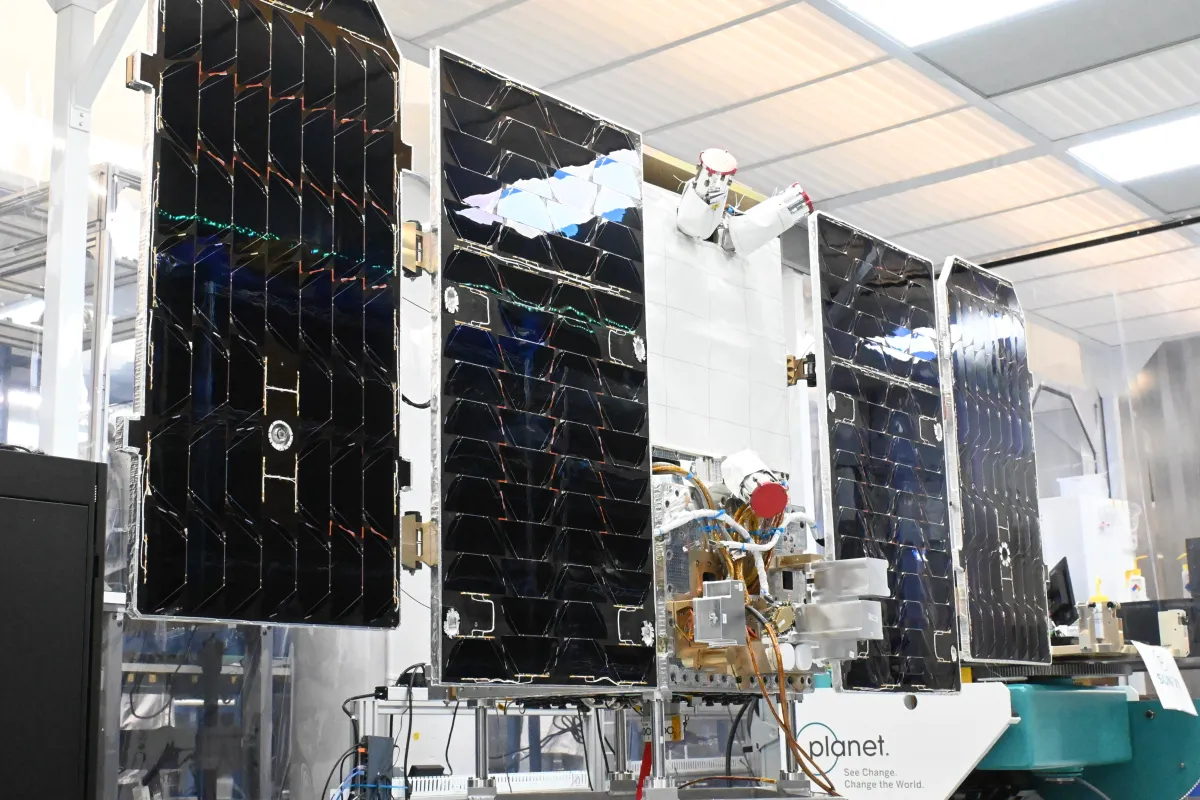
Google says it has received the first AI response from a data-center-class TPU in orbit, as part of Project Suncatcher. The response came from an onboard Gemma 4 model prompted during a ground-station pass.
Key takeaways · 4
- 01
The prompt asked Gemma 4 to write a haiku about being in space; Google also tested limericks and prompts about payload-system status.
- 02
The prototype carries four TPUs but can operate only one at a time, for about 20 minutes per activation.
- 03
Google says the satellite generates up to one kilowatt of electricity.
- 04
Google’s next tests concern thermal stress and radiation exposure; a pair of interconnected satellites is a future milestone for 2027.
A first prompt, sent from the ground
During a ground-station pass, Google sent the satellite its first prompt, asking the onboard Gemma 4 open model to write a haiku about being in space.[1] The poem began “Blue marble below” and ended “Starlight feeds my core.”[1] Google also says it tried space-themed limericks and telemetry prompts that asked the model to report technical status across the payload systems.[1] The milestone followed commissioning work that included powering up the satellite’s host and TPU trays and running early machine-learning tests.[1] Google described the result as its first AI response from a data-center-class TPU in orbit.[1]
The prototype has tight operating limits
The prototype satellite carries four Google Tensor Processing Units, but it can operate only one TPU at a time.[3] TechCrunch reported that the satellite can turn on one TPU for about 20 minutes at a time and generates up to one kilowatt of electricity.[3] These constraints matter when judging what the demonstration establishes: it shows an AI response from the system, but does not by itself establish sustained or large-scale computing in orbit.[1][2][3] Google says the satellite was operating as expected after the company confirmed contact with it.[2] TechCrunch reported that commissioning took about three weeks.[3]
Research continues beyond the demo
Google says its next tests will assess how TPUs perform under thermal stress and radiation exposure in orbit.[1] The company also says the satellite’s in-orbit data collection will examine how its TPUs handle spaceflight stress, radiation and thermal extremes.[2] Project Suncatcher is research into whether space could eventually host scalable machine-learning infrastructure, rather than evidence that such infrastructure is already in place.[2] Google identifies a pair of interconnected satellites in 2027 as a future milestone.[1] The prototype, built with Planet, reached orbit on SpaceX’s Transporter-18 rideshare mission; Google says a peer-reviewed paper about the research is available in the journal Joule.[2]
The demonstration gives infrastructure and engineering teams a concrete early result to weigh against the satellite’s operating constraints. For professionals assessing off-Earth computing, the next useful signal will be how the hardware performs under the environmental stresses Google says it plans to test.
Why it matters
Bring this to your team — one session a day, built for your industry.
kju.ai is built for teams: daily sessions, team analytics, and rollout support for your organization.
For teamsHow this developed
1 November 2026
Google reports first AI response from an orbital TPU
Sources
- Google receives response from Project Suncatcher prototype satellite in spaceblog.google
- Google's Project Suncatcher prototype satellite is in orbitblog.google
- Google's first data center satellite is online and writing poetry | TechCrunchtechcrunch.com
- Google's AI satellite sends a very expensive haiku to Earththeregister.com
- 🚨 AI News | TestingCatalog on X: \"GOOGLE 🔥: AI is running in space now! Google has reported being able to prompt a TPU running on a satellite as part of its Suncatcher Project. Should've been a \"pelican on a bike\" test 👀\" / Xx.com