Google Gemini's Personal Intelligence Debuts in India: The Next Leap in Contextual AI
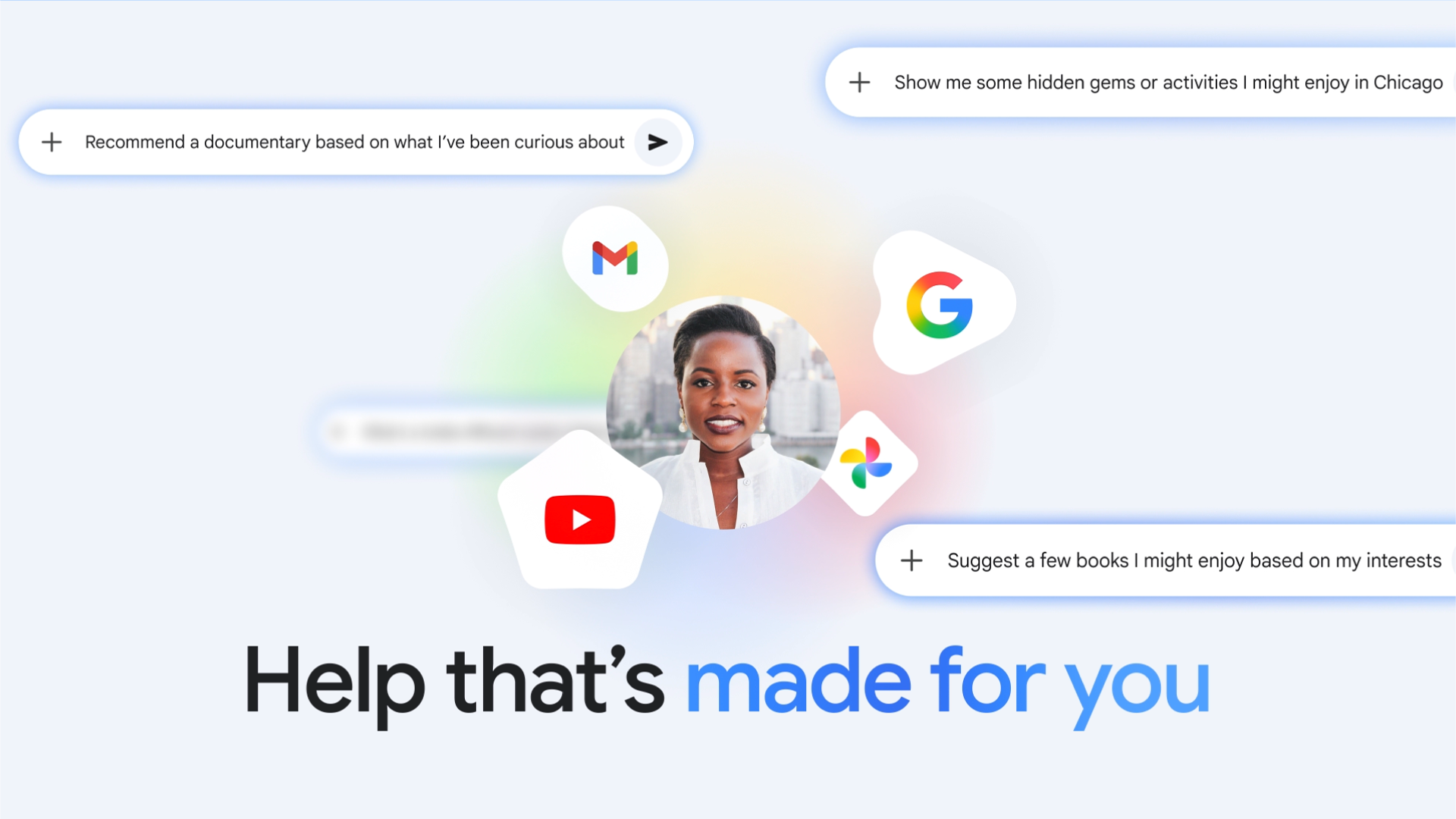
Google has launched its Gemini Personal Intelligence feature in India, bringing cutting-edge, context-aware AI to one of the world’s largest digital markets. By connecting with apps like Gmail, Google Photos, YouTube, and Search, Gemini aims to deliver responses uniquely tailored to individual users’ lives.
Key takeaways · 4
- 01
Gemini Personal Intelligence aggregates and reasons across user data from Gmail, Photos, YouTube, and more, yielding highly specific and contextual responses.
- 02
Privacy is central: features are opt-in, users choose connected apps, and data stays within Google’s infrastructure with explainable results.
- 03
Indian users gain support for 'Your Day' proactive feeds, Hindi and regional language voice commands, and tailored email response suggestions.
- 04
Subscription required for initial access, with a staged expansion to all Indian users planned in the coming weeks.
A Major Expansion: Gemini’s Personalized AI in India
Google’s decision to launch Gemini Personal Intelligence in India four months after its U.S. beta points to the company’s recognition of India’s rapidly growing, smartphone-centric digital ecosystem. With around 80% of Indians relying primarily on smartphone access for daily productivity, the timing aligns perfectly with rising demand for smart assistants that move beyond static, one-size-fits-all responses.[1][7]
The new feature transforms Gemini from a traditional chatbot into an integrated digital assistant that cross-references a user’s Gmail, Google Photos, YouTube history, and Search data. Instead of providing generic answers detached from user context, Gemini now surfaces precise insights: summarizing flight details by reading your Gmail, surfacing old map screenshots from Photos, or leveraging YouTube history to suggest restaurants matching your viewing habits. Early adopters in Delhi and Bangalore report saving upwards of 20 minutes each day by skipping manual app-switching, suggesting real impact on productivity for India’s busy digital workforce.[2][3][7]
Initially available to Google AI Plus, Pro, and Ultra subscribers, the rollout will soon extend to free users on Android, iOS, and the web. This staged expansion demonstrates Google’s intent to fine-tune the experience before a nationwide release, ensuring that the highly contextual responses deliver both value and reliability regardless of user tier.[2][3][5]
How Gemini’s Personal Intelligence Works
Gemini’s Personal Intelligence isn’t just a data aggregator—it’s designed for complex reasoning across multiple personal sources. When a user enables the feature, Gemini can retrieve details from history, correlate events among different apps, and reason through real-world tasks such as travel planning or compiling schedules. For example, Gemini can extract booking confirmations from Gmail, locate saved maps in Photos, and check for scheduling conflicts—all in a single conversation thread.[2][3][4]
The AI can handle layered tasks, such as confirming whether a family event in your calendar conflicts with a hotel reservation pulled from an email. It even analyzes Photos and YouTube activity to refine its suggestions, surfacing a photo of a recent gift idea or proposing restaurant options aligned with past viewing trends. New in India is support for personalized email replies based on local customs, where Gemini suggests responses such as 'Shubhakamnayein! Main pahunchunga' for wedding invites, adapting tone and formality according to cultural context.[3][4][7]
Proactive cards—dubbed 'Your Day'—further automate daily life, presenting reminders, alerts, and curated to-dos in a single feed. Combined with improved voice commands in Hindi, Tamil, and Telugu, Gemini now supports context-aware queries and reminders that respond to a wider demographic, reinforcing Google’s localization and inclusivity efforts for India’s diverse user base.[7]
Privacy, Consent, and Data Security: Google’s Approach
With deep personalization comes heightened privacy risk—and Google has sought to address Indian users’ concerns head-on. Personal Intelligence is strictly opt-in, requiring explicit user consent before any cross-app integration occurs. Users maintain granular control over which apps Gemini can access; these can be connected or disconnected at any time via dedicated settings in the Gemini app.[2][3][4]
Google emphasizes that all connected user data remains secured within Google’s infrastructure, never transferred to external or third-party servers. Moreover, Gemini’s responses reference their sources when possible—for example, citing the originating email or photo—allowing users to verify and audit the AI’s reasoning on the spot.[3][4]
Crucially, Gemini does not train its underlying models directly on private emails, photos, or personal content. Only anonymized prompts and responses (after filtering sensitive information) are used for limited training purposes, aligning with privacy-by-design principles. For further assurance, users are able to delete chat history, adjust permissions, and prompt Gemini for citations, supporting a transparent and user-led AI experience.[2][3][7]
User Feedback and Real-World Impact
Beta users in India have already influenced Gemini’s early tuning, providing two-way feedback channels for error correction and model improvement. Some users have experienced 'over-personalization,' where the AI misinterprets context—for instance, wrongly suggesting recreational interests based on frequency of photos rather than intention (like a user who visits a golf course for family time, not for golf itself).[3]
Google has equipped Gemini with immediate correction workflows: users can directly clarify or correct assumptions within the chat, and report issues using the 'thumbs down' feature. Reports indicate faster Gmail response times for business users in Mumbai (up to 50% faster with AI-assisted drafting), and a substantive reduction (42%) in repeat prompts due to more accurate voice command processing—figures validated by early field tests in Indian metro regions.[7]
Despite these advances, the feature is still described as being in beta, with Google actively soliciting feedback to address inaccuracies and context-missing scenarios. The ability to disable, temporarily pause personalization, or regenerate responses without personal data ensures that users retain control as the AI’s sophistication evolves through continued Indian engagement.[3][7]
Broader Context: India’s Role and Global Future
India’s digital market is rapidly emerging as a crucible for new AI capabilities, due in part to its population’s heavy reliance on mobile technology and appetite for productivity-driven solutions. Gemini’s rollout here, following launches in North America and other regions, positions India at the forefront of testing and refining context-aware digital assistants fit for a culturally and linguistically diverse population.[1][7][8]
Features like Your Day and regional language command support are not only tailored for local needs but also act as testbeds for global adoption, with lessons learned in India likely to inform updates for Gemini users worldwide. Industry watchers note that Google’s careful balance of powerful personalization and privacy-by-design could set a standard in AI assistant rollouts, especially in markets wary of surveillance and data misuse.[1][6][8]
As competition in the AI assistant arena intensifies—with rivals pushing their own personalized solutions—Google’s Gemini deployment in India underscores how meaningful personalization, when executed responsibly, may define the next era of AI-driven productivity both regionally and globally.[1][4][7][8]
Gemini’s Indian launch is a pivotal moment for personalized generative AI, setting new expectations for contextual intelligence and privacy by design. For AI professionals, it demonstrates the rapid convergence of multi-modal reasoning, localization, and user-controlled privacy—hallmarks of the next generation of human-centric AI platforms.
Why it matters
Test yourself on this story — 1 question.
Create a free account to take the quiz, earn XP, and get a daily session built for your industry.
Take the quizSources
- Google brings its Gemini Personal Intelligence feature to IndiaAI News & Artificial Intelligence | TechCrunch
- Google brings Personal Intelligence to Gemini app in India: What is it and how it works - The Times of Indiatimesofindia.indiatimes.com
- Google Gemini Personal Intelligence launched in Indiafonearena.com
- Google Brings ‘Personal Intelligence’ to Gemini in India, Making AI More Context-Aware | Republic Worldrepublicworld.com
- Google has rolled out Personal Intelligence for Gemini users in India ...instagram.com
- Google brings its Gemini Personal Intelligence feature to India ...Middle Easteng.pressbee.net
- Gemini Personal Intelligence Expands to India with New Features | AI Newsaihaberleri.org
- Google releases Personal Intelligence for Gemini app in Canadamobilesyrup.com