Google introduces Tabletop, a collaborative planning experiment
Google has introduced Tabletop, a Google Labs experiment for groups to plan and coordinate activities in shared, interactive spaces. Google says it is rolling out in the U.S. to people aged 18 and older through a waitlist.
Key takeaways · 4
- 01
Tabletop is a Google Labs experiment for real-time group collaboration.
- 02
To create a tool, users can supply links, files and ideas and prompt @tabletop, or start from a template.
- 03
Google’s examples include trip itineraries, dinner polls, expense splitters and tournament brackets.
- 04
Access is rolling out in the U.S. to people aged 18 and older through a waitlist.
Create a tool from shared material
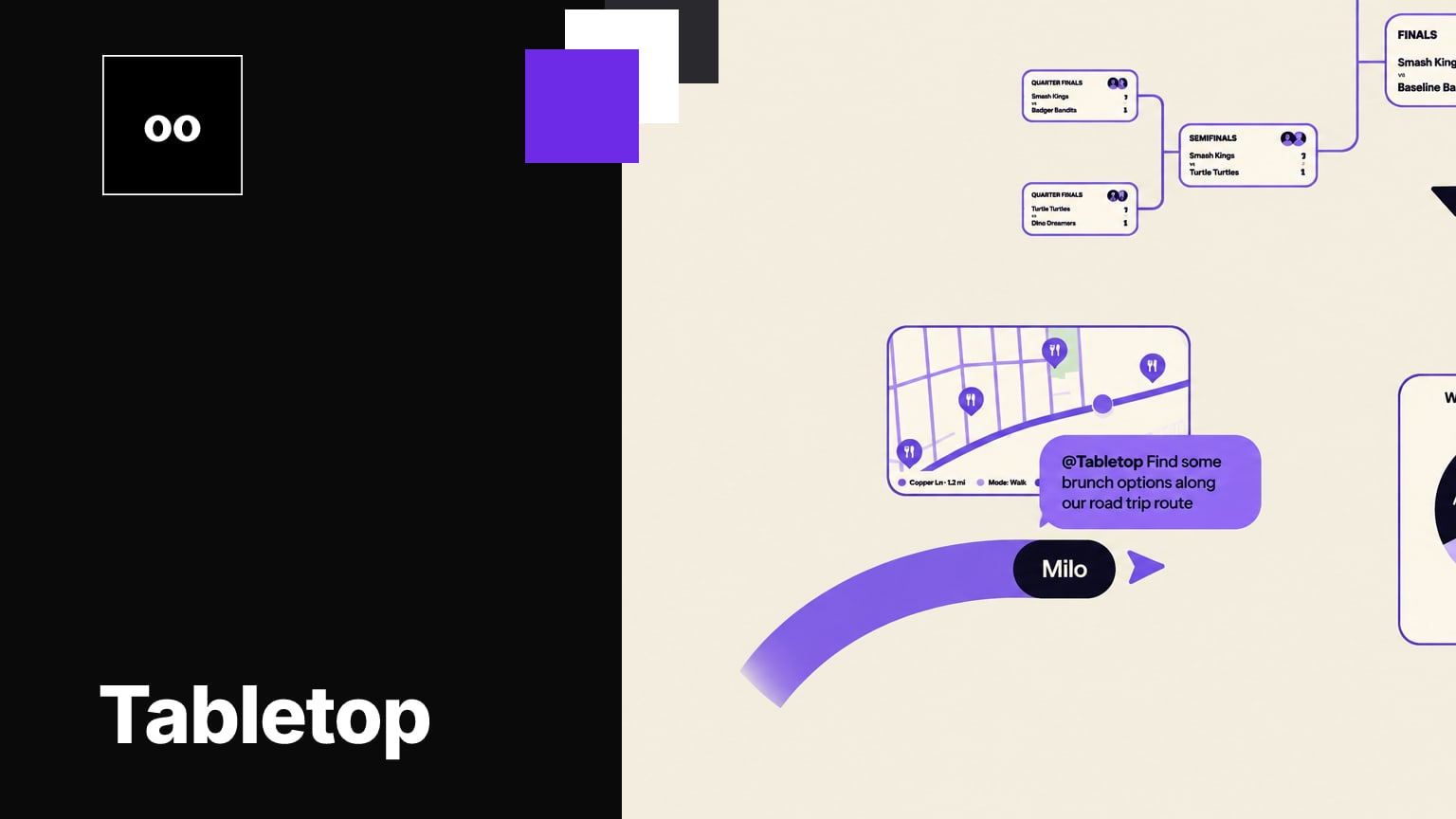
Google presents Tabletop as a way for groups to coordinate activities such as family trips, recreational leagues and potlucks.[1] Users can provide links, files and ideas, then prompt @tabletop or choose a starter template to generate a custom interactive tool.[1] Google’s examples span trip itineraries, dinner polls, expense splitters and tournament brackets.[1] That makes the product’s pitch less about a single planning template and more about generating different kinds of shared tools for a group’s task. The examples show possible formats, not a guarantee that every request will produce a particular result.
Spaces are designed for joint use
A creator can share a Tabletop space by posting its invite link in a group chat, Google says.[1] People invited to a space can use it at the same time, in a model Google compares with collaborating in a Google Doc.[1] Unite.AI reports that participants can ask Tabletop to revise a rule, reshape a tab or build something new as plans change, without starting over.[2] Its examples include changing a Pong tab into Pickle Pong with a live court scoreboard, and a road-trip space combining route mapping, stop votes, budget splitting and a dinner-choice wheel.[2] These are reported examples rather than evidence of broader product performance.
Waitlist access and open questions
Google says Tabletop is rolling out in the U.S. to people aged 18 and older through a waitlist.[1] The Next Web reports that Google has not said which AI model powers the experiment.[4] Technobezz says the announcement did not specify when people on the waitlist would receive access.[5] Unite.AI reports that new spaces open weekly to people admitted from the waitlist.[2] For teams considering the experiment, the available information establishes the intended audience and access route, but not a precise wait time or the underlying model.
Tabletop’s approach could let groups turn shared material into a purpose-built space instead of coordinating only through messages or static documents. Professionals evaluating it should distinguish the stated collaboration features from open questions about access timing and the AI model.
Why it matters
AI training for your team
kju.ai is built for teams: daily sessions, team analytics, and rollout support for your organization.
How this developed
11 November 2026
Google introduces Tabletop, a collaborative planning experiment
Sources
- Tabletop: Collaborative group planning with Google Labsblog.google
- Google Introduces Tabletop for Building Collaborative AI Spaces – Unite.AIunite.ai
- Google’s Tabletop AI experiment lets you build custom collaboration apps | The Vergetheverge.com
- Google’s Tabletop lets groups build AI planning tools togetherthenextweb.com
- Google Tabletop Experiment Builds Shared Trip Plans and Polls | Technobezztechnobezz.com