Googlebook Debuts at $899 With Five Hardware Partners
Google has opened preorders for five Googlebook laptops, pairing Android and ChromeOS-derived software with Gemini features in devices starting at $899.
Key takeaways · 3
- 01
Organizations should assess Googlebook as an Android-focused option, not a direct Chromebook replacement.
- 02
Developers should test workflows across native Android apps, desktop Chrome, web apps and Linux tools.
- 03
Procurement teams can evaluate five vendors and both x86 and ARM configurations.
Five Partners, One Platform
Google is launching Googlebook laptops at prices from $899 to $1,299, with preorders open for five models from Acer, Asus, Dell, HP and Lenovo. [2] The first devices are scheduled to reach US store shelves on October 4. [2] Hardware partners build the machines, while Google controls the software experience across different sizes, designs and form factors. [2] Google says the first version is designed for the Android community rather than as a replacement for every laptop or for Chromebooks. [2]
Android Meets Desktop Computing
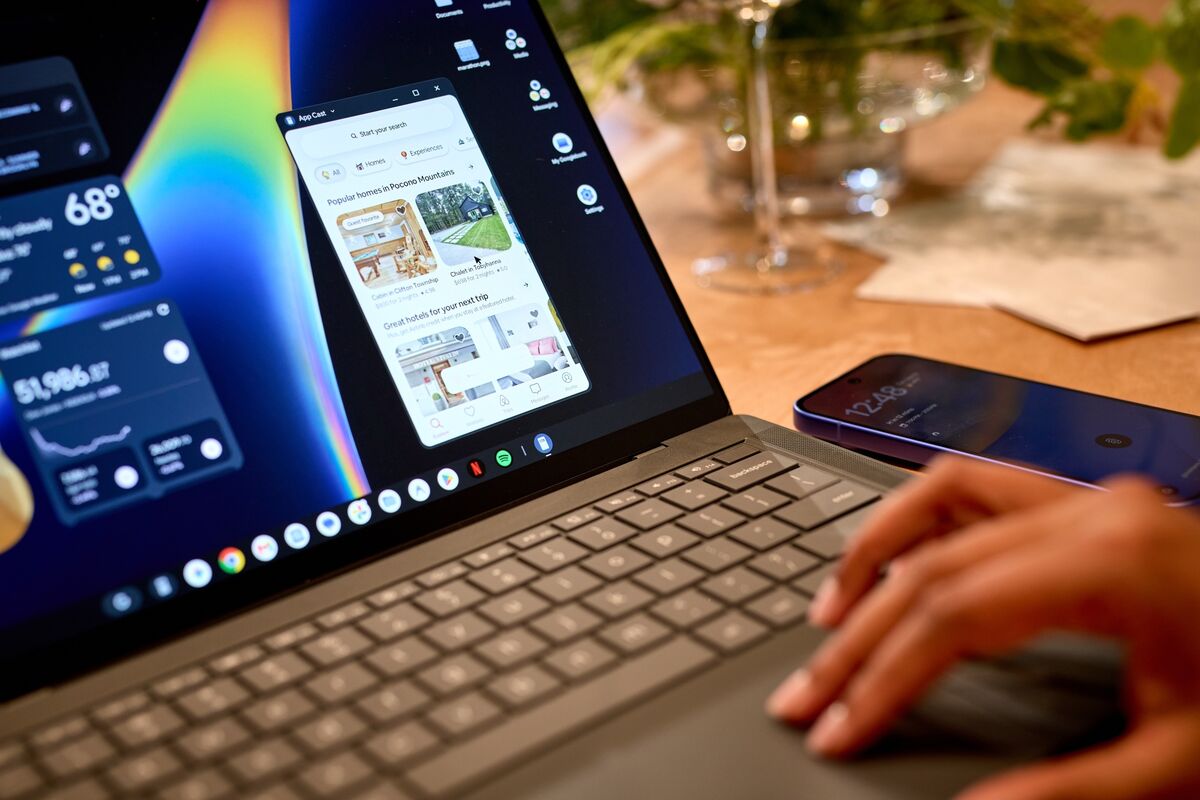
Googlebook combines a desktop experience derived from ChromeOS with Android underneath, supporting native Android apps alongside desktop Chrome, web apps and Linux tools. [2] Models can use either x86 processors such as Intel chips or ARM-based processors. [2] The $899 starting point sits below the $1,299 entry-level MacBook Air cited by Axios. [2]
Magic Pointer lets users wiggle the cursor over on-screen content to summon Gemini, which can interpret its text, images and context. [2] Google also previewed Android app support, access to phone files and the ability to use phone apps from the laptop. [2]
What it means
Googlebook’s initial proposition is narrower than a universal reworking of the PC: Google is concentrating on Android users while coordinating a common software experience across five hardware partners. Compared with the $1,299 entry-level MacBook Air cited by Axios, the $899 starting price gives Google and its partners a lower-priced route into premium phone-and-laptop integration. The practical distinction will depend on whether Android applications, Linux tools and contextual Gemini assistance work coherently across x86 and ARM machines. What the sources don't address: how the five models differ in performance, battery life, support terms, or Gemini behavior in daily use.
Googlebook places Gemini and Android interoperability at the center of a laptop platform offered through multiple hardware vendors. Practitioners evaluating AI-enabled computers will need to examine how consistently contextual assistance and application compatibility work across processor architectures and form factors.
Why it matters
Put this to work — one session a day, built for your industry.
Create a free account for a daily session — eight questions and one real-work challenge, on the news that affects your role.
Start freeHow this developed
22 September 2026
Googlebook Debuts at $899 With Five Hardware Partners
22 September 2026
Event created from source cluster.