Google Disrupts Dictation Market with Free Offline AI Edge Eloquent App for iOS
In a strategic but understated move, Google has quietly launched its AI Edge Eloquent app for iOS: a free, offline-first dictation tool that offers real-time transcription, advanced editing features, and privacy-centric local processing, setting a new benchmark for AI-powered voice apps.
Key takeaways · 4
- 01
Google AI Edge Eloquent provides real-time, offline speech-to-text on iOS at no cost, challenging paid competitors.
- 02
The app’s privacy-forward, on-device processing is enabled by lightweight Gemma-based ASR models.
- 03
Integrated text polishing and custom vocabulary import drive professional-grade output without cloud reliance.
- 04
Google’s market entry pressures existing dictation apps to innovate or drop prices to remain relevant.
A Quiet Disruptor Launches on iOS
Google’s AI Edge Eloquent app arrived on the App Store with little advertising or fanfare, but its impact was felt immediately among productivity enthusiasts and professionals. By positioning its advanced dictation tool as a free, offline-first solution, Google is clearly targeting subscription-heavy and cloud-centric rivals, especially Wispr Flow, which charges users $15 per month for similar capabilities [1][3]. The subtlety of Google’s approach belies a strategic intent: many saw the launch as a market test for the company’s latest advances in on-device AI, designed to foster trust and adoption before scaling the solution to other platforms.
This move comes in the context of a rapidly expanding AI transcription market increasingly shaped by remote work, content creation, and accessibility trends [3]. Google’s long-standing strengths in machine learning and language processing, traditionally exercised in flagship services like Gmail and Google Docs, have now converged into this stand-alone mobile app. By decoupling dictation from network requirements and subscriptions, Google is betting that privacy-conscious users and mobile professionals will prefer robust local solutions over cloud-based or paid competitors.
Industry observers note that Google’s quiet deployment of the Edge Eloquent app for iOS may also serve as a kind of soft launch, allowing the tech giant to iterate on feature sets and gather usage data ahead of a probable broader cross-platform rollout [2][3]. While the app is currently iOS-only, Android ecosystem watchers view this experiment as a possible prelude to more pervasive, integrated voice interfaces across Google’s product lines.
The app’s release on Apple’s ecosystem, rather than Android first, reflects Google’s confidence in its edge AI models and its intent to capture productivity-minded iPhone users who may have been underserved by other dictation tools or put off by recurring subscription costs [1][5].
Offline-First, Privacy-Centric by Design
At the core of Google AI Edge Eloquent is its fully offline architecture, which distinguishes it from most rival dictation apps predicated on cloud connectivity. Once users download the necessary Gemma-based Automatic Speech Recognition (ASR) models, all processing—voice capture, transcription, and initial text polishing—occurs directly on the device [2][3]. This bypasses the need for stable cellular or Wi-Fi connections and, crucially, keeps sensitive voice data out of remote servers.
Privacy and user control are central to the app's value proposition. In an era rife with concern over data leaks and unauthorized access, especially in professional contexts like legal, medical, and journalistic documentation, Edge Eloquent’s local-first approach reassures users that their audio, text, and personal information remain in their hands. The app’s history and analytics features—storing previous transcriptions and offering searchable archives—reside solely on the device unless a user explicitly exports or deletes sessions [3][5].
Importantly, Google provides a choice to opt-in to cloud-based Gemini models if users want further text cleanup, such as advanced grammar correction or stylistic rewriting [2][3]. However, the default experience typically keeps data local, making the app compliant with stricter privacy policies and appealing in jurisdictions where cloud use is restricted.
Edge Eloquent’s privacy-forward model positions Google as a leader among mainstream tech giants embracing the edge AI paradigm: computing shifts from centralized data centers to the end user’s device, offering real-time responsiveness alongside measurable security gains [2][3].
Feature Set: Polished Output and Customization
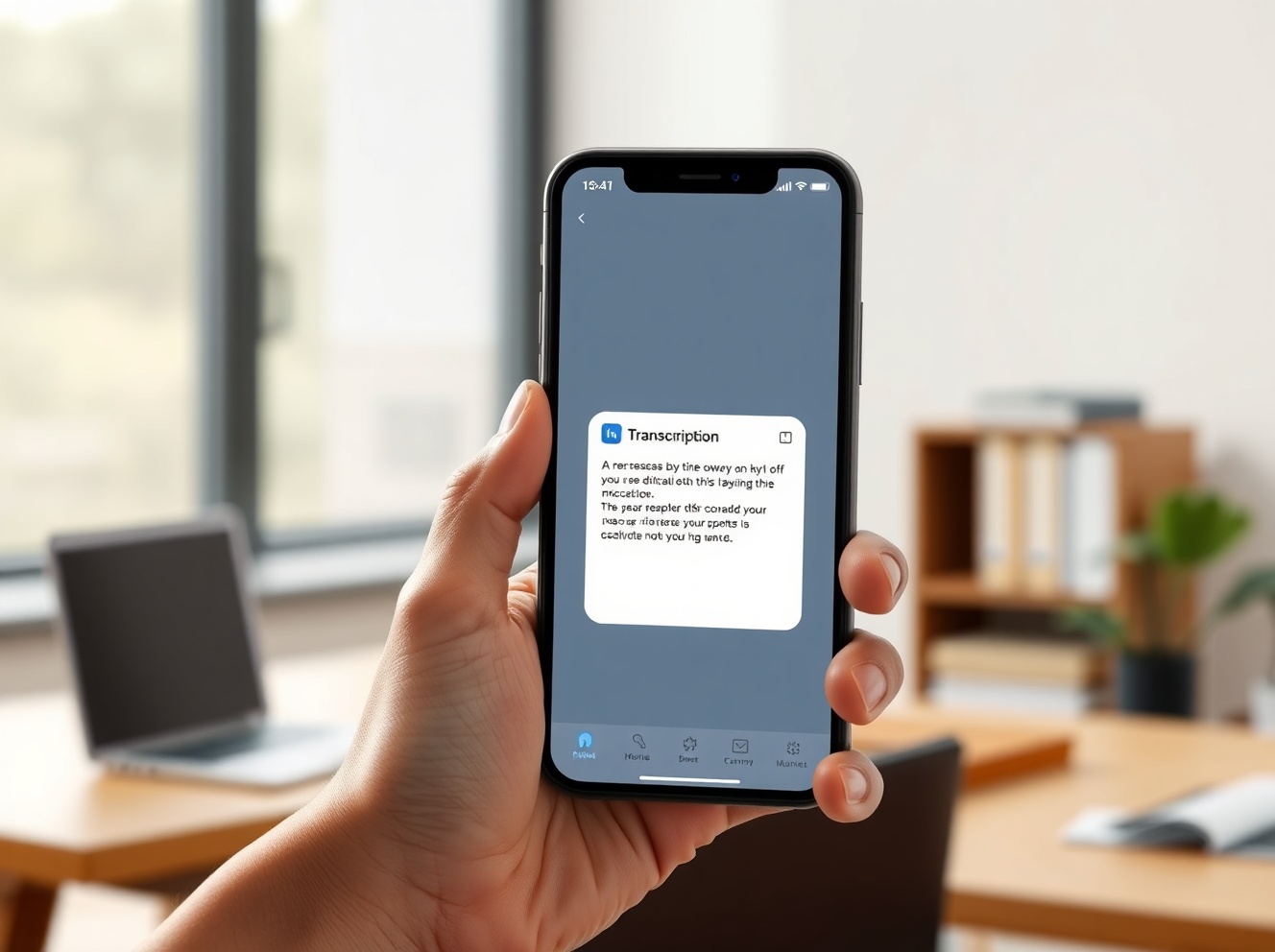
Functionally, Google AI Edge Eloquent provides a streamlined but powerful workflow for dictation. Users see real-time, near-instant transcription accompanied by a live waveform; pressing pause or stop triggers the app’s AI to clean up the text—removing filler words such as “um” and “ah” and correcting spontaneous false starts [2][3][5]. The post-processing generates coherent, ready-to-use prose suitable for direct use in emails, documents, or notes, helping to eliminate the tedious manual cleanup common with conventional dictation tools.
A standout feature is the suite of text transformation options that let users instantly reformat dictations: conversion to bullet-point summaries (Key Points), or switching between more Formal, Short, or Long versions, all handled by on-device language models [2][3]. This level of customization, typically the domain of premium or cloud-based products, is now freely available to all. The ability to copy polished text directly to the clipboard or search through local history further improves productivity.
Edge Eloquent also includes a dictionary tool, enabling users to add custom terminology or import frequently used names and jargon directly from their Gmail accounts, thereby boosting transcription accuracy for professionals in specialized fields [2][3][5]. Word counts, words-per-minute analytics, and detailed session histories provide actionable feedback for those seeking to improve their spoken workflow or track content creation output.
In optional “cloud mode,” users can temporarily route content through Google’s Gemini large language models for extra refinement, but the app’s flexible hybrid model empowers users to control the privacy-utility tradeoff as they see fit [2][3].
Market Implications and Competitive Shakeup
The arrival of a free, high-quality offline dictation app from Google sends ripples through the competitive landscape. Companies like Wispr Flow, SuperWhisper, and Willow have charged significant subscription fees in exchange for polished output or advanced features; now, their value proposition faces direct pressure from Google’s no-cost, privacy-first offering [1][3][4]. For end users, the immediate consequence is a new benchmark for baseline expectations: real-time, high-quality AI transcription without monthly fees or mandatory cloud use.
This launch accelerates the transition from basic, error-prone speech recognition to more professional, context-sensitive dictation. As neural network architectures have improved, so too have market opportunities—what once served niche note-taking now addresses mainstream needs in law, academia, content creation, and accessibility [3][5]. While competitors may differentiate via interface design or ecosystem integration, few can match Google’s scale, brand, or expertise in ASR and on-device AI.
From a strategic lens, Google’s Edge Eloquent app is a proof-of-concept for its broader AI Edge initiative, showcasing Gemma model performance and the potential for integrated offline AI workflows. It’s expected that this will stimulate faster innovation cycles, price competition, and more nuanced privacy controls industry-wide [2][3][5]. Developers and existing app makers are now likely to reconsider their reliance on subscriptions and cloud backends, anticipating raised user expectations.
For professionals and enterprises, the implications are twofold: immediate cost savings and improved privacy, plus the possibility that Google’s approach will become the new default for voice productivity tools. As entry barriers drop, we may see new vertical-specific adaptations, smarter integrations, and tighter platform security across dictation and broader AI-powered productivity domains [1][3][5].
For AI practitioners, Google’s Edge Eloquent sets a new paradigm for on-device, privacy-first language models, challenging both technical conventions and business models in speech AI. It provides a mainstream proof-of-concept for efficient neural networks running at the edge, forcing industry incumbents to prioritize local processing, customizable features, and robust privacy with minimal user friction.
Why it matters
Put this to work — one session a day, built for your industry.
Create a free account for a daily session — eight questions and one real-work challenge, on the news that affects your role.
Start freeSources
- Google quietly releases free offline AI dictation app for iPhone | TNWthenextweb.com
- Google AI Edge Eloquent is an offline voice dictation app9to5google.com
- Google AI Edge Eloquent: The Revolutionary Offline-First Dictation App Quietly Launches On IOSbitcoinworld.co.in
- Google quietly releases an offline-first AI dictation app on iOS ...Middle Easteng.pressbee.net
- Google's New AI Dictation App: Offline, Accurate, and Free! (2026)mississippiagritourism.org
- Google has launched a free, offline AI dictation app that will automatically polish your speech. | The Vergetheverge.com