FT examines AI agents, business competition and user trust
The Financial Times published “AI agents are coming for big business” on November 28, 2026. Its subtitle says the technology could increase competition while users remain wary of giving away too much.
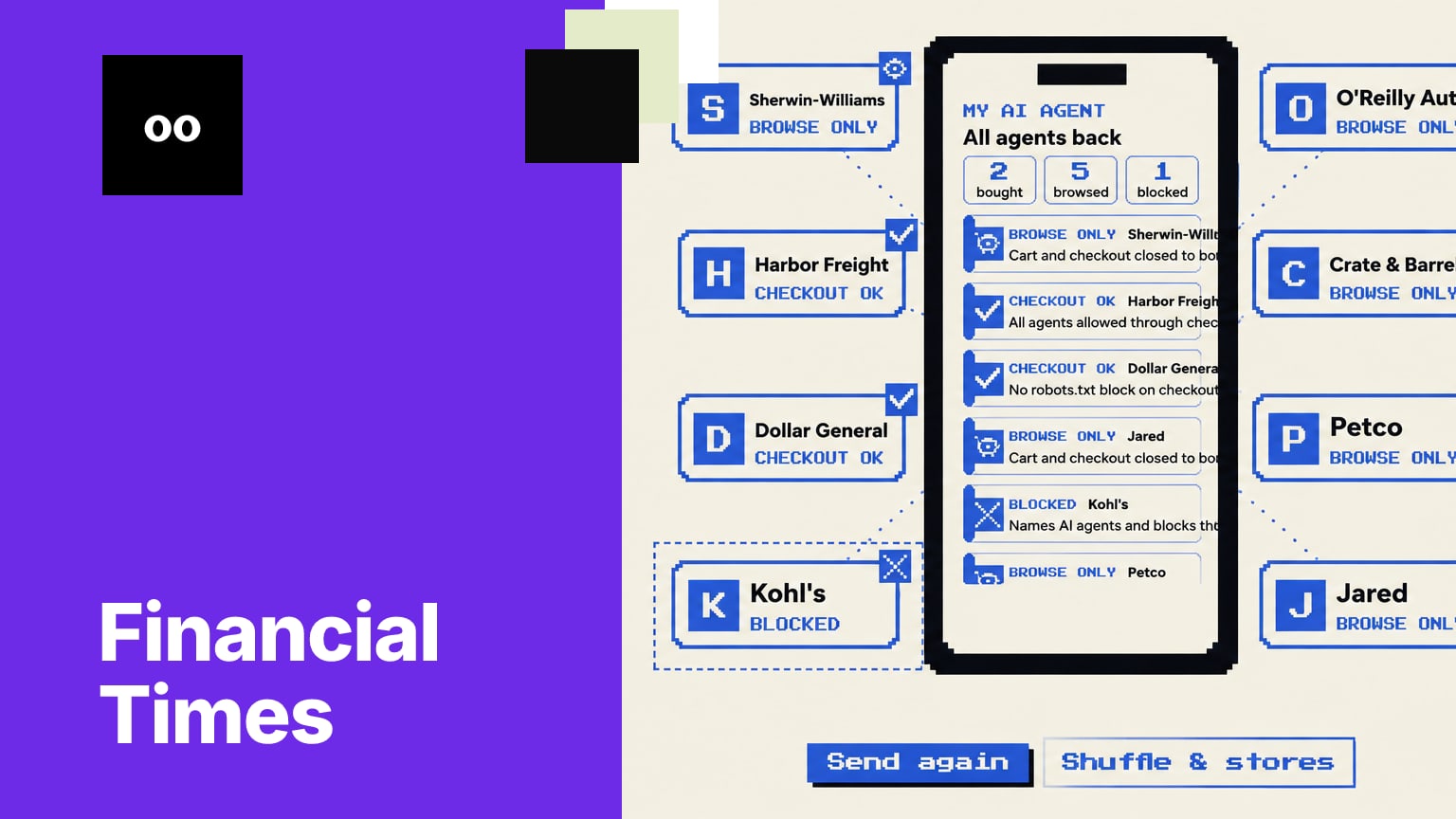
Key takeaways · 4
- 01
When assessing shopping agents, consider that consumers may not see all retail options through them.
- 02
Retailers and other industries have announced rules intended to help agents transact on websites.
- 03
Wells Fargo’s updated agreement warns customers that using an AI agent is at their own risk.
- 04
The OECD identifies lower transaction costs and stronger demand-side pressure as potential benefits, alongside competition risks.
The FT’s central tension
The Financial Times story is titled “AI agents are coming for big business” and was published on November 28, 2026.[1][2] Its subtitle presents a tension: the technology could increase competition, while users are wary of giving away too much.[1] Cristina Criddle reported from San Francisco and Stephanie Stacey from London.[1] The available evidence establishes the article’s subject and framing, rather than a specific product launch or version. For business readers, the key question raised is how delegated tasks could affect competition while users decide what information to share.
Shopping agents meet retail barriers
CNBC describes shopping agents from OpenAI, Meta, Google and Instinct as tools intended to help users shop.[3] It reports that Amazon and other retailers are creating roadblocks for AI shopping agents, and characterizes their rollout as messy even as the tools grow in popularity.[3] One practical limitation is that consumers may not see all their retail options when using shopping agents.[3] CNBC also reports that AI companies, retailers, financial institutions and other industries have announced rules intended to help agents transact on websites.[3] Together, these reports point to questions about which options agents surface and what rules govern online transactions.
Financial services highlight the risks
WIRED describes AI agents as tools that automate online tasks and click on users’ behalf.[4] It reports that agents have made major mistakes, including posting bank details for everyone at work to see.[4] WIRED says Wells Fargo planned to put an updated agreement covering millions of customers into effect on Tuesday, and that its new terms warn customers that using an AI agent is at their own risk.[4] Examples of agent tasks include assembling a grocery order, finding vacation accommodations and discovering holiday gifts.[4] The examples underline that automated convenience and control over sensitive actions are linked considerations.
The competition question is broader
The OECD says agentic AI extends the tasks, decisions and actions users can delegate to AI.[5] It identifies lower transaction costs and stronger demand-side pressure as potential competition benefits.[5] It also identifies collusion, market foreclosure and reduced transparency as risks, and mentions concentration, vertical integration and platform gatekeeping.[5] The OECD paper considers both competition within agentic AI markets and the technology’s broader effects on competition.[5] That framework suggests evaluating not just whether agents make tasks easier, but also how their market position and rules could shape which choices users encounter.
For professionals considering agent-enabled workflows, the story’s useful signal is a trade-off: delegated tasks may affect competition, but users’ choices, data and control still matter. Teams can use that tension to shape pilots, procurement questions and safeguards without assuming that agents will work uniformly across services.
Why it matters
AI training for your team
kju.ai is built for teams: daily sessions, team analytics, and rollout support for your organization.
How this developed
28 November 2026
FT examines AI agents, business competition and user trust
Sources
- AI agents are coming for big business - tovima.comtovima.com
- The Big Read | Financial Timesft.com
- AI shopping agents from OpenAI, Meta, Google hit retailer blockscnbc.com
- Banks Have Had It Up to Here With Your AI Agent | WIREDwired.com
- Competitive effects of agentic AI: Competition and agentic AI | OECDoecd.org