Financial authorities tighten breach checks and consider shared AI monitoring
The Financial Supervisory Service (FSS) met with financial-sector association officials on October 30 to discuss responses to hacking incidents. Authorities are checking whether companies carry out security improvements, while considering a joint AI-based monitoring system for the sector.
Key takeaways · 4
- 01
Companies must submit improvement plans for vulnerabilities found in self-inspections, and authorities are checking implementation.
- 02
The proposed joint AI-based monitoring system is under consideration, not described as an established service.
- 03
All 555 companies completed a 12-point cybersecurity checklist; 130 reported areas needing improvement.
- 04
Authorities said no recent hacking incident had involved reported account-password or credit-card-number data breaches.
Inspections and deadlines
The FSS said it was checking whether financial companies implement security improvement plans after identifying vulnerabilities through self-inspections.[1] Authorities are conducting on-site inspections and audits, beginning with firms that experienced major data breaches.[1] The Financial Services Commission (FSC) plans to hold an AI-hacking response inspection meeting on November 5.[1] Participants are expected to include the FSS, the Financial Security Institute, government agencies, industry associations and CEOs of the five largest banks.[1] Authorities plan to announce financial-sector security measures based on the meeting’s results.[1]
Breaches and checklist findings
At the time of the meeting, authorities had confirmed recent data breaches at 16 financial companies and estimated that about 100,000 pieces of customer data were affected.[3] They said no reported incident had involved account-password or credit-card-number data.[3] All 555 companies completed a 12-point cybersecurity checklist: 425 said their measures were appropriate, while 130 reported areas needing improvement.[3] Reported shortcomings mostly concerned security patches or control systems.[3] Authorities said deficiencies appeared more often in electronic financial services and online peer-to-peer lending than in more traditional sectors.[3]
Examples across the sector
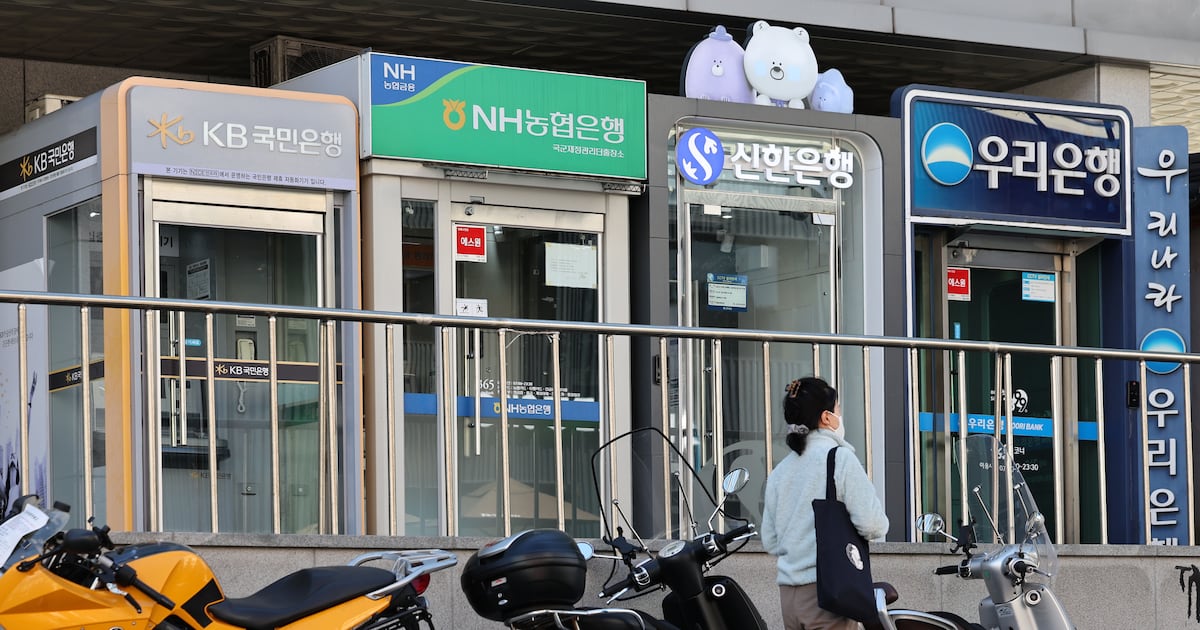
Since late September, incidents were reported at Shinhan, KB Kookmin, Hana and BNK Busan banks, as well as Ye Garam, Welcome and OK Savings Banks and Hyundai Capital.[1] Authorities later confirmed hacking damage at Daishin Securities, Bithumb and Mirae Asset Global Investments.[1] About 50,000 cases of personal information were leaked from Ye Garam Savings Bank; the FSS began a 10-day on-site inspection there on October 13 and requested an improvement plan.[1] KB Kookmin first reported 119 people affected by leaked personal information, then identified another 2,091 victims.[1] The FSS extended its inspection to investigate the circumstances of that breach.[1]
Proposals for AI-era risks
Authorities are considering a joint AI-based security monitoring system organized around financial-sector associations as a response to potential widespread AI-driven attacks.[2][1] Recent attacks may have involved AI agents autonomously identifying and infiltrating vulnerabilities, according to the report.[1] Authorities said they plan exhaustive inspections of cybersecurity management systems and want threats identified by individual companies to be reported quickly to regulators and shared with other firms.[3] They will also seek a regulatory basis for more frequent, regular vulnerability testing and consider expanding cybersecurity-management support for small and midsize financial companies facing AI-driven risks.[3]
For financial-sector leaders, the immediate operational question is whether vulnerabilities found in self-inspections are fixed and verifiable. Association-level AI monitoring remains under consideration, so teams should distinguish the proposal from measures that authorities have formally announced.
Why it matters
Bring this to your team — one session a day, built for your industry.
kju.ai is built for teams: daily sessions, team analytics, and rollout support for your organization.
For teamsHow this developed
2 November 2026
Financial authorities tighten breach checks and consider shared AI monitoring