EU draft would let adults disable compulsive-use features
The European Union’s proposed Digital Fairness Act would require companies to let adult users switch off features that encourage compulsive or excessive use, according to a draft Bloomberg says it reviewed. Bloomberg’s headline also describes the draft as targeting AI chatbot features alongside addictive social media.
Key takeaways · 4
- 01
Adult users would be able to switch off features that encourage compulsive or excessive use under the reported draft.
- 02
The draft would require explicit consumer agreement before a free trial becomes a paid subscription.
- 03
The Commission was scheduled to present the Act on November 11 alongside a reform of the Consumer Protection Cooperation framework, according to MLex.
- 04
The proposals would still need approval from the European Parliament and EU governments to become law.
Controls for compulsive-use features
Bloomberg reported that it had seen a draft of the Digital Fairness Act and that the draft would require companies to let adult users switch off features that encourage compulsive or excessive use.[1] Bloomberg’s headline describes the proposal as addressing AI chatbot features as well as addictive social media.[1] That framing is a report about the draft’s scope, not evidence that every chatbot or social-media feature would be restricted. The Commission describes addictive design as one of several issues the initiative aims to address.[3]
More consumer-facing rules
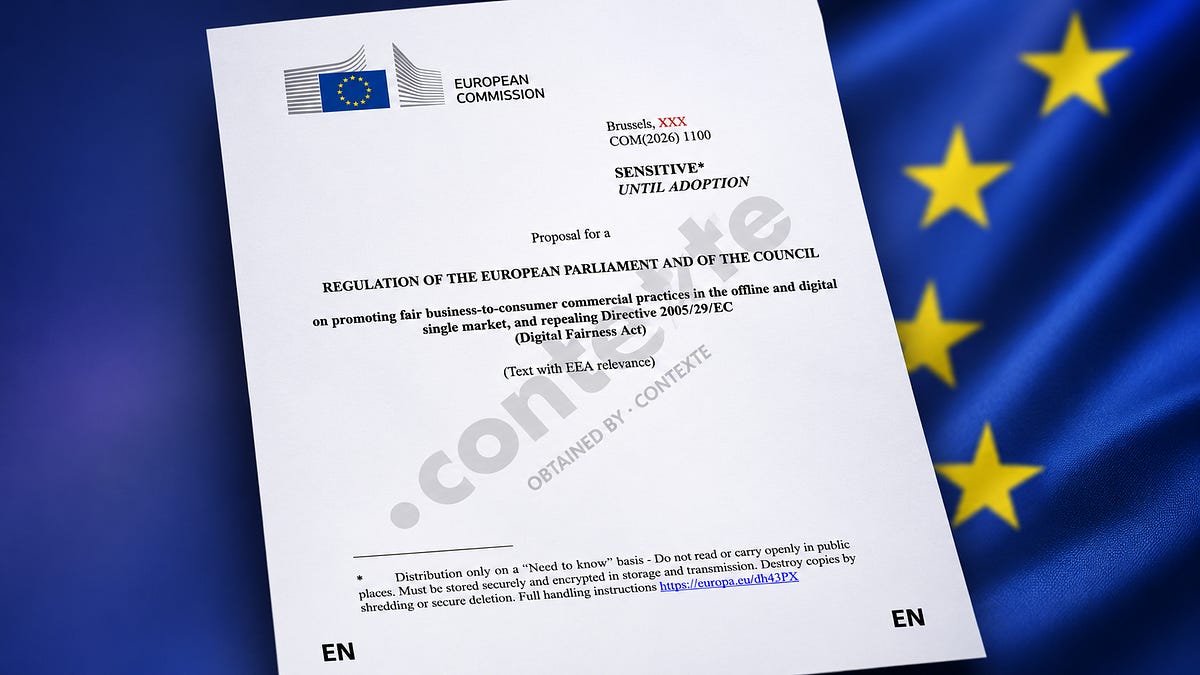
MLex reported that the leaked draft would require consumers’ explicit agreement before a free trial became a paid subscription.[2] The Commission says the initiative aims to address dark patterns, unfair personalisation, influencer marketing, pricing practices and digital-contract issues, among other topics.[3] A newsletter about the draft says it would generally prohibit manipulative online interface design and restrict personalised advertising.[4] The newsletter also says it would require easier online cancellation and renewal reminders.[4] These details come from reporting on a draft, rather than an enacted law.
Timetable and legal status
MLex reported that the Commission was scheduled to present the Digital Fairness Act on November 11, alongside a reform of the Consumer Protection Cooperation framework.[2] The proposals would need approval from the European Parliament and EU governments before becoming law, according to MLex.[2] The Commission says the initiative is intended to strengthen consumer protection and digital fairness, ensure a level playing field and simplify business rules.[3] For businesses assessing product or contract changes, the distinction between a scheduled presentation and rules that have completed the approval process is important.
Children are a stated focus
The Commission identifies vulnerable consumers, particularly minors, as a key focus of the initiative.[3] It said it surveyed almost 5,000 children from all EU member states in April 2026 about issues related to the planned Act.[5] In that survey, 48% called for rules on addictive design that keeps users online longer, while 58% wanted better protection from personalised advertising and pricing.[5] The Commission also reported that 69% believed influencers should only promote products to children that are safe and appropriate, and 72% favoured some form of age verification on social media.[5]
For teams responsible for digital products, subscriptions or marketing, the reported draft is a reason to map where user controls, trial conversions and personalisation intersect with consumer protection. Treat the details as proposals to monitor, not as requirements already in force.
Why it matters
Bring this to your team — one session a day, built for your industry.
kju.ai is built for teams: daily sessions, team analytics, and rollout support for your organization.
For teamsHow this developed
9 November 2026
EU draft would let adults disable compulsive-use features
Sources
- EU Targets Addictive Social Media, AI Chatbot Features in Draft Law - Bloombergbloomberg.com
- Digital businesses face addictive-design controls under draft EU consumer law | MLex | Specialist news and analysis on legal risk and regulationmlex.com
- Review of EU consumer lawcommission.europa.eu
- Contexte publishes leaked draft of Digital Fairness Actnewsletter.digitalfairnessact.com
- Commission survey shows children want better rules to ensure digital fairness for allcommission.europa.eu
- EU takes aim at TikTok, Meta's 'addictive designs' for teens | Reutersreuters.com