Data-center power plans face voter and regulatory scrutiny
Voters, governors and utility regulators are weighing data-center growth alongside its electricity demands. MLQ.ai’s tracker puts Texas at 23.2% of its disclosed planned U.S. AI-campus capacity.
Key takeaways · 4
- 01
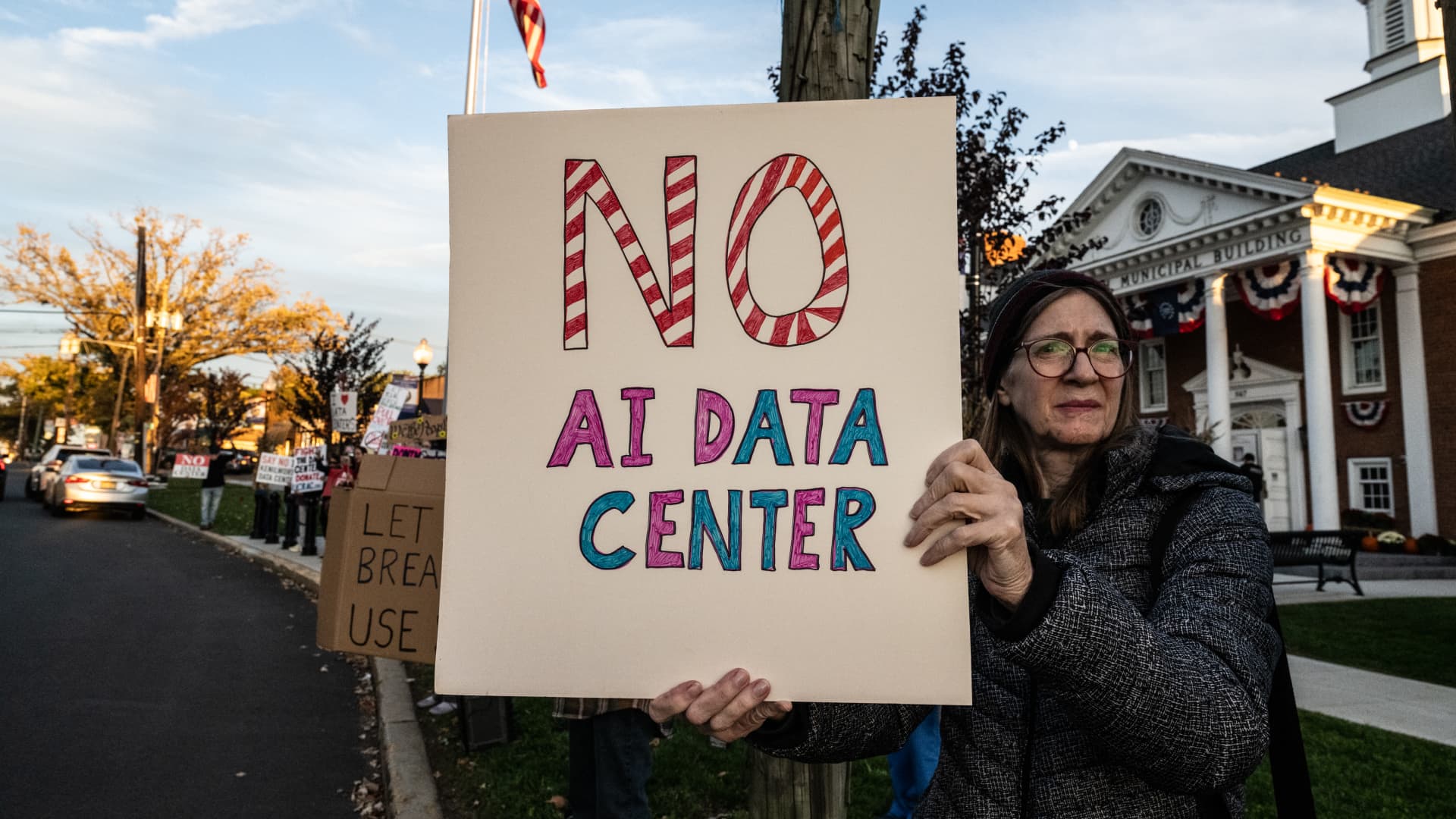
Ballotpedia reported voter support for limiting development in 40 of 41 local contests; 27 measures limiting it or expressing opposition were approved.
- 02
MLQ.ai counted 52 active Texas AI campuses with 44.4 GW of disclosed planned capacity, 23.2% of its 191.6 GW U.S. total.
- 03
Gina Hinojosa pledged to halt Texas data-center approvals until the Legislature passes protections, but the pledge does not itself change state law.
- 04
OpenAI says it will cover electricity and infrastructure costs for its use and provide financial assurances before major spending.
Voters send a signal on development
Ballotpedia reported that voters favored limiting data-center development in 40 of 41 local ballot-measure contests on Nov. 3.[1] It said voters approved 27 measures that limited development or expressed opposition to it.[1] Ohio accounted for 21 of the local measures.[2] A CNBC Voter Poll found that 56% of voters considered data centers a crucial or major factor in their decision.[3] These results indicate voter concern, but the evidence does not establish that every measure had the same effect or that local votes directly determine state policy.
Texas combines a pause with a large pipeline
Texas Gov.-elect Gina Hinojosa pledged to halt all data-center approvals until the Legislature passes laws to protect Texans.[4] She won the governor’s race, and approvals could remain paused if she keeps her campaign promises.[4] The pledge does not itself change Texas law; implementation depends on executive action and legislation.[5] Her stated priorities include requiring operators to hire union workers, protecting community water supplies and stopping companies from using nondisclosure agreements.[4] Separately, Abbott halted new data-center grid connections on Aug. 3 and ordered an audit of power demand, environmental effects and developer tax breaks.[5]
Power access and planned capacity
ERCOT was tracking more than 400 GW of data-center projects seeking grid connections.[5] MLQ.ai counted 52 active Texas AI campuses with 44.4 GW of disclosed planned capacity, or 23.2% of its 191.6 GW nationwide total.[2] Of those Texas campuses, 16 representing 25.9 GW—58% of the state’s tracked capacity—list on-site or other non-utility-grid power.[2] These figures describe different measures: projects seeking grid connections and disclosed campus capacity. Duke Energy reported a 15.4-GW large-load pipeline, including 7.8 GW under signed agreements.[2]
Georgia tests protections for customers
Democrats won a 3-2 majority on Georgia’s Public Service Commission beginning in January, the party’s first control of the regulator in 30 years.[6] Georgia Power’s contract to serve a 3.2-GW OpenAI campus was approved with its public copy fully redacted.[2] Georgia Power promised other customers would not cover revenue shortfalls if OpenAI or another data-center customer ends its contract early.[2] OpenAI says it will pay the full cost of the electricity it uses and the infrastructure needed to serve it, and provide financial assurances before major spending if a project is delayed, reduced or canceled.[7] Its Georgia Power agreement also allows deliveries to be reduced by up to 1,000 MW during high demand.[7]
For professionals planning power-intensive projects, these developments make local approval, grid access and customer protections important parts of the same decision. Treat announced capacity, requests for grid connections and signed agreements as distinct measures when assessing project exposure.
Why it matters
Bring this to your team — one session a day, built for your industry.
kju.ai is built for teams: daily sessions, team analytics, and rollout support for your organization.
For teamsHow this developed
8 November 2026
Data-center power plans face voter and regulatory scrutiny
Sources
- Voters favored limiting data center development in 40 of 41 local ballot measures on Nov. 3. - Ballotpedia Newsnews.ballotpedia.org
- The midterms put AI data centers before voters, governors and utility regulators, with Texas holding 23% of planned capacity | MLQ.aimlq.ai
- Voters rebuff data centers in every ballot measure except onecnbc.com
- Under Hinojosa, Texas data center approvals could stay pausedtexastribune.org
- Texas governor-elect Hinojosa gets SpaceX land sale talk pulled and pledges to freeze data center approvals | MLQ.aimlq.ai
- Democrats won control of Georgia Power’s regulator for the first time in 30 years | Fortunefortune.com
- Setting a new standard for responsible AI infrastructure | OpenAIopenai.com