Cursor reports malicious Claude Code extension version
Cursor said it found a malicious version of the Anthropic.claude-code extension in its VS Code Marketplace and removed it. The version attempted to install a persistent SSH backdoor and collect host details.
Key takeaways · 4
- 01
Check whether your organization used version 2.1.313 during the reported October 29 availability window.
- 02
Cursor said it would contact users directly; it estimated that at most 5,000 users were affected.
- 03
The attempted local SSH-enablement step required administrator rights and would fail on most macOS and Windows hosts, but the extension still added its key, installed persistence and sent host details.
- 04
Cursor advised isolating hosts showing evidence of payload execution or backdoor installation.
What Cursor found
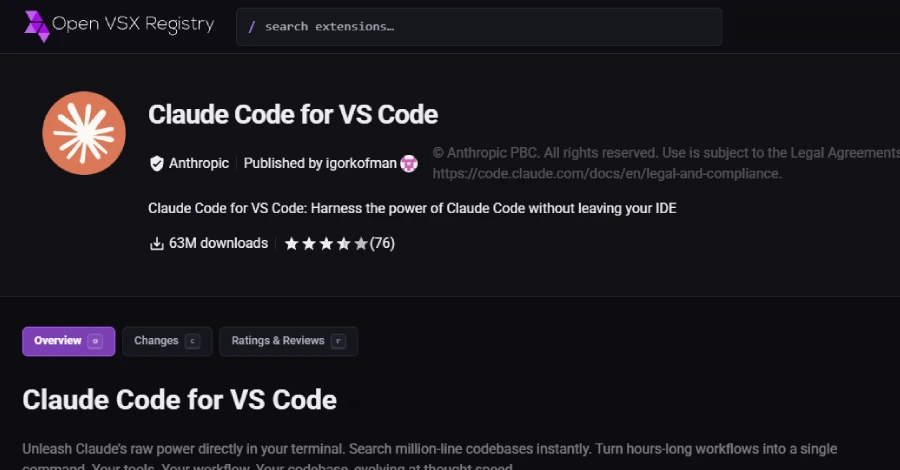
Cursor said the affected item was Anthropic.claude-code version 2.1.313 in its VS Code extension Marketplace.[1] It said the version was available from about 2:27 a.m. to 1:35 p.m. Pacific Time on October 29, 2026, and that at most 5,000 users were affected.[1] Cursor said the malicious version was not developed by Anthropic.[1] The Hacker News reported that the update appeared under the extension’s legitimate publisher identity, while the method used to introduce it remained unclear.[2]
What the extension attempted
Cursor said the extension collected host and user details, including the hostname, username, operating system, architecture, home-directory path, environment-variable names, working directories, configured Git email and public IP.[1] It attempted to add an attacker-controlled SSH key labeled “svc-telemetry” to the user’s authorized_keys file, enable local SSH and establish a reverse SSH tunnel.[1] It also attempted to keep the tunnel active using a macOS LaunchAgent or a Windows scheduled task, with a Startup-script fallback; background scripts retried roughly every 60 seconds.[1]
The limitation and the remaining activity
Cursor said enabling local SSH required administrator rights and would fail on most macOS and Windows hosts.[1] However, Cursor said the extension still added its key, installed persistence and sent host details to the attacker.[1] It reported host details and backdoor status through an HTTP POST to /beacon on port 8099.[1] Cursor said the attacker’s server no longer functioned, making the reverse shell and host-detail POST nonfunctional.[1] The Hacker News reported that no other follow-on payloads had been observed, while noting that a reverse tunnel could let an operator issue commands or transfer files.[2]
Cursor’s response and user guidance
Cursor removed the malicious version, blocked further distribution and shut down its VS Code Marketplace as a precaution.[1] It said its audit found no other extensions had been tampered with, and that it rotated its keys, rebuilt the marketplace and brought it back online.[1] Cursor also said it worked with the hosting provider to take the malicious server offline and disrupt the attack.[1] It said it had no evidence that other extension versions or the official distribution were affected.[1] As of October 30, 2026, Anthropic had published version 2.1.314 to Open VSX and the Microsoft VS Code Marketplace.[2] Cursor advised users to isolate hosts showing evidence of payload execution or backdoor installation.[1]
The incident shows why teams should verify extension versions and distribution channels rather than relying only on a familiar publisher identity. For organizations managing developer environments, checking for the named version and following Cursor’s isolation guidance can help focus response work on the evidence described.
Why it matters
Bring this to your team — one session a day, built for your industry.
kju.ai is built for teams: daily sessions, team analytics, and rollout support for your organization.
For teamsHow this developed
30 October 2026
Cursor reports malicious Claude Code extension version