Claris previews Harbor for private AI across Apple silicon Macs
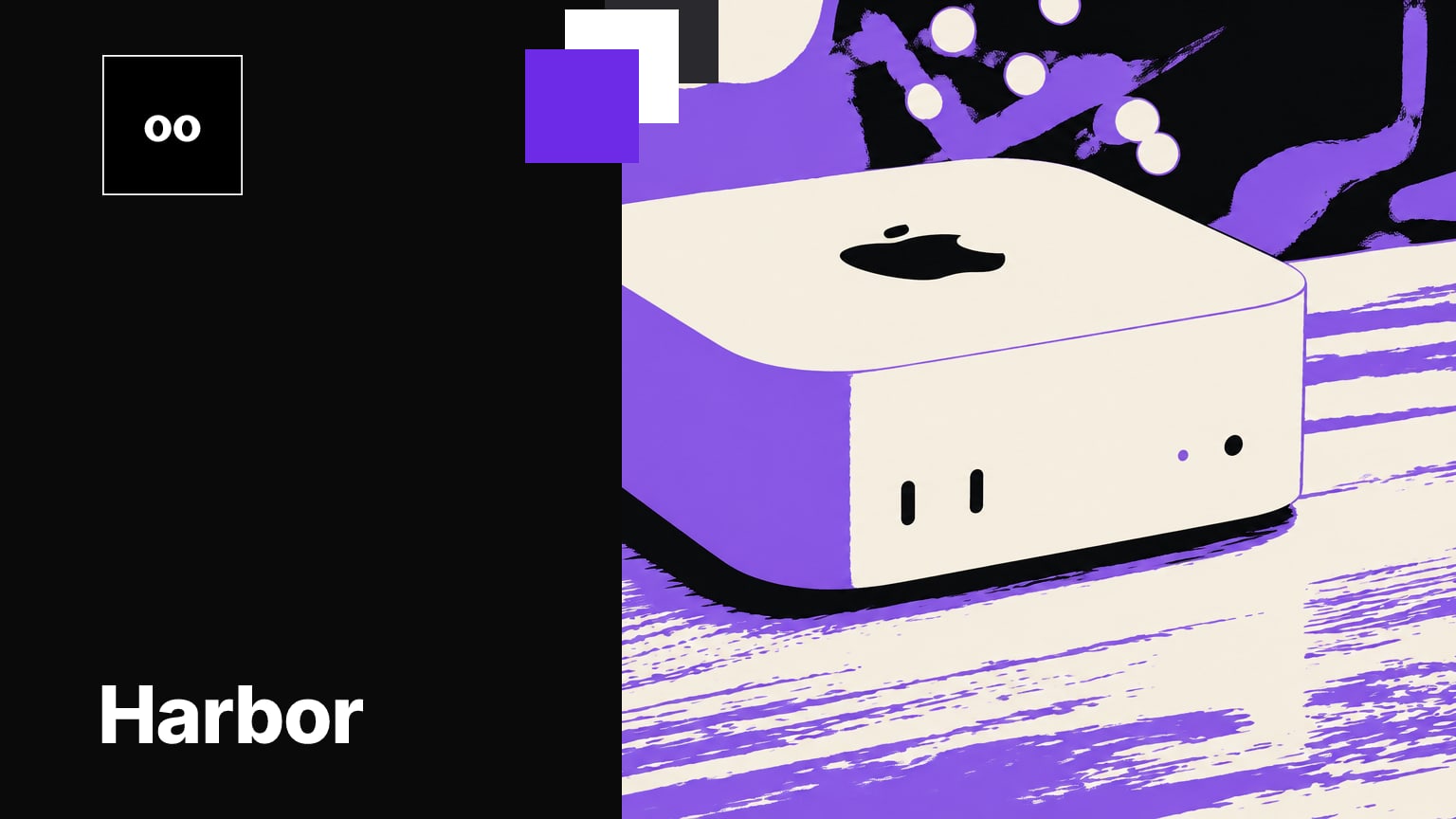
Claris describes Harbor as early access to a private AI server that turns Apple silicon computers into a place to run open-weight models. The company labels Harbor a private preview.
Key takeaways · 4
- 01
Claris presents Harbor as early access to a private AI server, and labels it a private preview.
- 02
The service runs open-weight models and can be set up as an endpoint on one Mac.
- 03
Users can connect Macs over Thunderbolt 5 to pool unified memory on hardware they control.
- 04
Claris says Harbor has no cloud fees or per-token billing, and keeps data and prompts within the physical Mac hardware.
A private server for open-weight models
Claris describes Harbor as early access to a private AI server from Claris, which it identifies as an Apple company.[2] The company says Harbor turns Apple silicon computers into a private AI server and runs open-weight models.[2] Claris also says the service has zero cloud fees and no per-token billing.[2] For teams considering local model use, those details frame Harbor as an option to evaluate on hardware they control, rather than a cloud-billed service; the description does not establish what models or workloads will perform well.
One Mac or a Thunderbolt cluster
Claris says users can set up an endpoint in minutes on a single Mac.[2] For larger setups, its description says users can connect multiple machines over Thunderbolt 5 and pool unified memory on hardware they control.[2] Aaron Perris’s description adds that Harbor automatically detects devices connected over Thunderbolt 5 to form a cluster, and that users can browse for, download and load open-weight models within the app.[1] Perris also says Harbor can run models that exceed the capacity of any single computer and that a cluster can serve more concurrent requests across its Macs.[1]
What the preview indicates
Claris labels Harbor a private preview, while 9to5Mac reported that leaker Aaron Perris had found evidence of an Apple Mac app in development.[2][1] Perris’s post and 9to5Mac’s report were both dated November 10, 2026.[1] Perris’s description says getting started requires no manual configuration, command line or infrastructure expertise.[1] MacRumors says Apple added RDMA over Thunderbolt 5 with macOS Tahoe 26.2, making clustering faster.[3] Together, the descriptions point to a local setup designed to be simpler to assemble, but they do not establish general availability.
Harbor’s approach could make it easier for teams to test local open-weight models while keeping data on hardware they control. The practical decision is whether a private preview, Mac-based setup and Thunderbolt 5 cluster fit a team’s model, capacity and deployment needs.
Why it matters
AI training for your team
kju.ai is built for teams: daily sessions, team analytics, and rollout support for your organization.
How this developed
11 November 2026
Claris previews Harbor for private AI across Apple silicon Macs