Boltz raises $110 million as paid-customer usage grows
Boltz announced a $110 million Series A led by Bessemer Venture Partners. The company said molecular-token usage among paying customers has grown 50-fold since June.
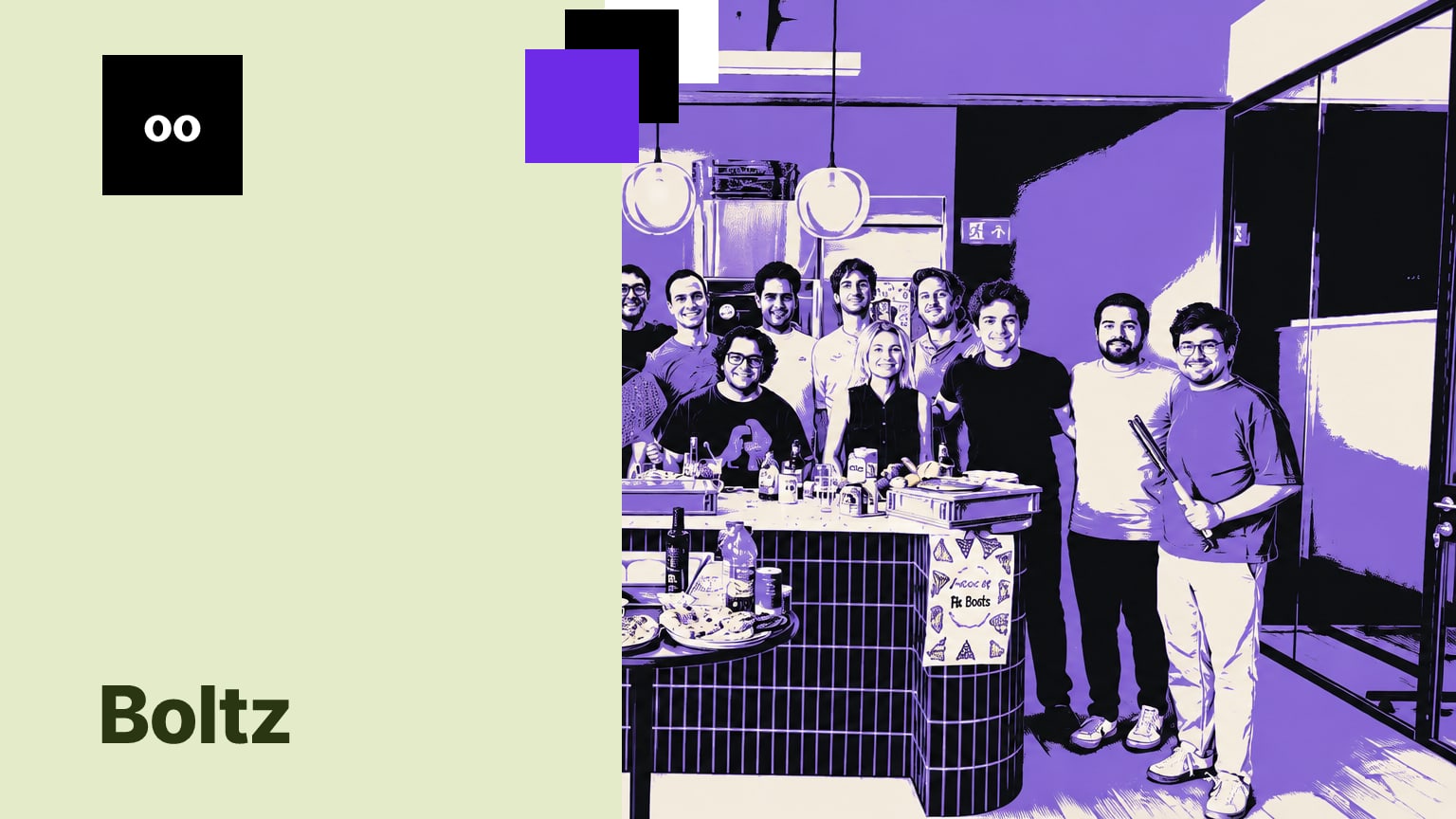
Key takeaways · 4
- 01
Boltz raised $110 million in a Series A led by Bessemer Venture Partners.
- 02
Boltz says paying-customer molecular-token usage has grown 50-fold since June.
- 03
Boltz says six of the world’s 20 largest pharmaceutical companies have signed partnerships with it.
- 04
The company says the funding will go toward compute, data, meeting partner demand and expanding its team.
Funding is aimed at capacity
Boltz said the $110 million Series A will fund investment in compute and data, help the company meet partner demand and support team expansion.[1] Bessemer Venture Partners led the round.[1] Existing investors Andreessen Horowitz, Amplify Partners, Zetta Venture Partners and Obvious Ventures reinvested, according to Boltz, which also welcomed Greycroft, F-Prime Capital, Hummingbird and Benchling.[1] The company said it has grown from a small group of MIT researchers to 40 scientists and engineers in just over a year.[1]
Usage and partnerships
What the models are designed to do
Boltz released its first proprietary models, BoltzMol-1 and BoltzProt-1, in June.[1] Tech.eu describes the software as helping pharmaceutical and biotech researchers design potential drugs and select candidates for laboratory testing; the models can predict bound protein-and-drug structures, estimate binding strength and propose molecules intended to bind a target.[2] Boltz says its models helped discover small-molecule hits and design protein binders for most challenging targets it pursued, in a fraction of the time and cost of traditional methods or previous models.[1] These performance statements are company-reported.[1]
Early results and access
Boltz said a single prediction can cost as little as $0.025.[3] It also reported that its BoltzMol-1 pipeline found confirmed hits on six of 10 challenging targets while testing 28 to 51 compounds per target, and that BoltzProt-1 nearly triples the de novo nanobody hit rate achieved by BoltzGen on challenging targets.[3] Boltz Lab launched in January to make the company’s latest models available to scientists and AI agents; the company said thousands of scientists signed up within its first few weeks.[1]
For research leaders, the funding and reported customer activity are signals to watch when assessing computational drug-design options. Boltz’s hit-rate and cost claims may be relevant to pilot planning, but teams should distinguish company-reported results from independently validated performance.
Why it matters
AI training for your team
kju.ai is built for teams: daily sessions, team analytics, and rollout support for your organization.
How this developed
20 November 2026
Boltz raises $110 million as paid-customer usage grows
Sources
- Boltzboltz.com
- London-based Boltz raises $110M Series A - Tech.eutech.eu
- Boltzboltz.com