Australia plans limits on suburban AI data centres
The Albanese government plans to ban AI data centres near homes and recreational facilities, as it drafts legislation to regulate the facilities. The proposal follows voter backlash over large developments in inner Sydney and Melbourne suburbs.
Key takeaways · 4
- 01
The proposed ban concerns AI data centres near homes and recreational facilities, not all data centres.
- 02
The government is drafting legislation and considering restrictions on major facilities in suburban neighbourhoods.
- 03
The standards Charlton described would require operators to add to energy supply, use water responsibly, train Australians and contribute to research.
- 04
Operators have warned that an unclear government position risks investment in Australia.
What the proposal covers
The Albanese government plans to ban AI data centres from being built near homes and recreational facilities.[1] It is drafting legislation to regulate data centres and considering restrictions on major AI facilities in suburban neighbourhoods.[2] The proposal comes after voter backlash over large data-centre developments in inner Sydney and Melbourne suburbs.[1] Assistant Minister Andrew Charlton has argued that Australia needs data centres, but not facilities that make poor neighbours.[4] He said the government’s approach is to reject data centres that provide nothing in return, rather than ban all data centres.[4]
Standards and local contributions
Charlton referred to the Prime Minister’s new Australian Standards for AI data centres.[4] He said the standards would require operators to add to energy supply, use water responsibly, train Australians and contribute to research.[4] Charlton also said data centres support services including banking, education, news, groceries and Medicare.[4] He argued that if Australia did not build data centres domestically, facilities would instead be located overseas, including in Singapore, Tokyo and Virginia.[4] These standards and the proposed restrictions form part of a debate over what operators should contribute and where facilities should be built.[1][4]
Investment and regional concerns
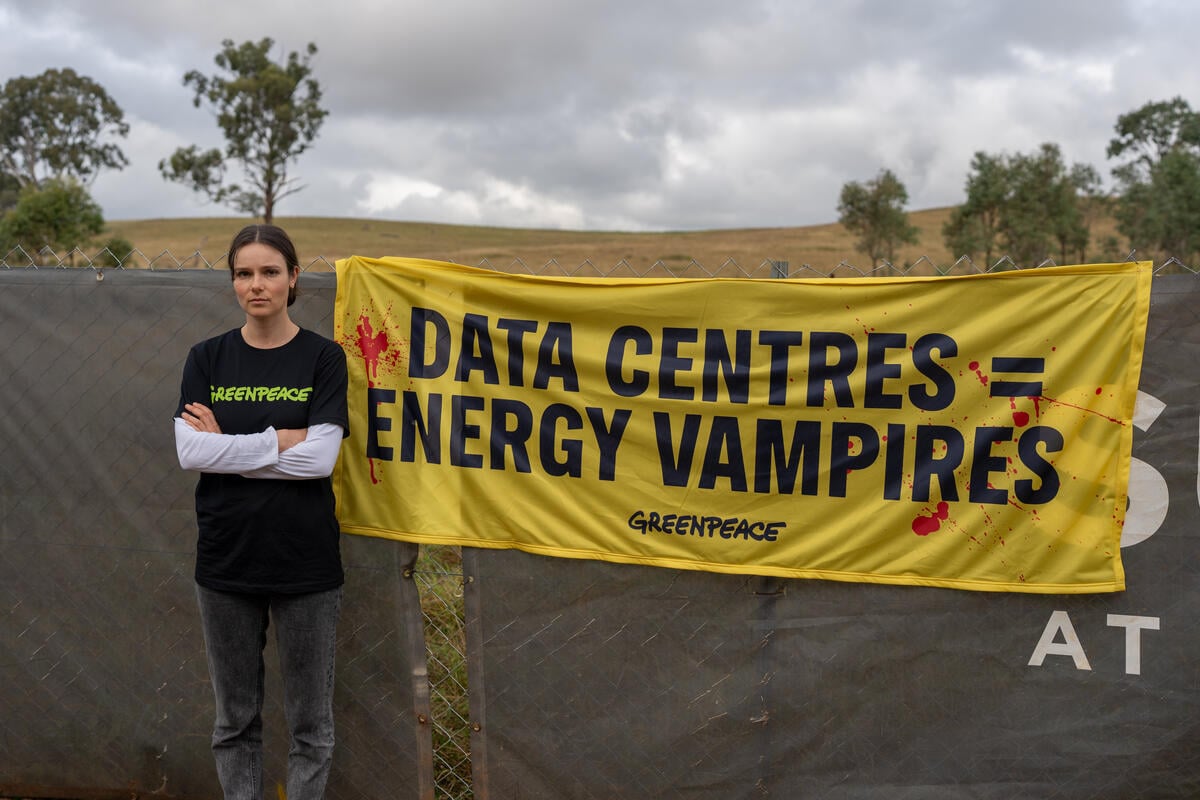
Data-centre operators warned that the government’s unclear position risks investment in Australia.[2] Greenpeace argued that moving development out of suburbs without addressing underlying problems would shift the issue to regional Australia.[3] It said some regional proposals are in more water-scarce and environmentally sensitive areas, near sources of fracked and coal seam gas.[3] Greenpeace identified the Beetaloo Basin in the Northern Territory and Western Downs in Queensland as places where proposals could drive new gas development, which it warned could threaten Australia’s energy transition.[3] It also said communities including Berry Springs and Dalby did not want data centres that bring no local benefit.[3]
Copyright policy remains in play
The government is also changing its plans to allow technology companies to scrape internet content freely without compensating creators.[1] OpenAI and Anthropic are the companies named in the copyright-regime discussion.[1] The two policy issues raise separate questions for companies: where facilities may be built, and what rules will govern use of online content.[1]
For data-centre operators and organisations planning AI infrastructure, the distinction between a proposed location ban and a blanket ban matters when assessing future options. Teams should track both the developing regulatory framework and the standards Charlton described, while treating investment and regional impacts as unresolved concerns.
Why it matters
Bring this to your team — one session a day, built for your industry.
kju.ai is built for teams: daily sessions, team analytics, and rollout support for your organization.
For teamsHow this developed
1 November 2026
Australia plans limits on suburban AI data centres
Sources
- AI data centre ban proposed by Anthony Albanese, Labor governmentafr.com
- Data centre regulations are confusing and risk investment in Australia, industry leaders warnafr.com
- AI data centre ban in suburbs would not address fundamental issues - Greenpeace Australia Pacificgreenpeace.org.au
- We need data centres, but only the good ones | The Hon Dr Andrew Charlton MP | Ministers for the Department of Industry, Science and Resourcesminister.industry.gov.au