Attackers used Claude pages and Google Ads to spread malware
Attackers used Claude’s sharing features and paid Google ads to direct people to fake software-installation pages hosted on claude.ai. Gen Digital researchers found campaigns targeting Mac and Windows users.
Key takeaways · 4
- 01
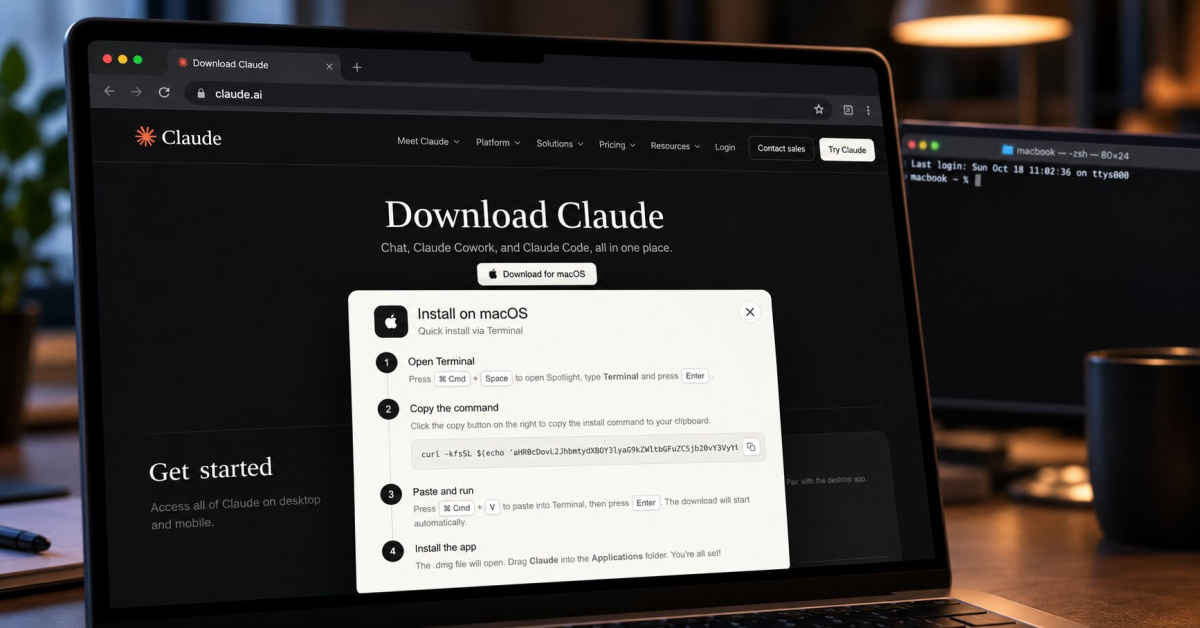
Treat a Terminal command on a purported app-installation page as a reason to verify the source: the fake Mac page offered no installer.
- 02
Claude’s sharing features can be used to publish content on claude.ai; their presence does not mean Anthropic authored it.
- 03
Paid Google ads directed people to the fake pages, which could appear near the top of search results.
- 04
The Mac and Windows campaigns used different installation instructions and different malware.
How the pages reached users
The pages were hosted on claude.ai, Anthropic’s own domain, and attackers used Claude’s conversation-sharing and Artifact features to put malicious content there.[1] Shared Chats and public Artifacts are ordinary Claude features for sharing content.[1] The fake pages used Claude branding and appeared to offer simple desktop-app installation instructions, but Anthropic did not publish those instructions.[1] Attackers paid for Google ads to send users to the pages, and the ads could place them near the top of search results.[1][2]
What happened to Mac users
The fake Mac page did not offer an installer; it told visitors to paste a command into Terminal.[1] Gen Digital’s report says everybody who followed the steps installed Atomic macOS Stealer, or AMOS.[1] The malware is designed to steal passwords, browser sessions, cryptocurrency wallets and other sensitive data.[1] It can also replace legitimate Ledger and Trezor desktop apps with modified versions.[1] Those modified apps ask users for their recovery phrase, giving attackers what they need to take victims’ cryptocurrency.[1]
A separate Windows campaign
Researchers also identified a campaign that used Claude’s sharing features and Google Ads to target Windows users.[1] It used different installation instructions and different malware from the Mac campaign.[1] The available evidence does not identify the Windows malware or describe its installation steps, so the Mac instructions and AMOS should not be assumed to apply to Windows.[1] Researchers found several rotating Artifacts associated with two ad campaigns and described the operation as ongoing and funded.[2]
What the attack did not require
Neither campaign required attackers to compromise Anthropic’s infrastructure or register a convincing imitation domain.[1] That distinction matters when assessing a page that appears on a company’s genuine domain: the domain alone did not establish that Anthropic created or endorsed the content.[1] For comparison, the Claude desktop app uses a regular installer from claude.com, not a Terminal command.[3] Teams can use that distinction as a practical prompt to verify installation instructions through the software provider’s official source.
The campaigns show how familiar sharing features and paid search placement can make malicious instructions appear credible without compromising the service’s infrastructure. For security and IT teams, checking both the source and the installation method can help staff evaluate suspicious software guidance.
Why it matters
Bring this to your team — one session a day, built for your industry.
kju.ai is built for teams: daily sessions, team analytics, and rollout support for your organization.
For teamsHow this developed
29 October 2026
Attackers used Claude pages and Google Ads to spread malware