Apple launches study of conversational AI for health
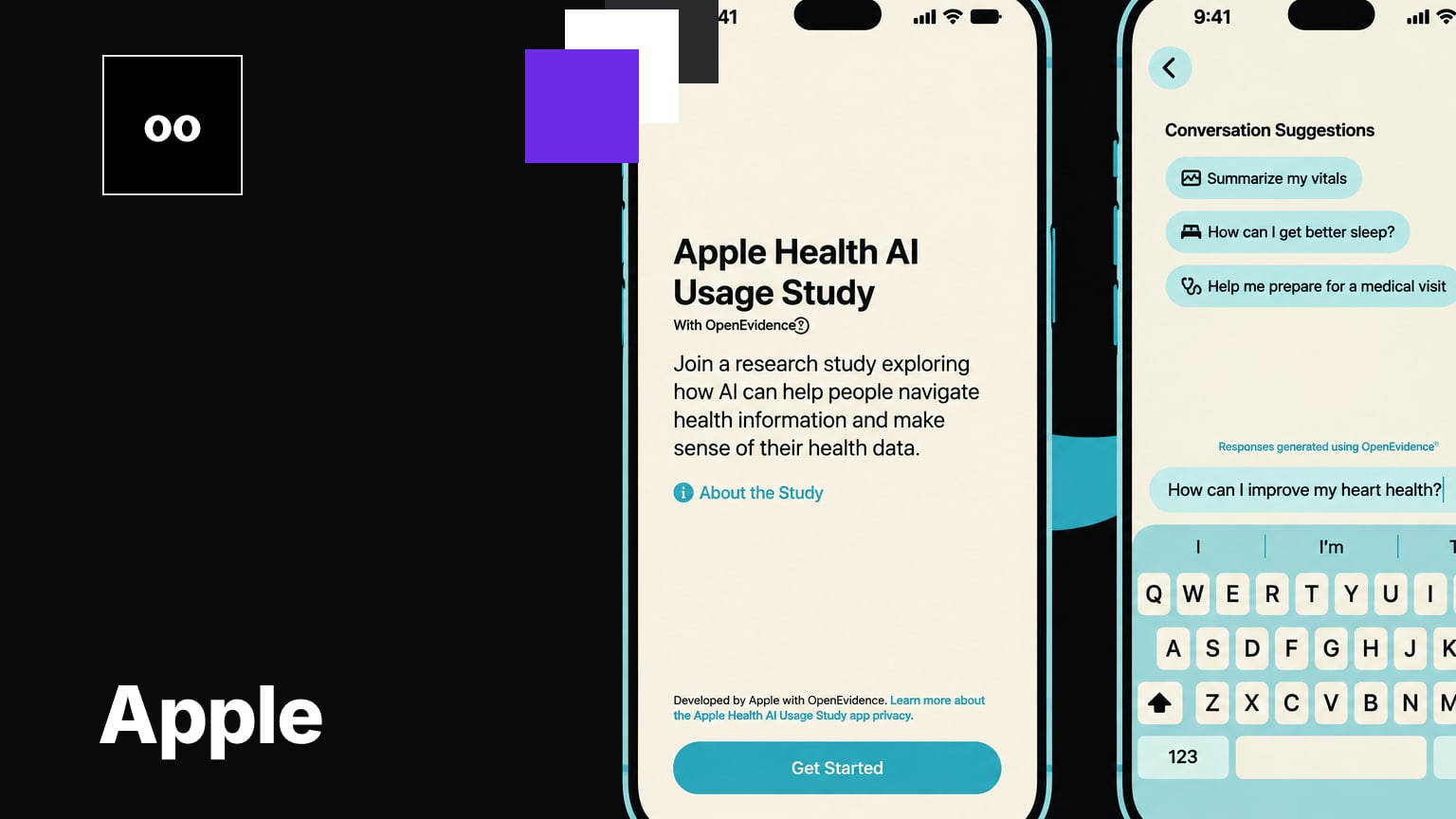
Apple has launched the Apple Health AI Usage Study to examine how people use conversational AI health tools. The study is being conducted with OpenEvidence, which provides the underlying clinical AI technology.
Key takeaways · 4
- 01
The study is open to U.S. residents aged 21 or older who have an Apple Intelligence-enabled iPhone 15 Pro or later running iOS 26 or later.
- 02
Participation can last up to 12 months and includes monthly surveys.
- 03
Sharing HealthKit data or imported clinical records is optional and requires separate consent for clinical records.
- 04
Apple says study information will not train AI models; the study does not provide medical advice, diagnosis or treatment.
What the study asks participants to do
Participants can ask the app questions about symptoms, general health, recovery from procedures, fitness and other health concerns.[1] It provides answers in approachable language with links to peer-reviewed clinical sources, and participants can rate answers and describe what they found useful or lacking.[1] The App Store listing says the app can also help users put health data in context, prepare for medical visits and build personalized exercise or meal plans.[4] Apple’s listing says the study app and research do not provide medical advice, diagnosis or treatment.[4]
Who can join and how long it lasts
Apple plans to recruit up to 200,000 participants, who may remain enrolled for up to 12 months.[3][1] Eligibility is limited to people aged 21 or older who live in the United States and have an Apple Intelligence-enabled iPhone 15 Pro or later running iOS 26 or later.[1] The study runs through a dedicated app separate from Apple’s Health and Research apps.[1] The App Store lists the study app as free, available only for iPhone, and requiring iOS 26.0 or later.[4]
Optional data and privacy details
Participants may choose to share HealthKit data, including resting heart rate, activity and sleep, to receive more personalized responses.[1] Those who have imported clinical records into Apple Health can separately consent to share them with the study; those records may include lab results.[1] Apple says information collected in the study will not be used to train AI models, and that data will be anonymized before being sent to a secure third-party cloud provider.[3][2] According to Apple, OpenEvidence deletes query and response data after 24 hours.[2]
What Apple wants to learn
Apple says it aims to study user trust, response quality, comprehension and everyday health actions to inform responsible design of health AI.[1] A speaker described a dedicated research study as a thoughtful way to understand how people engage with, comprehend and evaluate health AI in everyday life.[2] The study’s focus on user ratings and monthly surveys offers participants ways to report their experience, alongside their questions to the app.[1][2] The broader context is that a KFF survey found roughly one in three U.S. adults had turned to an AI chatbot for health information.[1]
For professionals building or evaluating health AI, the study focuses on how people understand and assess answers, not just on the technology supplying them. Its optional data-sharing choices and stated limits also make consent and clear communication relevant considerations for similar research.
Why it matters
AI training for your team
kju.ai is built for teams: daily sessions, team analytics, and rollout support for your organization.
How this developed
16 November 2026
Apple launches study of conversational AI for health
Sources
- HLTH26: Apple kicks off 200K-person health AI studyfiercehealthcare.com
- Apple launches new app to study how people use AI for health | TechCrunchtechcrunch.com
- Apple’s new study looks to improve the effectiveness of AI health tools | The Vergetheverge.com
- Apple Health AI Study App App - App Storeapps.apple.com