Anthropic’s Claude Code Desktop Redesign Ushers in Multi-Agent Orchestration
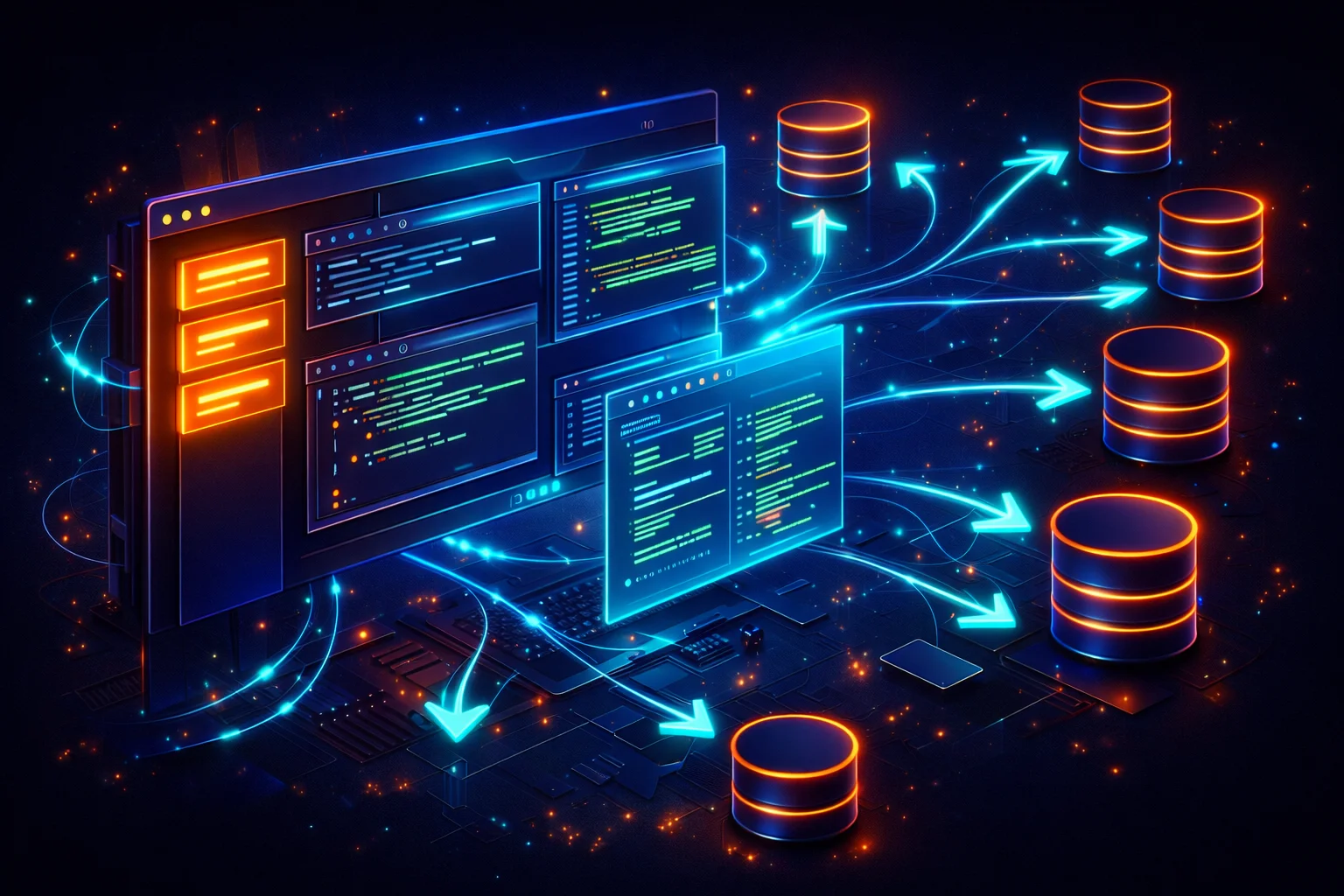
Anthropic has unveiled a sweeping redesign of Claude Code's desktop app, transforming it from a single-threaded coding assistant into a robust agent orchestration platform with parallel sessions, integrated tooling, and enhanced workflow management for modern developer teams.
Key takeaways · 5
- 01
Parallel session management empowers developers to orchestrate and monitor multiple AI code tasks at once.
- 02
Integrated terminal, drag-and-drop layouts, and faster diff viewing reduce the need to switch between external tools.
- 03
Side chats and auto-archiving boost productivity by keeping related discussions and session status organized.
- 04
Plugin parity and SSH expansion increase compatibility with existing developer infrastructure and remote workflows.
- 05
The redesign signals a broader industry shift from single-query AI assistance to agentic, workflow-oriented code collaboration.
Redesign Overview and Philosophy
The April 2026 Claude Code desktop redesign marks a decisive move by Anthropic to reframe the product’s purpose for modern developers. The traditional one-prompt-one-output paradigm gave way to a dashboard built around orchestrating multiple AI agents in parallel—a paradigm Anthropic and industry analysts are now referring to as the 'orchestrator seat' [1][2][4]. In place of the legacy code editor, the new app introduces a session-centric sidebar that allows users to kick off, monitor, and manage several Claude-powered tasks—refactorings, bug fixes, test writing, and more—each with isolated context windows.
The strategy underlying this shift is clear: advanced users and teams weren’t just chatting with AI; they were bouncing between simultaneous agent sessions, often using external tools to patch together fragmented workflows [2][6]. With the redesign, every active or recent session is visible in a sidebar, filterable by status, project, or environment. Sessions auto-archive on PR merge or close, keeping the interface tidy and aligned with real-world collaborative practices.
The multi-session philosophy also repositions the developer’s skill set—no longer just about architecting the perfect prompt, but about decision-making at the workflow level: when to interrupt, merge, review, or reroute agent activity [1][2]. This move, highlighted by internal Anthropic statements and user feedback, puts Claude Code on the frontline of a larger transition in AI-tool interaction models.
Integrated Tools: Reducing Context-Switching
One of the core pain points for AI-assisted coding workflows has been the constant need to shift between editors, terminals, and browser-based previews. Anthropic’s redesign tackles this by embedding an integrated terminal, a file editor fit for quick fixes, a preview pane capable of rendering HTML and PDFs, and a reengineered diff viewer optimized for large code changes—all natively within the desktop app [1][3][5]. This means developers can now run tests with npm or pytest, spot-edit code files, and review visual outputs without ever leaving Claude Code.
Particularly notable is the drag-and-drop workspace layout, which allows users to customize their window arrangement—grouping terminals, chat sessions, or diff panes according to personal or project-specific preference. This granularity in workspace management is a nod to power users accustomed to tools like VS Code but looking for tighter agent integration [2][4].
Expanded SSH support means users on both macOS and Linux can point sessions at remote machines, a boon for teams that maintain high-performance or isolated dev environments in the cloud. Plugin parity with the CLI ensures that corporate or community tools—such as code linters or deployment utilities—work identically inside the app, closing gaps that previously pushed users back to the command line [3][6].
New Workflow Features: Multi-Session and Side Chats
The standout feature of this release is the robust multi-session sidebar, which treats every coding task as its own session, tracked and archived intelligently according to lifecycle events like code merges or task completion [4][6]. Users can filter by project or environment, group related sessions, and keep large-scale work from devolving into chaos. For agencies, solo founders, or teams juggling several client codebases, this upgrade represents a tangible streamlining of daily operations [2][4].
A critical refinement comes in the form of side chats, accessible via a simple keyboard shortcut. These enable users to branch off questions or clarifications during an agent task—such as inquiring about a design choice or troubleshooting an unexpected response—without contaminating the main thread’s workflow. This targeted isolation reduces the risk of derailing complex, long-running agent operations—something that previously required spawning redundant sessions or risking context confusion [4][6].
The update also introduces view modes—Verbose, Normal, Summary—allowing users to modulate the level of detail shown. These improvements respond directly to scaling pain points as developers run an increasing number of agent-driven tasks simultaneously and need clear, actionable overviews [3][6].
Broader Implications for Developer Experience
Anthropic’s overhaul is more than a set of productivity features; it’s emblematic of a wider shift in AI coding expectations. Increasingly, developers see AI agents less as smart autocomplete tools and more as persistent collaborators capable of handling concurrent, nuanced tasks—blurring the line between code generation and workflow automation [2][5]. By internalizing testing, file editing, and review processes directly into the AI tool, the need for constant app-switching is minimized and the tool itself becomes the central hub for agentic software development.
This move has knock-on effects for both individual productivity and team collaboration. Integrated session management supports engineers working across multiple repositories or product lines, while the more advanced session grouping and auto-archive capabilities help agency and consultancy models scale their AI-assisted workflows [4][6].
Competitors like Cursor, GitHub Copilot, and OpenAI Codex are now tasked with catching up, as Anthropic’s integration of session context, management, and plugin workflows creates pressure for deeper end-to-end experiences elsewhere. The industry at large is witnessing a transition where being able to orchestrate and monitor multiple AI-driven efforts simultaneously becomes a core productivity differentiator, rather than an optional advanced workflow [2][5].
Rollout, Access, and Strategic Direction
The redesigned Claude Code desktop app is available immediately for users subscribed to the Pro, Max, Team, and Enterprise plans, as well as API users. There’s no separate upgrade path—the new interface replaces the old app, and users see changes upon their first post-update launch [1][3][6]. SSH support on macOS levels out with existing Linux parity, while additional improvements like reliability upgrades, usage tracking buttons, and streaming agent responses further refine the day-to-day experience.
A companion feature, 'Routines,' debuted alongside the desktop overhaul. While still in research preview, Routines allow developers to schedule AI-powered tasks—essentially prompt-driven automations that run on Anthropic’s cloud, even when the developer’s device is offline. This places Anthropic squarely in the race for intelligent, persistent agent workflows akin to dynamic cron jobs or advanced GitHub Actions, with clear AI context logic [5].
Anthropic’s communication and product framing consistently reference the orchestrator model—a conscious bet on advanced, multitasking users who mix agentic AI, manual oversight, and complex session management. As these expectations gain traction, the landscape for competing AI coding platforms tightens, and the ability to manage and direct fleets of agents, not just generate code, becomes the new baseline [1][2][5].
This redesign sets a new standard for AI-native developer tools, turning code assistants into full orchestration platforms. For practitioners, it changes the core workflow: AI agents can now be managed, monitored, and integrated in parallel, with less reliance on legacy IDEs or manual context management. Expect similar shifts across the AI tool landscape and new demands on team practices, plugin architectures, and workflow security.
Why it matters
Put this to work — one session a day, built for your industry.
Create a free account for a daily session — eight questions and one real-work challenge, on the news that affects your role.
Start freeSources
- Claude Code Desktop Redesign: Hands-On Review (April 2026) | FindSkill.ai — Learn AI for Your Jobfindskill.ai
- Claude Code Goes Full Workstation: Anthropic Redesigns the Desktop App for Parallel Agents — abZ Globalabz.global
- Anthropic Redesigns Claude App on Desktop for Parallel Agents - Thurrott.comthurrott.com
- Claude Code Desktop Redesign 2026: Parallel Sessions Reviewdevtoolpicks.com
- Anthropic's Claude Code gets automated 'routines' and a desktop makeover - SiliconANGLEsiliconangle.com
- Anthropic redesigns Claude Code desktop app to support parallel agent sessions - Absolute Geeks UAEabsolutegeeks.com