AMD EPYC processors to power Google Cloud TPU 8tx
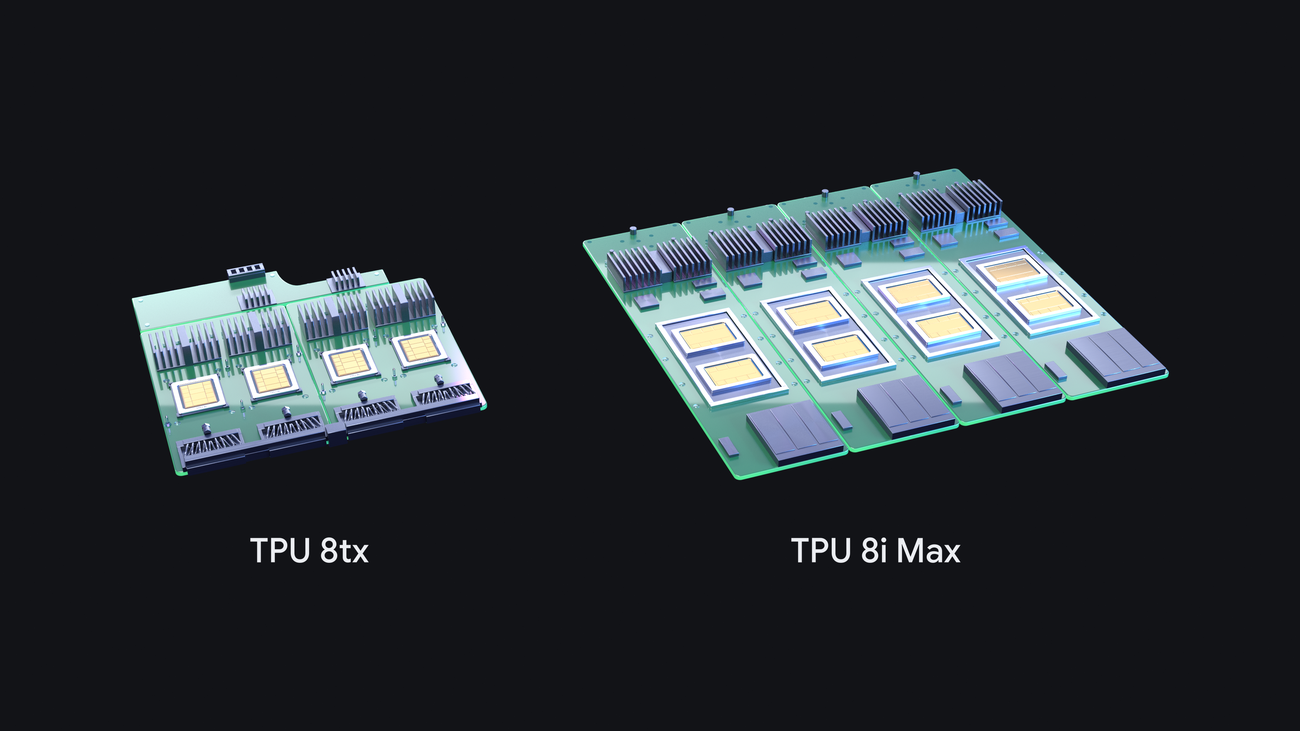
AMD says its fifth-generation EPYC processors will provide host infrastructure for Google Cloud TPU 8tx, pairing AMD CPUs with Google’s eighth-generation TPU architecture. Google Cloud says the system brings hardware-enforced confidential computing to cloud TPUs for the first time.
Key takeaways · 4
- 01
AMD’s fifth-generation EPYC processors will serve as host CPUs for Google Cloud TPU 8tx systems.
- 02
Google Cloud says the EPYC–TPU pairing brings hardware-enforced confidential computing to cloud TPUs for the first time.
- 03
AMD says the collaboration targets inference, fine-tuning and reinforcement learning; TPU 8tx is designed for secure inference.
- 04
The supplied reports give different share-gain figures and describe different trading contexts.
What the companies announced
AMD says its fifth-generation EPYC processors power the host infrastructure for Google Cloud TPU 8tx.[1] Google Cloud says it paired those processors with its eighth-generation TPU architecture inside its AI Hypercomputer.[1] AMD describes the collaboration as combining EPYC performance, Infinity Guard security and x86 compatibility with Google Cloud TPU acceleration.[1] The statement from AMD carries a timestamp of November 9, 2026, at 8 a.m. EST.[1] AMD says organizations can run sensitive AI workloads at scale in the cloud without compromising data protection.[1]
How the system is meant to work
AMD says EPYC CPUs handle host processing in systems using GPUs and custom accelerators, including preparing data and coordinating workloads.[1] On TPU 8tx, AMD says those host-processing capabilities are combined with hardware-rooted security to protect data while it is in use.[1] Google Cloud says the pairing delivers silicon-level data protection and low-latency performance for modern reasoning models.[1]
Security and the wider TPU portfolio
Google Cloud says the pairing brings hardware-enforced confidential computing to cloud TPUs for the first time.[1] AMD characterizes the approach as enabling sensitive AI workloads to run at scale in the cloud without compromising data protection.[1] Google says its eighth-generation TPU portfolio includes TPU 8tx and TPU 8i Max, bringing its total to four new TPU systems in one year.[2] The two named systems have different stated aims: Google describes 8tx as designed for secure inference and 8i Max as designed for massive context.[2]
Market response and operating context
The supplied coverage reports a rise in AMD shares after the announcement, but the figures differ: GuruFocus reported about 4% in Monday morning trading, while Livemint reported 12.5%.[3][4] The evidence does not establish that the reports refer to the same measurement time. AMD says EPYC processors are the host CPU of choice at more than 10 leading hyperscalers and frontier AI labs.[1] It also says its EPYC generations have developed performance, memory-bandwidth and I/O capabilities for accelerated systems.[1]
For teams evaluating cloud AI infrastructure, the announcement puts host processing and hardware-enforced data protection alongside accelerator choice. The practical decision is whether the stated security and workload fit meet a team’s requirements.
Why it matters
Bring this to your team — one session a day, built for your industry.
kju.ai is built for teams: daily sessions, team analytics, and rollout support for your organization.
For teamsHow this developed
10 November 2026
AMD EPYC processors to power Google Cloud TPU 8tx
Sources
- AMD EPYC Expands Its Leadership at the Foundation of AI :: Advanced Micro Devices, Inc. (AMD)ir.amd.com
- Introducing TPU 8tx and TPU 8i Maxblog.google
- AMD Stock Jumps as Google Taps Its Chips for a New AI Systemgurufocus.com
- AMD stock rallies 12% as Google Cloud taps its EPYC processors for next-generation AI infrastructure | Stock Market Newslivemint.com