AGIBOT unveils GO-3 Preview; report cites 85% success in GO-3 trial
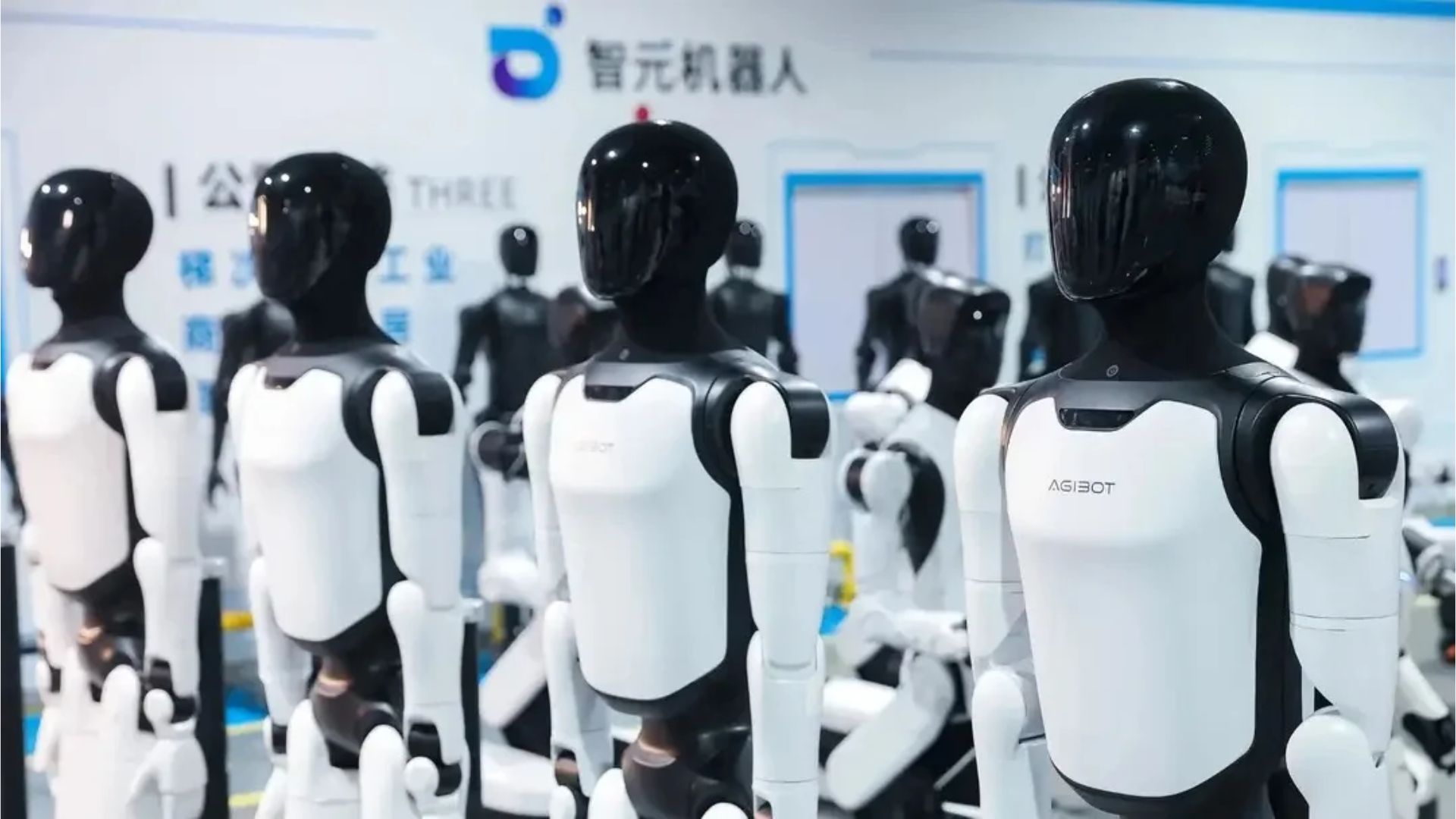
AGIBOT unveiled GO-3 Preview, while Interesting Engineering reports a humanoid robot achieved an 85% success rate in a real-life trial using GO-3.
Key takeaways · 3
- 01
Interesting Engineering reports an 85% success rate in a real-life trial using GO-3; the report does not specify the number or types of tasks tested.
- 02
AGIBOT says experience from a fleet of 100 physical robots feeds a shared learning system.
- 03
AGIBOT plans to fully open-source GO-3 Preview by the end of 2026.
Store demonstration and reported result
AGIBOT demonstrated GO-3 Preview on its G2 wheeled humanoid robot in a convenience store.[3] Separately, Interesting Engineering reports that a humanoid robot achieved an 85% success rate in a real-life trial using GO-3.[2] The evidence does not specify how many tasks made up that trial or whether its setup was the same as the convenience-store demonstration. That distinction matters when assessing what the percentage says about a potential deployment: it is a reported trial result, not a measure of performance across all tasks or settings.
Learning after deployment
AGIBOT describes its approach as “full-lifecycle scaling,” spanning three stages, and says GO-3 Preview is designed to keep improving after a robot enters service.[3] Its Genie Master framework manages deployed robots, while the Embodied Execution Protocol standardizes four types of interface.[3] AGIBOT says the robot’s long-term memory logs successful and failed attempts and consolidates reusable lessons at the end of each day.[3] The company also says trajectories recorded during interventions and failure recoveries are used to retrain robot action policies.[3] These are descriptions of the system’s design and learning process, not quantified evidence of improvement over time.
Model, training and adaptation
GO-3 Preview runs on AGIBOT’s proprietary World Reasoning Action Model architecture, which combines task understanding, future-state prediction and action generation in one model.[3] AGIBOT says pre-training draws on two data sources, but the evidence does not identify them.[3] The company says the model can perform some new tasks zero-shot, without task-specific fine-tuning on physical robots.[3] For harder tasks such as LEGO assembly, AGIBOT says it adapts few-shot from a small number of demonstrations.[3] For teams considering a use case, the stated distinction suggests checking whether the task resembles the model’s zero-shot capabilities or needs demonstrations.
Benchmarks and planned release
AGIBOT says GO-3 Preview ranks first on the RoboDojo, RoboTwin and RoboColiseum embodied AI benchmarks.[3] Those rankings are company-reported; the evidence does not provide benchmark scores or comparison details. AGIBOT says its post-training system uses a fleet of 100 physical robots, and its Collective Experience Learning system pools successful and failed attempts so a lesson from one robot can update a shared strategy.[3] The company plans to fully open-source GO-3 Preview by the end of 2026.[3] The cited date on AGIBOT’s announcement is October 29, 2026.[1]
The announcement puts attention on whether robots can improve through experience after deployment, not only through pre-deployment training. Professionals assessing a robotics pilot should distinguish the reported trial result and company benchmark claims from evidence about performance in their own tasks and settings.
Why it matters
Bring this to your team — one session a day, built for your industry.
kju.ai is built for teams: daily sessions, team analytics, and rollout support for your organization.
For teamsHow this developed
3 November 2026
AGIBOT unveils GO-3 Preview; report cites 85% success in GO-3 trial
Sources
- Newsroom-AGIBOT Innovation (Shanghai) Technology Co., Ltd.agibot.com
- Humanoid robot achieves 85% task success rate with AGIBOT's GO-3 modelinterestingengineering.com
- AGIBOT GO-3: Humanoid Robot AI Model That Learns on the Jobhumanoidroboticstechnology.com